
Analyses / Middle East / North Africa
2 November 2026
Israel: What Do the Results of the Legislative Elections Reveal?
-

Scientific Adviser at IRIS, Head of the Middle East/North Africa Programme
Results That Defy Predictions
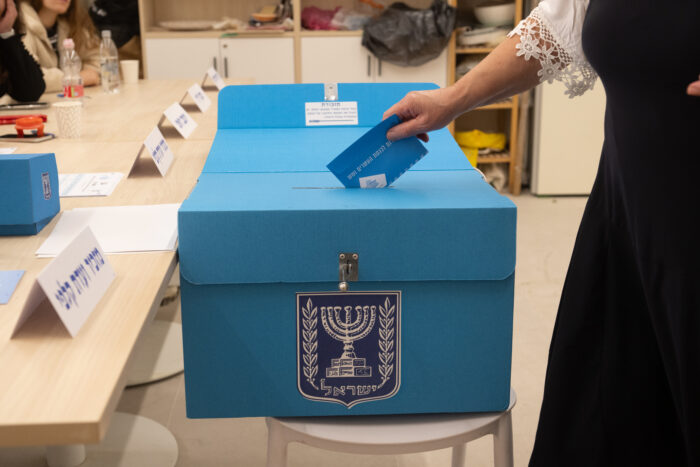
First, voter turnout stood at nearly 78 percent, showing that Israeli citizens considered the stakes of this election to be crucial. Palestinians in Israel, for their part, voted at a rate of nearly 80 percent, expressing a total rejection of the policies of Benjamin Netanyahu, the outgoing prime minister.
The electoral system, based on near-full proportional representation, once again highlights the difficulty of securing a clear majority without resorting to coalitions—where, traditionally, secret negotiations are the norm, accompanied by their share of broken promises, betrayals, and shifting alliances.
However, beyond the parameters related to the rules of the electoral system itself, the results of these elections are above all an expression of the divisions plaguing Israeli society over domestic policy issues. A wide variety of scenarios are therefore possible in the days and weeks ahead, and it would be futile to make any predictions with even a modicum of certainty in the context of this article.
The officially announced results show that the coalition led by Benjamin Netanyahu, composed of five parties, came in first with 53 elected seats out of the 120 in the Knesset, the Israeli parliament; the opposition coalition led by Gadi Eisenkot, composed of four parties, won 48 seats; and finally, the two Arab lists won 19 seats. Since an absolute majority requires 61 members of the Knesset, negotiations are now beginning to determine the composition of the future government.
Several observations can be made at this stage.
Although it has seen a significant reduction in the number of its members—the outgoing majority coalition had 64—the fact remains that the bloc led by Netanyahu has not collapsed, despite the various accusations leveled against it throughout the election campaign: corruption, violations of democratic principles—notably embodied by its judicial reform plan aimed at bringing the Supreme Court to heel—and, above all, its responsibility for failing to prevent the October 7 attacks, or worse, for having been informed of Hamas’s preparations and failing to alert the relevant security services. Despite these accusations, a significant portion of the electorate has absolved him of responsibility for the genocidal policy implemented in Gaza and the ethnic cleansing carried out in the West Bank.
Nevertheless, the other 67 members of the Knesset, representing the opposition, point out that the coalition led by Netanyahu has been rejected by a majority of the electorate.
The coalition led by Gadi Eisenkot, the former chief of staff, has failed to meet the goals it set for itself and is also unable to form a government on its own. It is also worth noting that most polls were once again incorrect, as they had placed this coalition ahead of the one led by Netanyahu. During the campaign, Gadi Eisenkot distinguished himself from his main opponent on numerous domestic policy issues. For instance, he called for the establishment of a commission of inquiry into the security failures that led to the October 7 attacks, even though Netanyahu has stubbornly refused to do so; he expressed support for the conscription of ultra-Orthodox Jews—the “God-fearing”—who have been exempt since 1948; and he has frequently emphasized the need to respect the principle of the separation of powers. Gadi Eisenkot has also frequently stated that, if he were to win the election, he would relentlessly return to the foundations of the Declaration of Independence of the State of Israel, which he defines as “Jewish and democratic.” We can therefore conclude that, in addition to his condemnation of Netanyahu’s populist and illiberal excesses, he also distances himself—at least publicly—from the Basic Law on “Israel, the Nation-State of the Jewish People,” adopted in 2018, which codifies the existence of two categories of Israeli citizens with different rights based on ethnic criteria: Jews and non-Jews. If he comes to power, the coming weeks will confirm—or not—whether he keeps this promise on a matter of paramount importance.
The Palestinians of Israel, however, are the real surprise of this election due to their strong showing. Arab parties have won a total of 19 seats, compared to just 10 in the previous legislature. This result can be explained by their very strong turnout, which in turn was driven by the increasingly stigmatizing situation they face in Israel, particularly since October 7. As has been frequently noted in recent days, they are de facto the “kingmakers” of the future government structure. Benjamin Netanyahu is well aware of this, and during his October 28 press conference, he stated bluntly that “the Arabs stole the election.” The meaning of this statement is crystal clear and confirms that, for him and his coalition—composed of racist and supremacist parties—the Palestinians of Israel possess no legitimacy.
In light of these results, one of the key questions is whether Gadi Eisenkot’s “Change” bloc will agree to form an alliance with Arab lawmakers. The answer is difficult to discern, given the deep divisions within the bloc. One of its components—Avigdor Liberman’s party, with 7 seats—has, for example, repeatedly expressed its opposition to such a prospect, while Yair Golan’s Democrats, with 8 seats, would be more inclined to support it. A possible solution could take the form of support without the participation of the parties representing the Palestinians of Israel, but what assurances would Gadi Eisenkot then be able to offer them?
The Palestinian issue: conspicuously absent from the campaign
While there are many differences among the various Jewish electoral coalitions on domestic policy issues, these differences are clearly less pronounced when it comes to the Palestinian question.
Benjamin Netanyahu’s convictions have long been known, and one must acknowledge his unwavering obsession with the subject. Since the signing of the Oslo Accords in 1993, he has consistently opposed any form of compromise with the Palestinians and the prospect of a sovereign Palestinian state. He has never deviated from these positions, and the other members of his coalition fully share them. The methods used against the Gaza Strip since October 7 and the ongoing ethnic cleansing in the West Bank show just how far this policy can go.
Gadi Eisenkot, for his part, has also clearly rejected the prospect of a Palestinian state, ultimately reflecting the conviction of the majority of Israeli public opinion. The difference between him and Benjamin Netanyahu lies in the fact that he does not rule out the possibility of negotiations a priori, though their goal would be to determine the status of a hypothetical “autonomous region” or “quasi-state” that would remain under Israel’s exclusive security control. While he has certainly condemned the policy of terror organized by the outgoing government in the West Bank—which encourages daily abuses by fanatical settlers against the Palestinian civilian population—he does not oppose the very principle of settlement. For him, it is, in a sense, a matter of settling “properly.”
There is therefore no agreement on methods, but the shared disregard for international law appears to be the same in both rival coalitions. Despite the nuances—and even the differences—the outgoing head of government and the leader of the opposition essentially hold the same position: no Palestinian state between the Jordan River and the Mediterranean Sea, and an open disregard for international law. It is also striking to note that none of the Israeli political leaders—aside, of course, from those representing the Palestinians in Israel—bothers to formulate specific, positive proposals to break the deadlock and reverse the deterioration currently plaguing the Israeli-Palestinian conflict. The trauma of October 7 is so profound within Israeli society that a national consensus exists among the country’s Jewish parties, preventing any critical reflection.
Upcoming Episodes
Now that the official results have been announced, the Israeli president must meet with political leaders and appoint the person he deems suitable to form a government. It will be up to that person to find a way to secure the 61 Knesset members needed to achieve a majority in the Knesset. The negotiations could be lengthy and, if they fail, could lead to the calling of new early parliamentary elections. President Herzog has certainly urged political leaders to find a solution as soon as possible, but nothing is certain, and speculation is futile.
In the meantime, Benjamin Netanyahu, the outgoing prime minister, remains in office. He has proven over the past few years that he is capable of making the worst possible decisions to stay in power, and we cannot rule out yet another attempt to charge ahead regardless of the consequences. Unfortunately, the possibility of a new campaign of strikes against Iran—following the U.S. midterm elections—which would undoubtedly provoke a response from Tehran and help foster the reestablishment of a national unity government in Tel Aviv, cannot be ruled out.
This article has been translated from French into English using artificial intelligence.