Cartographies / Defence and Climate Observatory
21 October 2026
Mapping the Main Activities Relating to Solar Radiation Modification and Associate Funding
-

Associate Research Fellow, IRIS
-

Head of Data, Mapping and Infographics
-

Research and Data Assistant
In the context of accelerating climate change, scientific and political discourses advocating research into solar geoengineering are multiplying. These methods, also referred to as “Solar Radiation Modification” (SRM), vary in complexity and aim to lower the global surface temperature by reflecting a portion of incoming sunlight back into space.
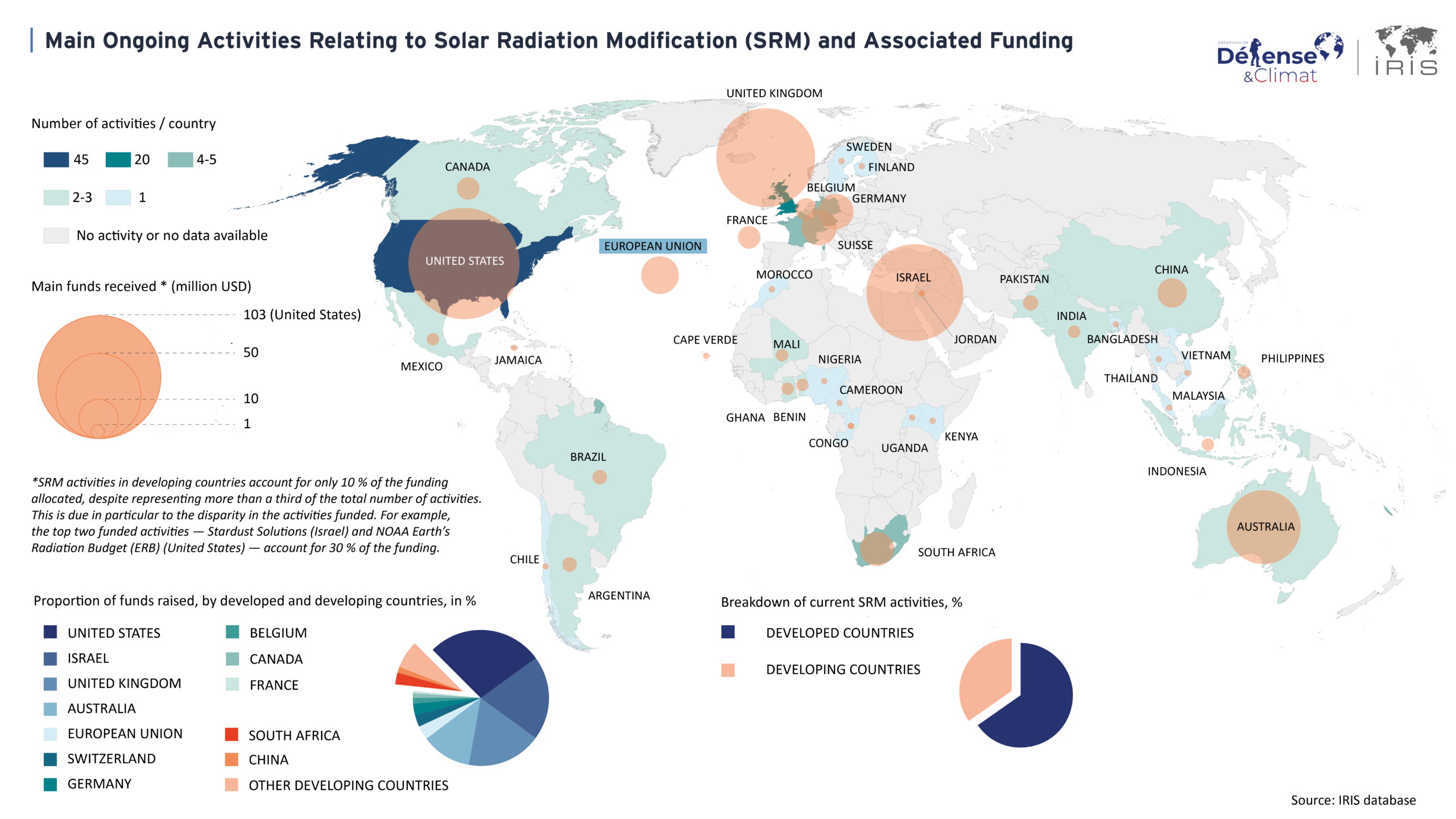
Between 2007 and 2026, USD 412 million was invested in research, advocacy and awareness-raising activities, as well as in the commercialisation of SRM. The sharp rise in funding from 2020 onwards can be attributed to massive funding from certain public bodies (ARIA), philanthropic foundations (Quadrature Climate Foundation, Simons Foundation) and investments in private companies (Stardust Solutions, totalling USD 75 million). Today, the 140 ongoing initiatives identified represent USD 328 million.
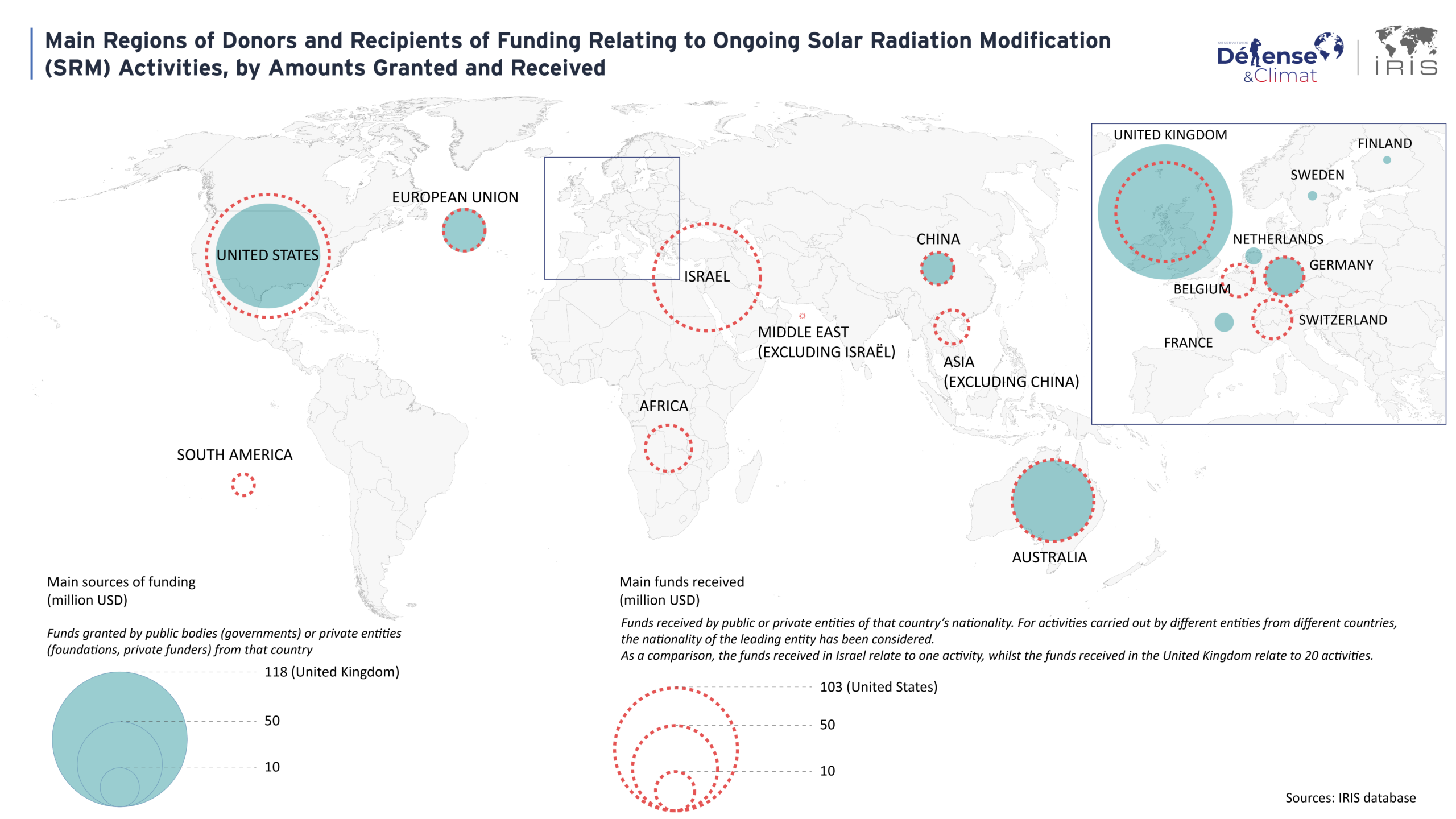
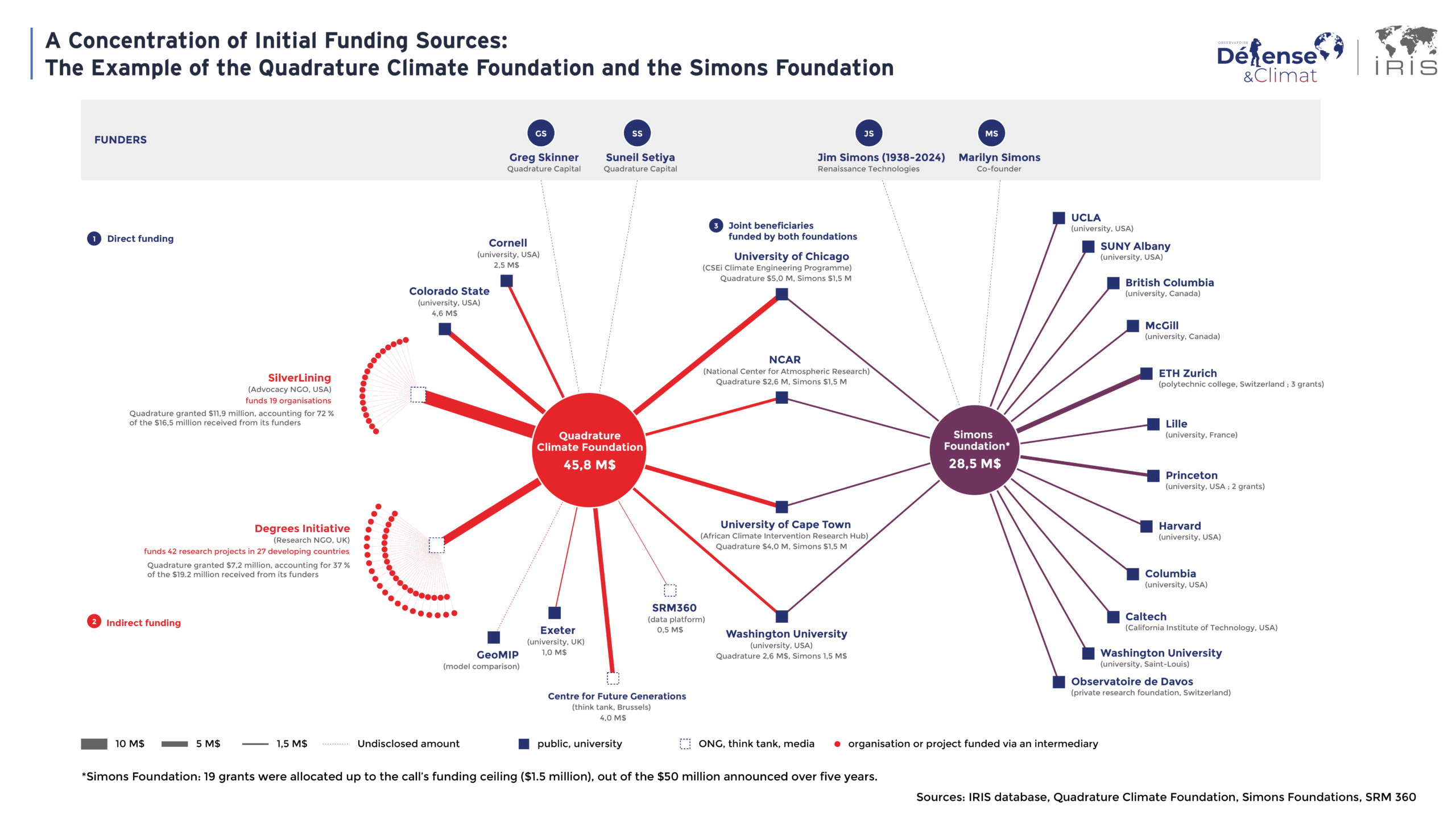
On a global scale, Western countries account for almost all of the funding allocated to ongoing solar radiation modification activities, with the United Kingdom (US$118 million) and the United States (US$102 million) leading the way. Developing countries receive less than a quarter of global funding for solar geoengineering activities, despite accounting for a third of ongoing projects. It should be noted that almost all activities funded in developing countries are financed by the Degrees Initiative, which is itself funded by the UK-based Quadrature Climate Foundation.
These maps and infographics are an excerpt from the report From a Climate Tool to an Instrument of Power: The Geostrategic and Defence Implications of Solar Geoengineering by the Defence and Climate Observatory, published in October 2026.