
Editorials by Pascal Boniface / Sport and Geopolitics
13 November 2026
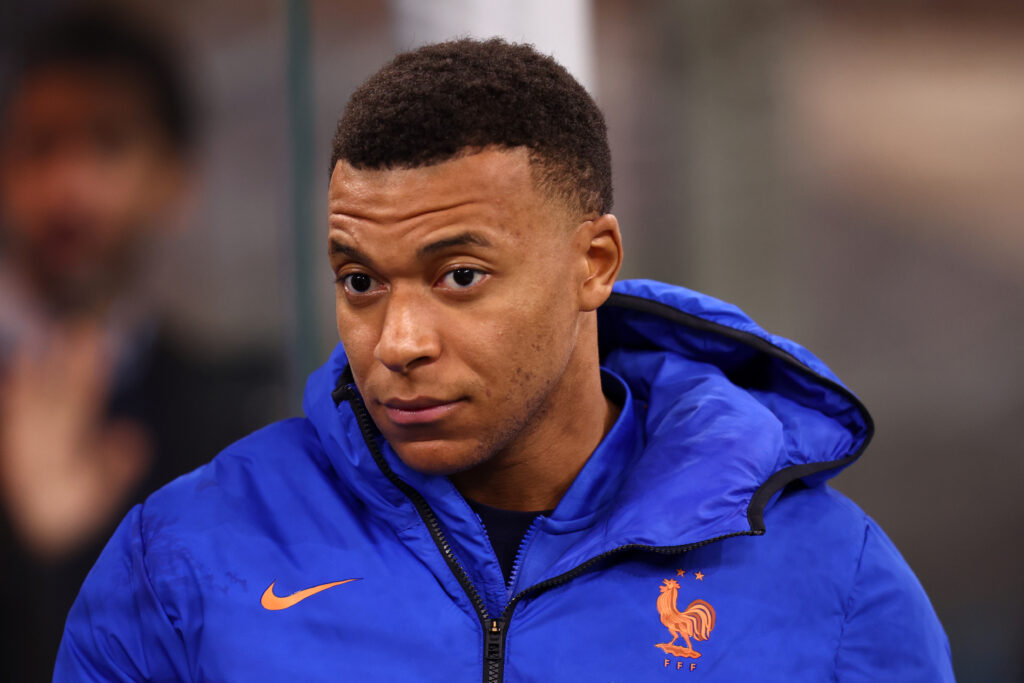
Kylian Mbappé: A Political Figure?
-
Director, IRIS
This article is a English translation of an interview given to the Italian newspaper la Repubblica.
What does Kylian Mbappé represent for France today: a role model of success who shows that it is possible to rise from a working-class neighbourhood to the very top, or a figure capable, through his achievements, of bringing together social classes that rarely engage with one another?
Above all, he is a great champion who played a major part in France’s ‘second star’ at the 2018 World Cup and who inspires the French people with his sporting achievements. He is, of course, a role model for the kind of social mobility that sport can still offer in France, but which is becoming increasingly difficult to achieve in other professional sectors, apart perhaps from show business. He is the captain of the French national team, which makes him a unifying figure.
His stances against the National Rally (RN) may have made him a divisive figure for some. Far-right leaders have not taken kindly to his speaking out against them, precisely because of his popularity outside political circles. In other sectors of society, however, his stance has, on the contrary, been regarded as highly commendable, given that he is committed and willing to take risks, when he could very well have found it more comfortable to stay out of the debate.
Mbappé grew up in Bondy, but his wealth and fame now place him a world away from everyday life in working-class neighbourhoods. What enables him to remain a role model for the young people who live there? Does his success primarily fuel their hope of leaving, or their pride in belonging there?
Kylian Mbappé hasn’t forgotten where he comes from. He returns regularly to Bondy. He has set up a charity, which he funds out of his own pocket, that offers a wide range of opportunities to young people in the neighbourhoods. He is certainly a ‘turncoat’ of the highest order, but one who remains true to his roots, never failing to speak positively about the neighbourhoods. He is therefore a role model and a source of hope. His message is that anything is possible, and at the same time that there is no shame in being from Bondy; on the contrary, one should take a certain pride in it, even if one does not go on to become a global football star.
The suburbs are often spoken of as a world apart. Does Mbappé’s journey help to change this perception, or does it risk reinforcing the idea that only exceptionally talented individuals can overcome social barriers?
His message is a positive one, stating that anyone can succeed and make a success of their life provided they make an effort, whilst not overlooking the difficulties. It is difficult; there are obstacles. All the more reason to adopt a proactive attitude and not succumb to self-pity. He seeks to highlight the positive aspects of life in the neighbourhood, particularly solidarity, in order to combat negative prejudices. He does not present his own example as the only one to follow; or at least, he wants to broaden the scope of possibilities, which is not limited to extraordinary individual success.
When he takes a stand against the National Rally, where does the credibility of his words come from: his background, his status as captain of Les Bleus, or his experience of racism? And what might undermine that credibility?
It is his social status and his high profile that give his words such impact. He has millions of followers on social media. He is, in fact, a person of colour; both he and his parents have suffered racism. But his sporting success means that even racist people admire him. It’s always the same phenomenon: success, especially when it comes to sport, reflects well on the whole country and acts as a shield – at least to some extent – against racism. What could undermine his credibility – and he is aware of this – is if his sporting performance were to decline.
Do his views resonate with young people whom political parties are no longer able to reach? Is there any evidence to suggest that he can actually influence public opinion or voting behaviour, beyond the media attention he attracts?
His statements do have an impact, of course. Whilst this alone will not be enough to prevent Marine Le Pen from reaching the second round, he is playing his part in a collective effort to warn of the dangers that the National Rally’s rise to power could pose to French society. The impact of Mbappé’s stance is difficult to gauge, but it is certainly not insignificant. His comments may lead many people who regard him as a star to think twice before voting for Marine Le Pen.
In Italy, there is often debate about the responsibility of public figures: should they use their public profile to take a stand on social issues? How does this debate play out in France, particularly in the case of sportspeople? Are they expected to get involved, or are they still asked to confine themselves to the playing field?
In France, there has long been a dichotomy between brawn and brains. Sportspersons are citizens like any others, yet international stars often possess a fairly detailed understanding of globalisation and the state of the world. Very often, sportspersons – and footballers in particular – come from disadvantaged backgrounds, and many of them belong to racialised minorities. The right and the far right therefore do not appreciate it when they speak out publicly. They issue contradictory demands, criticising sportspeople for not taking an interest in social issues and for living in a bubble, whilst also attacking them when they do take a stand.
Are the divisions within French society reflected within the national team? Or does the fact that its players are now all men who have achieved social and financial success tend to blur the differences linked to their backgrounds, cultures and life experiences?
There is a fairly strong sense of unity within the national team when it comes to not forgetting where they come from and being firmly committed to combating racism
Working-class neighbourhoods are rife with a wide range of grievances and aspirations. Can we expect a champion to become their spokesperson? Is there not a risk in seeking a single voice for communities whose diversity is so rarely heard?
No one, not even Kylian Mbappé himself, claims that he is the sole spokesperson for the suburbs. He is one voice amongst many, alongside local and national community leaders, intellectuals and politicians. He is not excluded from the public debate, but neither does he have a monopoly on expression.
To what extent can a global celebrity freely express their political views when their image also depends on sponsors and international business interests? How can we distinguish between a commitment that comes at a cost and a stance that enhances a personal brand?
Michael Jordan used to say that “even Republicans buy Nikes” and therefore kept out of public debates. Kylian Mbappé himself had to backtrack on his comments about Mao Zedong, whom he had described as a dictator. That concerns China – it’s a long way off. He will not do so on issues concerning French society – where he was born, where his parents live, and which remains his own, even though he now lives in Spain.
This article has been translated from French into English using artificial intelligence.