
Editorials by Pascal Boniface
2 September 2026
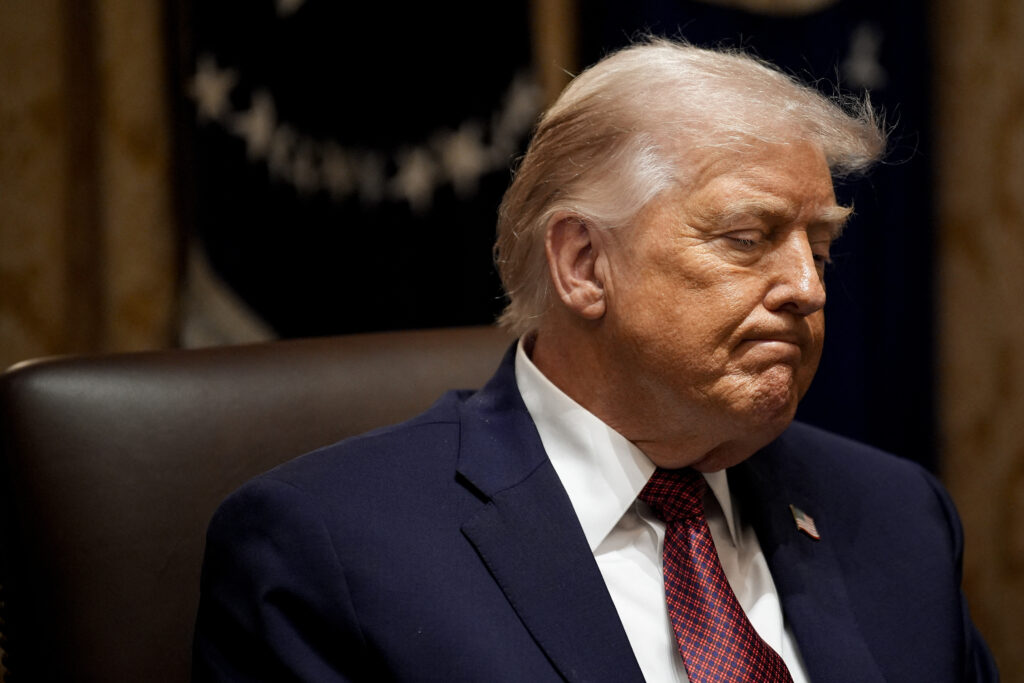
Geopolitical return to business as usual: Trump on all fronts
-
Director, IRIS
There are numerous geopolitical challenges as we head into the new political term. Donald Trump finds himself at the centre of each and every one of them, and has failed in the majority of cases.
Firstly, regarding the situation in Iran: the ‘quick mission’ that the United States was due to carry out there is still not over, more than six months after the conflict began. Donald Trump now appears to be at an impasse. The initial military solution did not work. Donald Trump subsequently attempted the path of negotiation. Iran, which endured two wars (June 2025, February 2026) just as negotiations were on the verge of success, showed no hurry to reach an agreement and raised the stakes. The US superpower, with its staggering military budget of 1,000 billion dollars, is running out of ammunition. What an admission of failure! Donald Trump is now resorting to a third option: declaring all-out economic war on Iran by threatening any country that maintains trade relations with Tehran with sanctions imposed by the United States.
In reality, Iran has long been in the habit of circumventing the sanctions imposed on it. But there is a more pressing issue. Whilst the United States’ European allies may well follow Donald Trump’s lead so as not to upset him, one country will undoubtedly resist pressure from Washington: China. Beijing cannot afford to give in to this pressure, for both geopolitical and domestic political reasons. The Chinese public would be furious to see their government bow to Washington.
China also has geopolitical interests at stake. It needs Iranian oil and, above all, it must show the rest of the Global South that it will not yield to US power. Furthermore, Donald Trump is expecting Xi Jinping to visit the United States at the end of September. He needs Xi to make economic concessions – to buy more Boeing aircraft and American agricultural products. It therefore seems unlikely that he would simultaneously launch an all-out trade war with China over Iran.
On the other hand, he did so with Canada. And Canada did not give in. Prime Minister Marc Carney has given an assurance that he would impose on the United States the exact same tariffs – down to the last dollar – as those imposed by Washington. It is true that Canada is taking the risk of suffering a loss, given that 75 per cent of its exports are destined for the United States, but the US would also bear the cost. Marc Carney wanted to show Donald Trump that he would not back down, as he believed that Canadian sovereignty was at stake. This is therefore a setback for Donald Trump. Here is an example that others could have followed. Europe, in particular, which – despite having a larger internal market than the United States and being less dependent on the US market than Canada – accepted an unequal and humiliating deal involving a 15 per cent tariff on its exports whilst exempting US products.
Donald Trump and his administration have opened a new front – this time political and legal – against the International Criminal Court. Marco Rubio has decided to ‘dismantle’ the International Criminal Court ‘brick by brick’. Washington cannot forgive him for the fact that the US military has been implicated in Afghanistan and Iraq, and above all that an arrest warrant has been issued against its ally, the Israeli Prime Minister. It therefore remains to be seen whether countries other than Chad and Venezuela will bow to the US administration’s threats and withdraw from the International Criminal Court, or whether, on the contrary, they will resist this assault. This also constitutes a new test for the European Union, whose member states claim to be strongly committed to international law, but which once again risk merely offering half-hearted criticism, deploring or regretting these attacks, without taking any further action.
There is, however, one war that Donald Trump is not waging: the war to protect the planet. It is reported that the El Niño oceanic phenomenon could cause further devastation, even as the Mediterranean region has experienced numerous wildfires, and as floods could become more frequent in the wake of the drought. On this issue, the president of the world’s leading power continues to pursue a climate-sceptical policy and to refuse to tackle climate change. Similarly, the Ebola virus is spreading all the more easily in the Democratic Republic of the Congo because the United States has scrapped USAID and numerous aid programmes for African countries.
Finally, two conflicts which he had promised to bring to an end are still ongoing.
Firstly, the war between Russia and Ukraine, where the number of civilian deaths is rising as strikes intensify. Neither side is prepared to back down. The demands of one side are completely incompatible with those of the other. It is therefore difficult to see how this conflict could end, even as both countries – and above all their civilian populations – are suffering enormously.
And then there is the Middle East, where the Israeli army is tightening its grip on Gaza and the West Bank. Donald Trump’s peace plan is not being respected at all. Benjamin Netanyahu has flatly rejected the second phase of the plan. The prospect of genuine peace – or at any rate, a just peace – therefore still seems a long way off. And the possibility of creating a Palestinian state is slipping further away with every passing day, in the face of the culpable inaction of the entire international community.
There is only one area in which Donald Trump has succeeded, albeit in a manner that is as immoral as it is illegal – though that matters not a jot to him.
He has managed to get his hands on Venezuela’s oil by signing an agreement with President Delcy Rodriguez. This agreement allows the United States to control most of Venezuela’s proven oil reserves. Massive investment will be required, but this will enable production and exports to resume following the lifting of US sanctions, in exchange for which Venezuela has relinquished its independence. Admittedly, in recent years, the administration of Nicolas Maduro – who is now imprisoned in the United States – has been an absolute disaster and has driven 6 million Venezuelans to flee their country. But the capture of a sitting head of state in a sovereign country runs counter to all international norms. We are opening Pandora’s box by allowing this sort of action, which bears more resemblance to mafia tactics than to relations between sovereign states. Delcy Rodriguez realised that she could only remain in office if she obeyed Donald Trump’s orders. This is an assertion of unbridled imperialism that can only lead to a coarsening of international relations.
This article has been translated from French into English using artificial intelligence.