
Editorials by Pascal Boniface
17 September 2026
Xi Jinping in Washington: Unexpected Support for Donald Trump?
-

Director, IRIS
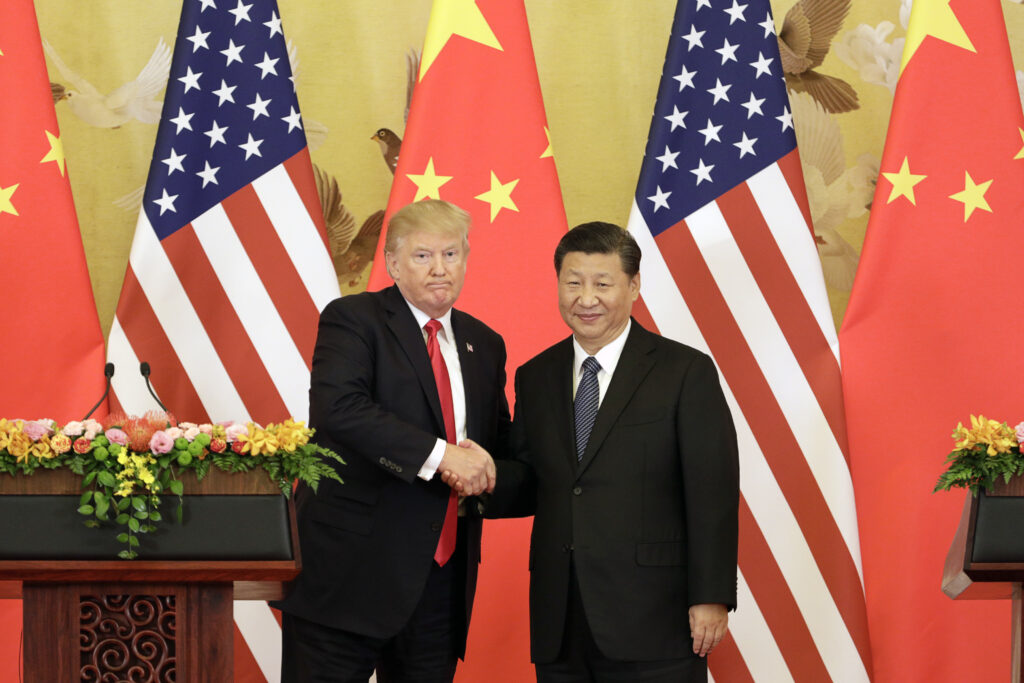
Donald Trump is expecting Xi Jinping to visit on 24 September. Relations between the leaders of the world’s two most powerful countries are on a rollercoaster ride, oscillating between declarations of unclouded friendship and extreme rivalry. However, it is primarily the US President who is responsible for these fluctuations, switching effortlessly and very quickly from one to the other, whilst his Chinese counterpart avoids making any ill-timed statements.
Donald Trump has just declared all-out economic war on Iran, threatening countries that continue to trade with Tehran with sanctions that would make it difficult for them to maintain their economic relations.
The problem for him is that China is the Islamic Republic’s main economic partner, and it is hard to see Beijing yielding to this sort of demand from Washington. Firstly, because China needs Iranian oil and does not want Iran to become a second Venezuela. A collapse of the regime, which could see Iran fall under US control, would be a disaster for China. Secondly, because its diplomatic credibility in the eyes of the rest of the world would be severely damaged if it were to meekly obey an order from the United States. This is a matter of prestige and status; China cannot afford to appear to be acting under pressure from another state. It should also be noted that these measures contravene international law, which China officially upholds. Finally, whilst China is certainly not a democratic country, there is nevertheless a public opinion there that is highly sensitive to anything touching on national pride, and which would be repelled by such concessions. Moreover, the defence of Chinese nationalism is a major factor underpinning the Communist Party’s hold on society.
Consequently, the US President has raised the spectre of a threat that he cannot carry out: it is hard to see how he could launch a trade war just a few days before the visit of the Chinese President, who is firmly opposed to it.
The timing of this visit may, in fact, raise some questions. Admittedly, Xi Jinping is returning the courtesy shown by Donald Trump, who visited Beijing in May 2026. However, there is usually a much longer interval between such reciprocal visits. Furthermore, the Chinese President had another opportunity to visit the United States, to attend the G20 summit to be held in Florida in December 2026. This international summit could very well have provided an opportunity to extend his stay as part of a bilateral visit with Donald Trump.
Thus, by making this visit in September, Xi Jinping is either forcing himself to make a second visit to the United States within a very short space of time, or missing the G20 summit – which would send the wrong diplomatic signal. Why, then, choose this date? Quite simply to offer Donald Trump a gift ahead of the mid-term elections due in early November. We can expect the announcement of economic agreements, including significant purchases by China from the United States, in order to reduce the US’s huge trade deficit: $1,200 billion, of which $200 billion is with China.
Boeing, which is struggling, is expected to receive a number of orders, as are US farmers, who are facing a major economic crisis. Observers had been surprised by the lack of major contracts during Donald Trump’s visit to China in May. This was because there would have been no point in signing them before the summer, as US voters would have forgotten about them by the time of the elections.
Xi Jinping’s forthcoming visit would therefore allow Donald Trump to showcase a degree of success to American voters at a time when he has little else of a positive nature to show for himself and risks losing his majority in Congress.
Now that the issue of the date has been resolved, another mystery arises: why would Xi Jinping do Donald Trump this favour? Why help his main rival? It is likely that this is linked to a certain degree of satisfaction on his part with the US President’s actions. The Chinese president is watching, not without some pleasure, as his counterpart becomes embroiled in the war against Iran and exposes his own powerlessness to the whole world. The trade war launched against Canada, despite it being a long-standing ally, has brought Ottawa closer to Beijing. Donald Trump’s heavy-handedness is driving many countries away from the United States, all the more so as this approach is proving incapable of achieving the very objectives it is supposed to serve. Xi Jinping therefore considers Donald Trump to be useful to him. Despite his rhetoric, Trump is doing more to weaken the United States than to restore its greatness.
The most significant issue for China, however, is Donald Trump’s ambiguous stance on Taiwan. For Beijing, the fate of the island is an absolutely crucial matter, as Xi Jinping emphasised ahead of the summit with Donald Trump in May.
On the flight home from that trip, the US President had stated that Taiwan must not declare independence because it was 9,500 miles from the United States, and that the US would find it difficult to come to its aid due to the vast distance involved.
Never before has a US president distanced himself so much from Taiwan. It is worth recalling that Joe Biden, when asked twice, said that the US would come to Taiwan’s aid in the event of a Chinese attack, going even further than the country’s official and traditional position.
The fact that Donald Trump mentioned the distance between the United States and Taiwan – 9,500 miles – shows that this statement had been carefully prepared. Indeed, one might well doubt whether he has a sufficient grasp of geography to know off by heart the distance between the United States and the island.
Chinese leaders, watching Donald Trump strut about and insult other heads of state – including allies – to the point of caricature, are patiently biding their time, knowing that this behaviour is accelerating China’s catch-up with the United States.
This article has been translated from French into English using artificial intelligence.