
Analyses / Observatory on Multilateralism and the Future of International Cooperation
16 October 2026
A New Secretary General of the UN: What’s the Point ?

-
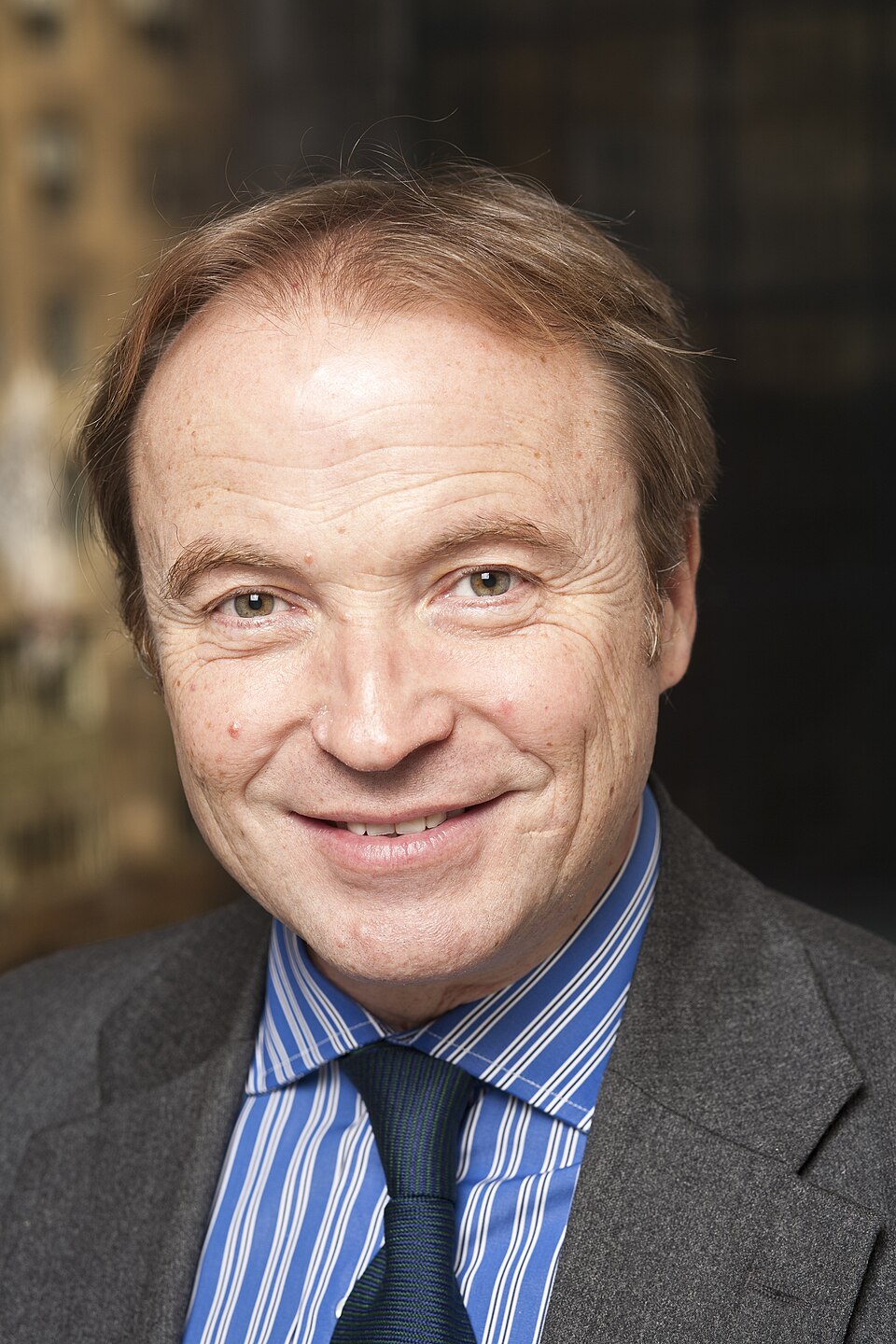
Head of the IRIS Observatory of Multilateralism and the Future of International Cooperation, lecturer at IRIS Sup’
In the coming weeks, a new UN Secretary-General will be appointed amid an atmosphere of resignation, or even crisis, regarding the institution’s future. Beyond the United Nations, the entire architecture of multilateralism and international cooperation established since 1945 to ensure peace, development, and respect for human rights is being seriously challenged by three distinct threats.
The first, of course, is the return to the use of force, the disregard for the rules of international law, and the law of the jungle in relations between states—a trend exemplified in particular by several members of the UN Security Council, who should, in fact, be the guardians of the system. Violations of the fundamental principle of the territorial integrity of states and the use of force in Ukraine, Gaza, Venezuela, and Iran illustrate this brutalization of international relations—even if, by becoming bogged down, they reveal the impotence of power.
The second threat is of an entirely different nature—one that is older—which undermines trust in and support for traditional international institutions and stems from the rising influence of the “Global South” in international relations: it is the threat posed by these institutions’ lack of legitimacy and representativeness. Conceived and created in the aftermath of World War II in a world dominated by Western thought, the UN and the Bretton Woods institutions—the World Bank and the IMF—have a governance model and, more often than not, an agenda that leaves little room for the “rest” of the world, which now challenges them. For the BRICS nations, the goal is to create a “post-Western world,” characterized by its multipolar nature and South-South solidarity. It is telling in this regard that President Xi, during an official visit to Washington last September, did not deem it necessary to travel to New York to address the United Nations General Assembly, which was convening at the same time.
The third threat concerns the lack of effectiveness in the functioning of international institutions, particularly given the complexity of the global challenges we face. The prevailing Westphalian system, based on the nation-state as the primary and supreme actor on the international stage, is clearly no longer suited to establishing global governance of AI or addressing a world grappling with the digital revolution and climate change. Establishing new modes of operation and decision-making that involve businesses, civil society, and the research and scientific communities has become urgent. In this regard, we must commend France, which, as President of the Security Council, took the initiative to invite Sam Altman and Dario Amodei, the CEOs of OpenAI and Anthropic, to speak on September 23, 2026, at a meeting of the United Nations Security Council. The purpose of this meeting was to assess the scale of risks posed by AI agents and to discuss the need for global coordination. Altman and Amodei presented several requests and concrete proposals to the Security Council for regulating cutting-edge AI models, including the adoption of common international standards, alert and transparency protocols, and targeted global bans—specifically suggesting an outright ban on the use of AI for the design or manufacture of biological weapons. Even though the United States categorically rejected any idea of oversight or binding regulation, this type of dialogue within the UN’s highest body between governments and private actors represents a notable innovation that is a step in the right direction. Just like the Fashion Pact, launched during the G7 summit in Biarritz—a coalition of some 30 of the largest fashion and apparel brands, including Kering, Ralph Lauren, H&M, Armani—which have joined forces and committed to using 100 percent renewable energy by 2030 and achieving net-zero carbon emissions by 2050. Given that the fashion industry is the second-most polluting industrial sector in the world and that its production generates more greenhouse gases than air and maritime transportation combined, it becomes clear just how crucial public-private coalitions can be in implementing international commitments in the face of the inertia of traditional intergovernmental processes. In this context, NGOs must be fully involved alongside international organizations not only in building knowledge and expertise but also in setting quantified goals and standards to be achieved, as well as in the implementation phase. This represents a new, collaborative approach that fosters consensus-building and ownership among all stakeholders.
In the long term, we can even envision a redefinition of roles: private-sector actors, the research community, and NGOs will need to be fully involved alongside international organizations not only in building knowledge and expertise, but also in setting quantifiable goals and standards to be achieved, as well as in the implementation phase. This is a new, collaborative approach that fosters consensus-building and ownership among all stakeholders.
How should we respond to these three threats? Clearly, the second and third threats can be addressed if a sincere commitment to success can be mobilized among all parties—both public and private, as well as leaders from the Western world and the Global South. It is in everyone’s interest. In the weeks following his appointment, the new UN Secretary-General could call for a major “conference on rebuilding,” in the spirit of the San Francisco Conference in the spring of 1945, which led to the drafting and unanimous adoption of the United Nations Charter by the fifty states in attendance. This is a massive undertaking which, if carried out with strong leadership and in a spirit of inclusive dialogue with clearly defined objectives, can bring the international community back under one roof and serve as leverage to influence those states that advocate a return to force and power—the primary threat outlined above.
France can play a decisive role, as it has done successfully in recent years, notably through the Franco-Mexican initiative calling on the five permanent members of the United Nations Security Council to voluntarily waive their right to veto in cases of mass atrocities, genocide, crimes against humanity, and large-scale war crimes. Since April 26, 2022, the United Nations General Assembly has required a mandatory debate within 10 business days following the exercise of the veto by a permanent member of the Security Council. Similarly, France, together with Togo and the African Union, co-sponsored the resolution adopted last September recommending the gradual phasing out of the Mercator projection in favor of the Equal Earth map projection, which provides a representation of the world that more accurately reflects reality.
This clearly demonstrates that progress is possible and that the time has come for this conference on rebuilding the international order, as evidenced by the Partners for Multilateralism (P4M) Summit held in New York last September on the sidelines of the 81st session of the United Nations General Assembly, at the initiative of the European Union and countries as diverse as Australia, Brazil, Canada, India, and Kenya. In an increasingly fractured world, a strong commitment to cooperation persists across all continents, regions, and political traditions.
If this conference on global renewal succeeds in establishing new, just, equitable, and effective modes of operation, it may steer countries that favor the use of force and power back toward a spirit of cooperation, rather than continuing a frantic race for dominance that is leading humanity to the brink of the abyss. The major powers did manage to reach an agreement in the 1960s, in the face of the threat of nuclear annihilation, by adopting the beneficial Treaty on the Non-Proliferation of Nuclear Weapons (NPT) under the auspices of the UN in 1968. Why should it not be possible today to adopt global regulations for artificial intelligence, a new existential threat?
If the United States and Russia had used the hundreds of billions swallowed up in Ukraine, Gaza, and Iran—with the disastrous results we all know—to fund the fight against poverty, climate change, or education for all, they would have become the most celebrated nations on the planet. The United States earned its reputation in the aftermath of World War II by establishing the foundations of international criminal justice through the Nuremberg Tribunal, even as it now rejects the very existence of the International Criminal Court.
Europe must understand that even after Trump leaves office, there will be no return to a strong and harmonious transatlantic alliance. “You can’t put the genie back in the bottle,” to borrow the well-known expression. While maintaining the best possible relationship with the United States, Europe must now—and very quickly—assert itself as a major balancing power and bring to life Prime Minister Mark Carney’s vision of creating alliances of middle powers, bringing together the countries of the coalition of the willing and the countries of the South determined to reestablish the rules of cooperation and international law—the sole guarantors of peace and development. This support and determination will be essential for the new United Nations Secretary-General and for the institution’s survival.