
Analyses / Sport and Geopolitics
3 August 2026
A Geopolitics of Same-Sex Marriage under Vladimir Putin: The Zabiiako-Kasatkina Case
-

Senior Research Fellow at IRIS, Head of the Sport and Geopolitics Programme
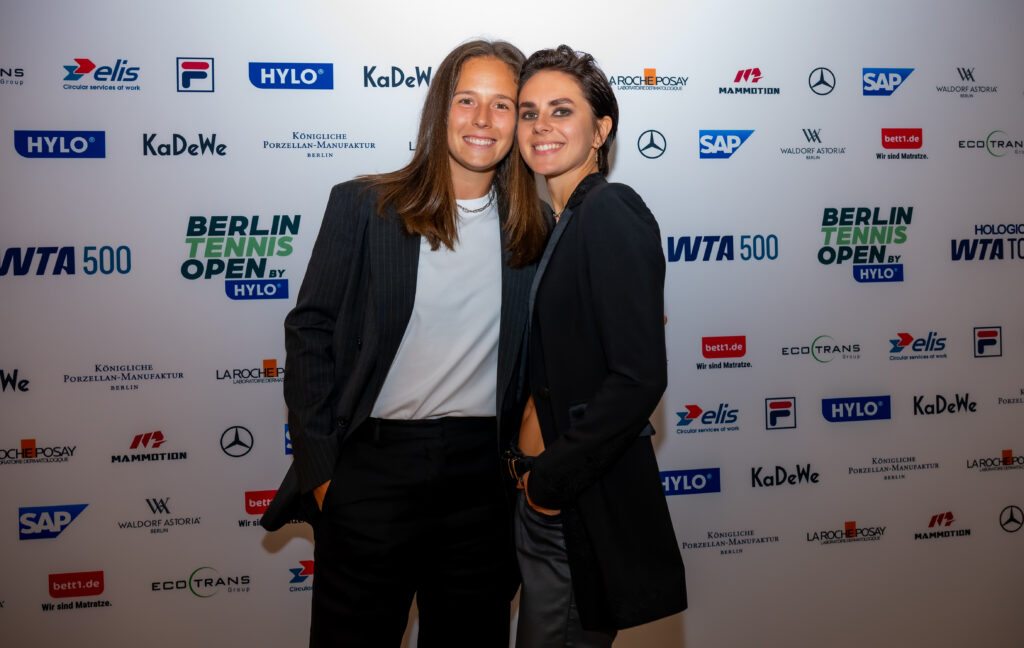
In Vladimir Putin’s Russia, a media outlet using the word “marriage” may now need to add an asterisk. On 16 July 2026, tennis player Daria Kasatkina and figure skater Natalia Zabiiako published photographs of their union, celebrated in Greece, far from the splendour of Moscow or St Petersburg. Both are Russian, and said that they had celebrated “love, freedom and acceptance”. Yet on the ru.net (the Russian internet), the story takes a different turn. The words “marriage”, “couple”, “relationships” and “coming out” are accompanied by a reference stating that the supposed “international LGBT movement” is considered a terrorist organisation in Russia, in the same way as Daesh or Al-Qaeda. The asterisk becomes a border. On one side, two women marry. On the other, Russian law makes their union impossible and… dangerous.
This marriage therefore takes on a geopolitical dimension because it brings together several territories, several flags and several conflicting representations. Kasatkina, for many years Russia’s leading female tennis player, has represented Australia since March 2025 and obtained Australian citizenship in January 2026. Zabiiako, born in Tallinn, initially skated for Estonia before winning an Olympic team silver medal with Russia in 2018 following her naturalisation.
In this context, their union reveals what happens when an anti-LGBT state seeks to control the bodies of its female champions. How does the marriage of Daria Kasatkina and Natalia Zabiiako reveal the way in which Vladimir Putin’s Russia has transformed intimacy, gender and sexuality into a geopolitical border?
From glorified bodies to forbidden bodies
Since coming to power, Vladimir Putin has used bodies and sport to tell the story of Russia’s resurgence. The concept of “sportokratura” describes this system in which political leaders, oligarchs and athletes are mobilised in the service of the state. A medal becomes evidence of power. The athlete’s body carries a flag, reinforces a narrative and contributes to the prestige of the regime. This system, of course, has a profoundly gendered dimension. Its ideal body is successful, healthy, patriotic and available to serve the nation. It extends the image that Vladimir Putin has constructed of himself through judo, ice hockey or staged appearances bare-chested. This presidential virility separates conforming bodies, deemed worthy of being displayed, from those considered deviant. It also creates a specific and gendered place for women in Russian society. The discourse against what he calls “LGBT propaganda” therefore naturally complements the sportokratura.
The turning point came in 2013-2014. In June 2013, the Duma adopted, almost unanimously, a law prohibiting the “promotion of non-traditional sexual relations” among minors. A few months later, Russia hosted the Winter Olympic and Paralympic Games in Sochi. The Kremlin presented a modern and victorious nation while LGBT+ people were ordered to remain silent. Then, in March 2014, Vladimir Putin revived the Soviet GTO programme, “Ready for Labour and Defence”, intended to produce a robust population available to serve the motherland. The authorities shape the bodies they wish to see and erase those that disrupt their narrative.
Daria Kasatkina and Natalia Zabiiako initially belonged to the first category. A semi-finalist at Roland-Garros in 2022 and formerly ranked eighth in the world, Kasatkina provided Russian tennis with a figure of success. Zabiiako won an Olympic team silver medal in 2018 for the Russian team, which was then competing under a neutral flag because of the state-sponsored doping scandal. In the context of Russian distrust towards the West, they contributed to the Putinist narrative that Russia is a fortress besieged by the EU and NATO, and the guardian of “traditional values”. Then their bodies escaped the script. In July 2022, the two women came out as gay, made their relationship public, and condemned the war in Ukraine. This triple announcement was unprecedented at the time of the Russian invasion. The two champions who had been expected to embody Russia became, through their very public existence, a challenge to the norm imposed by the Kremlin: since then, it has been impossible for them to return to their country of birth.
Russia’s culture war against the West
The repression did not begin with the invasion of Ukraine, but it increased in scale with it. In 2020, the Russian Constitution had already defined marriage as the union of a man and a woman. From December 2022, the 2013 law was extended to the entire population. Any positive or merely neutral representation of LGBT+ identities could now be punished, whether directed at children or adults in public spaces, the media or literary works. Finally, in November 2023, the Supreme Court took a further step by classifying a so-called “international LGBT movement” as extremist, despite the fact that it has no leadership, structure or identifiable legal existence.
This tightening forms part of the culture war being waged alongside the military war. The Kremlin presents the invasion of Ukraine as the defence of a Russian civilisation besieged by a decadent West. In this representation, Ukraine constitutes both a territorial and a moral front. Its rapprochement with the European Union is presented as a threat not only to Russia’s security, but also to its identity, family and demography. LGBT+ people and feminists become convenient embodiments of this otherness. They make visible a Western enemy portrayed as weak, emasculated and corrupting. The Russian state’s anti-LGBT and anti-feminist policies therefore perform a geopolitical function. They distinguish a virile, Orthodox and sovereign Russian “us” from a Western “them” accused of having sacrificed its traditions. This language circulates among illiberal governments, conservative religious movements and masculinist networks. Russia thus seeks to produce its own norms and unite a reactionary international.
Kasatkina and Zabiiako make this construction visible because they pay its price directly. The two women have not returned to Russia since coming out and speaking out against the war. When Kasatkina chose to represent Australia in 2025, she explained that living openly as a homosexual left her with little alternative. Coming out of the closet ultimately leads to leaving the flag behind. A change of sporting nationality becomes exile, political migration and a search for protection.
Marrying under different laws
The choice to marry in Greece, of course, adds a further dimension. Since February 2024, Greece has been the first country with an Orthodox Christian tradition to legalise same-sex marriage, despite opposition from its Church. This decision breaks the moral monopoly claimed by Moscow. Orthodoxy does not automatically lead to the Russian political model. Another path exists, based on the legal recognition of same-sex couples and membership of the European normative space. Australia, for its part, plays a different role. By granting Kasatkina citizenship and welcoming her under its flag, it transforms the protection of freedoms into a source of attractiveness. Russia loses a former national number one, while Australia gains a player and a figure embodying the values it seeks to project. Here, soft power is measured by a state’s ability to offer a future to bodies rejected by other states.
The wedding ceremony itself does not escape the war. Russian tennis players Mirra Andreeva and Anastasia Pavlyuchenkova attended alongside their Ukrainian counterparts Nadiia Kichenok and Yuliia Starodubtseva. Their presence prompted criticism in Russia but also… in Ukraine, particularly from the player Oleksandra Oliynykova. “While ‘Liubi menia, liubi’ (‘Love me, love me’) is playing at a party with Russians, I am living through the war. And I will not remain silent,” she stated on Instagram. The event therefore becomes a small stage for the sporting divisions caused by the war, with their personal solidarities and red lines. Two former representatives of Russian sport had to place themselves under the protection of other laws in order to make their relationship fully visible. One won an Olympic medal under a neutral flag because of the Russian doping system. The other played without a flag after the invasion of Ukraine before choosing a new one. Their respective paths indirectly reveal the successive crises of Russian power and the positions adopted by certain Western countries in response.
Finally, this marriage forms part of a broader ideological divide. Without conflating their political regimes, Vladimir Putin and Donald Trump are participating in the same transnational conservative moment, in which virility, the traditional family and the denunciation of “gender ideology” become markers of sovereignty. Masculinism then functions as a geopolitical language: it defines the domestic order, identifies adversaries and brings together governments whose interests nevertheless differ. Other states, by contrast, make equal rights and the recognition of sexual minorities components of their attractiveness. The dividing line therefore no longer simply separates East from West, or even democracies from authoritarian regimes. It separates two conceptions of the nation, the body and freedom.
Ultimately, this marriage forms part of a new transnational geography. Greece provides the legal framework for their union, Australia provides Kasatkina with a new citizenship, while the international sporting circuit ensures their public visibility. Their trajectory demonstrates how a domestic policy choice can produce geopolitical effects: the circulation of talent, changes in national allegiance, the redistribution of symbolic sporting capital and, finally, conflicts of representation. By placing “traditional values” at the heart of its political project, the Kremlin is also redefining the conditions of belonging to the nation by forcing a number of its citizens into exile. The sporting history of the two champions remains linked to Russia, but their future will now unfold under other flags.