
Interviews / Sport and Geopolitics
27 July 2026
2026 World Cup: what geopolitical lessons can be drawn?
-

Associate Research Fellow, IRIS
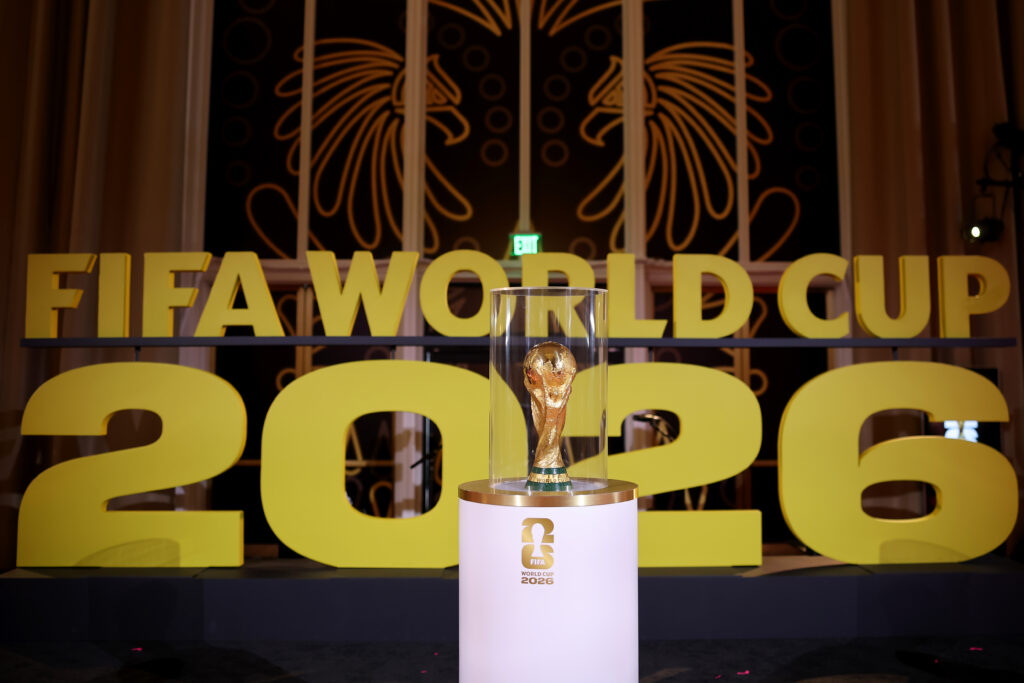
The 2026 Men’s World Cup, which ended with Spain’s victory, was marked by several controversies and raised numerous geopolitical issues. Although it was jointly hosted for the first time by Canada, the United States and Mexico, the Trump administration maintained an almost omnipresent role throughout the tournament. During the competition, Donald Trump sought to turn the event into a showcase for his ability to host the world’s largest international sporting events, reigniting questions about the relationship between football and political power in light of his interactions with FIFA. What geopolitical conclusions can be drawn from this World Cup? How should Donald Trump’s omnipresence during the tournament and the ambitions of US sports diplomacy be understood? What issues does the organisation of the next Women’s World Cup in Brazil raise for the future of women’s football and its expansion worldwide? Insights from Carole Gomez, Graduate Assistant at the Institute of Sport Sciences of the University of Lausanne (ISSUL) and Associate Research Fellow at IRIS.
What assessment can be made of this World Cup?
Presented as the most geopolitical World Cup in history, did it truly live up to that description? It is interesting to note that, at first sight, this Men’s World Cup appeared to generate forms of mobilisation different from those observed in Qatar in 2022. There were few, if any, campaigns calling for boycotts ahead of the competition, and no collective statements by European national teams on human rights or environmental issues, despite their omnipresence throughout this expanded edition. Germany, for example, which had been particularly outspoken in Qatar, remained discreet, with its sporting director, Rudi Völler, asking players not to express their political opinions.
What appears to be a decline in collective mobilisation does not, however, mean that geopolitical issues disappeared. With the notable exceptions of Team Melli, which denounced the extremely difficult conditions in which it competed in this World Cup, and the significant demonstrations in Mexico aimed at drawing media attention to missing persons, these forms of mobilisation were expressed more through individual initiatives. One example was the banner reading “las Malvinas son argentinas” [“The Falkland Islands are Argentine”], displayed by several Argentine players, which reignited diplomatic tensions with the United Kingdom. Following a referral from London, FIFA’s independent disciplinary committee is examining the matter, while Andrew Giuliani, an ally of Donald Trump and head of the FIFA Task Force, argued that it was a matter of freedom of expression, apparently overlooking FIFA’s regulations prohibiting any political demonstration. The Egyptian head coach, Hossam Hassan, also spoke out about the conflict in Gaza. After his team qualified for the round of 16, he appeared on the pitch with a Palestinian flag draped over his shoulders, dedicating the victory “to our Palestinian brothers”. At a press conference, he urged the world not to look away from what was happening in Gaza. Similarly, the Spanish striker Borja Iglesias, whose political engagement had attracted attention during the Rubiales scandal at the previous Women’s World Cup and through his campaigning against racism and homophobia, used his social media platforms to denounce the exorbitant ticket prices and the unrestrained commercialism of this edition.
It is also interesting to note the actions taken by institutions and associations. Still on the subject of ticket prices, protests moved beyond the stadiums and were brought before the courts. After asking FIFA to intervene in December 2025, Football Supporters Europe (FSE) ultimately lodged a complaint with the European Commission against the Zurich-based organisation, denouncing exorbitant prices, opaque and unfair procedures and an abuse of its monopoly position. This procedure, launched in Europe, was echoed across the Atlantic when the Attorneys General of New York and New Jersey opened an investigation a few days before the start of the competition, thereby bringing these protests into the courtrooms.
The strong mobilisation of the NGO FairSquare, which has been particularly active for several years, should also be noted. It launched the “Reboot FIFA” campaign, calling for reform of FIFA’s governance, and filed a complaint with FIFA’s Ethics Committee concerning the conditions under which the FIFA Peace Prize was awarded to Gianni Infantino in December 2025. Interestingly, this request for clarification was supported by the Norwegian Football Federation, led by Lise Klaveness, as well as by 50 Members of the European Parliament in the run-up to the competition.
Finally, this edition also highlights the limits of the power attributed to FIFA. For several decades, the organisation has promoted the idea that football is capable of bringing the world together beyond political divisions. Yet the 2026 World Cup shows that this ambition comes up against the realities of state sovereignty. The visa restrictions imposed on certain members of the Iranian delegation and the inability of Somali referee Omar Artan to enter US territory demonstrated this quite clearly. However powerful it may be, FIFA cannot free itself from the sovereign decisions of host countries, thereby revealing its powerlessness. The decision by the aptly named FIFA World Cup Task Force to authorise the Argentine banner is another particularly farcical example. Furthermore, and unfortunately as with every major sporting competition, both men’s and women’s, racist abuse flooded social media and even found its way onto certain television programmes and into parliaments. Although Kylian Mbappé issued a response, FIFA observed in early July that the proportion of posts considered racist had increased by three percentage points compared with the 2022 World Cup. Beyond slogans and performative actions, it is time for FIFA and sporting bodies more broadly to take meaningful action against the scourge of violence.
Although the 2026 Men’s World Cup was jointly hosted by Canada, the United States and Mexico, Donald Trump was an almost omnipresent figure throughout the competition, despite his physical absence from the matches. How should this omnipresence be interpreted and what does it reveal about the ambitions of US sports diplomacy under Trump II?
As the largest sporting event ever organised in terms of participation, with an unprecedented number of teams involved (48) and a considerable global audience, the competition represented an exceptional opportunity for international visibility. Given Donald Trump’s approach to politics, it was therefore foreseeable that the US President would seek to occupy, or even saturate, the media landscape in order to promote himself and his political programme, satisfy his electoral base and strengthen his image on the international stage. His omnipresence in the preparation of the event was particularly striking in this regard. The 47th President regularly portrayed himself as a leading figure in the competition, including at times by playing the role of disruptor. His statements suggesting that certain cities governed by Democrats could lose their matches through a simple presidential decision, by “calling Gianni”, or his statements discouraging the Iranian team from travelling to US territory, illustrate a desire to assert his control over the event and to emphasise that, despite an organisation officially shared between Canada, the United States and Mexico, the United States intended to secure the lion’s share of this World Cup.
This media presence nevertheless contrasted with his relative discretion during the competition itself. Preoccupied with other international issues, including the war launched with Israel against Iran, the celebrations marking the 250th anniversary of the United States and the G7 summit in Évian, Donald Trump did not attend the matches. His discretion was relative, however, at least until the Balogun affair, when he broke every rule by asking, and succeeding in persuading, FIFA President Gianni Infantino to overturn the suspension of the US striker following a red card. Moreover, his presence at the final was difficult to ignore. Loudly booed alongside Gianni Infantino, Donald Trump, as during the 2025 Club World Cup final, was slow to step out of the winners’ photograph, transforming a sporting moment into yet another scene of political performance.
Beyond Donald Trump himself, this World Cup forms part of a broader strategy of US sports diplomacy based, in particular, on hosting major international events. It should be remembered that, over the coming years, the United States will host the Los Angeles Olympic and Paralympic Games in 2028, the men’s and women’s Rugby World Cups, the Women’s World Cup in 2031 and many other events. These nevertheless raise a central question, which already emerged during this World Cup: who will be granted access to US territory? Restrictive visa policies, to cite only one example, will come into conflict with the universal vocation of these events, particularly the Olympic Games, which will bring together 206 National Olympic Committees and most likely the Refugee Olympic Team once again.
Finally, and more broadly, this first World Cup jointly organised by three states now raises one last question: what legacy will it leave, both for relations between the host countries and for the future governance of sporting mega-events?
In one year’s time, the Women’s World Cup will be held for the first time on the Latin American continent, after the Brazilian bid defeated the European bid submitted by Germany, Belgium and the Netherlands in 2024. What does this choice signify and what opportunities does it offer? Given that, historically, the competitions have largely been held in Western countries, can this World Cup help give women’s football a more universal character?
Following what was, on the whole, a close vote (119 votes to 91), Brazil was chosen to host what will be the 10th edition of the competition. It was competing against a European bid submitted by Germany, Belgium and the Netherlands, which proposed a more geographically compact competition model, placing particular emphasis on sustainable forms of transport.
Brazil’s selection undeniably represents an important decision for several reasons. First, the competition will be held in Latin America for the first time, a region where, although football occupies a central place in national identities, the development of the women’s game continues to be marked by significant structural inequalities. Following Europe, Asia, Oceania and North America, FIFA is therefore continuing to expand its empire. Second, it should be remembered that the choice of Brazil also represents a form of continuity, echoing the Men’s World Cup held in the country in 2014 and allowing the organisers to draw on existing infrastructure, particularly several stadiums built or renovated for that occasion.
This edition will be the last to feature 32 teams, as the format will expand to 48 teams from 2031. Here again, this development reflects a FIFA strategy aimed at giving more nations the opportunity to compete at the highest level, while also reflecting the democratisation of women’s football. On paper, therefore, and in light of the welcome surprises at the recently concluded Men’s World Cup, such as Cape Verde and the Democratic Republic of the Congo, a larger number of participating teams also means more federations involved during the qualification period, greater potential investment and increased visibility, including for territories where the women’s game is still developing. Caution is nevertheless required. Hosting or participating in a competition, even the most important event in the sport, does not in any way guarantee the sustainable development of women’s teams, either at the highest level or at amateur level. As always, far removed from the promises and superlatives in which Infantino specialises, the challenge will be to measure the long-term effects of this World Cup beyond the event itself, on the professionalisation of domestic leagues, the conditions provided to players, the sustainability of investment and relations between national teams and federations. Close attention will also need to be paid to the actions taken by FIFA. After publishing its first global strategy for the development of “women’s football” in 2018, 114 years after its foundation, it should be remembered, FIFA has a decisive role to play in the way it supports, showcases and promotes this competition. It remains to be seen to what extent it will embrace that role.