
Analyses / Middle East / North Africa
10 August 2026
Saudi Arabia, Pakistan, Turkey: What Is the Purpose of This Tripartite Agreement?
-

Associate Research Fellow, IRIS
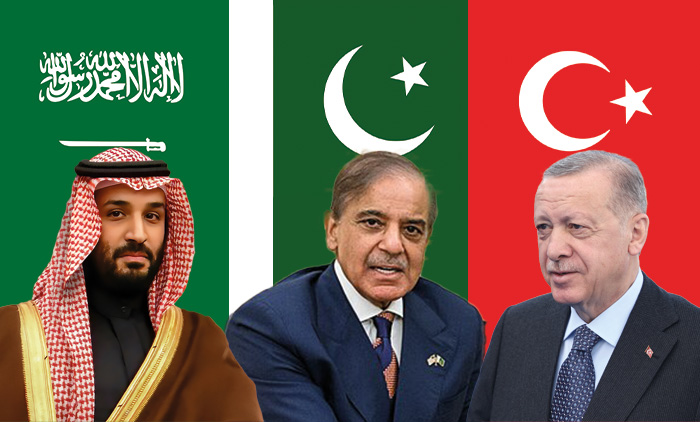
The signing of a defence and mutual assistance agreement in the event of an attack between Saudi Arabia, Turkey and Pakistan on 7 August 2026 comes as no surprise in itself. For some time now, a rapprochement between these three countries had been underway. On 17 September 2025, Saudi Arabia had concluded a defence agreement with Pakistan to strengthen mutual cooperation. As for Turkey and Saudi Arabia, they support Ahmed Al-Charaa’s Syria and are very close in many areas.
The emergence of a ‘Sunni axis’?
Although the signatories to the agreement deny it, this is indeed a ‘Sunni axis’ in response to the equivalent threat from the Shia Iranian side. The choice of venue and timing for the signing is significant. The agreement was signed in Mecca, the holiest site for Sunni Muslims. Furthermore, it comes just days after attacks by pro-Iranian Iraqi militias against Saudi Arabia, the Saudi retaliation and the resurgence of the Houthi threat in the Red Sea.
The limitations of the agreement
This agreement, which provides for mutual assistance in the event of an attack against one of the signatory countries, nevertheless raises a number of questions that remain unanswered for the time being. The first is the actual scope of these commitments. Pakistan is certainly an ally of Saudi Arabia and the only Muslim nuclear power, but at the same time it maintains very close relations with its neighbour Iran. It is therefore unlikely that Pakistan would become involved in a conflict with Iran.
Turkey, for its part, aspires to be a regional power and possesses a powerful army and an innovative, dynamic defence industry, but it is also a member of the North Atlantic Treaty Organisation (NATO). It therefore has commitments that may not be compatible with the requirements of this agreement.
Furthermore, one might raise the question of the future of this alliance. Is it intended to expand to include other countries, such as Egypt – which is a significant regional power – or Qatar, which hosts a large Turkish military contingent? Might Doha wish to join this agreement? What about other countries in the region, such as Kuwait and Bahrain, which are left to face threats they cannot ward off on their own?
The United Arab Emirates has, for the time being, chosen to consolidate its alliance with the United States, whilst Israel may be concerned about the growing influence of its large neighbour, Saudi Arabia.
A media stunt or a genuine turning point?
It is too early to gauge the significance of the 7 August agreement. What is clear is that it reinforces Saudi Arabia’s position vis-à-vis Iran, although it is highly unlikely that things will change on the ground. Tehran, a shrewd tactician, is well aware of the limitations of these commitments, which are, above all, a show of strength that gives Riyadh a symbolic advantage.
Riyadh, for its part, is well aware that it will not be able to do without the US protective umbrella any time soon, even if it is full of holes and struggles to open – all the more so as such an agreement could not have been concluded without Washington’s approval. Concerns may arise on the Israeli side, but these would be offset by a strengthening of their cooperation with the United Arab Emirates.
This article has been translated from French into English using artificial intelligence.