Analyses / Energy and Raw Materials
22 May 2026
Pigs: Surveillance and Containment on the Agenda
-
Chercheur associé à l’IRIS et directeur du Club DEMETER
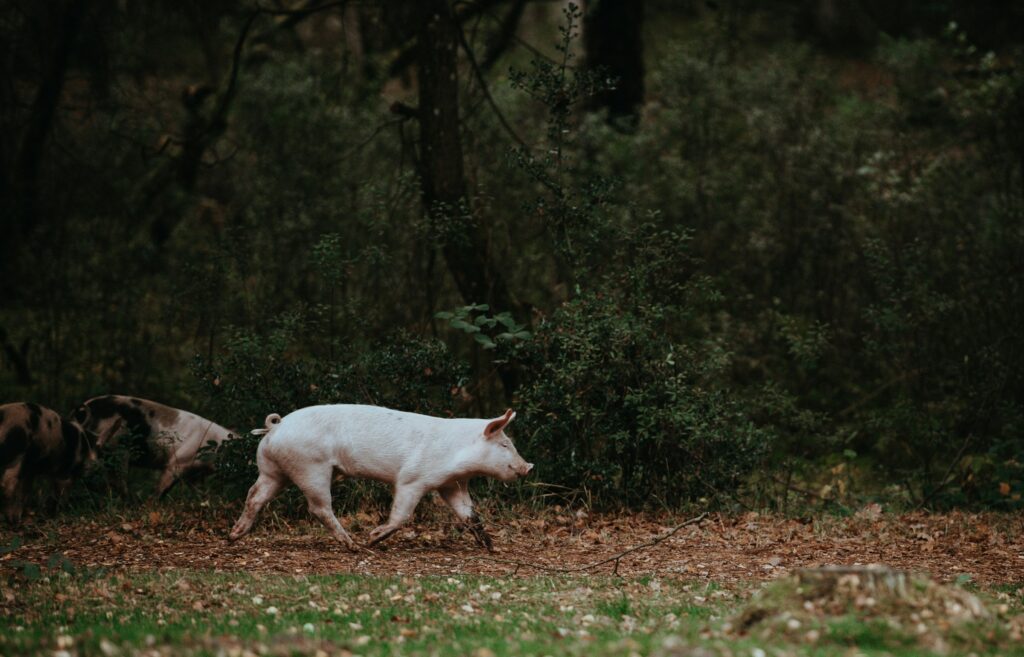
Pigs are under surveillance and in lockdown. It is the year 2030. Without realising it, the world has closed in on itself. In its determination to protect itself, it has ended up turning in on itself. This shift began a decade earlier, against the backdrop of the Covid-19 pandemic. Then, African swine fever paralysed entire regions, serving as a reminder that food security sometimes can be fragile. At the time, few people realised that the concept of One Health extended far beyond the realms of science and the environment. Gradually, another word took hold, the cold and prescriptive term “biosecurity”. It now applies to everything that breathes. The first to be affected? The pig.
A Treasure to be Protected and a Health Threat
In just a few years, pigs have become the most closely monitored animals in the world. It remains a pillar of food security, a widely consumed product because it is affordable and nutritious, especially as the promise of alternative protein sources has proved disappointing, avian flu continues to decimate poultry flocks and cereal harvests are stagnating, caught in a vice between climatic hazards, delays in innovation and still-fledgling results of plant breeding techniques (NGTs). Meanwhile, after three decades of euphoria, Brazil is seeing its soya yields dry up; animal feed is bearing the brunt of this, which is exacerbating global agricultural tensions. By 2030, the world’s population is expected to reach 8.5 billion – a figure never before reached in history – but we are seeing a growing disparity between food demand and supply. The inevitable consequence: countries are seeking to preserve their domestic resources and are curbing export trade. It is a case of keeping the pigs at home, given how valuable they are. This approach is becoming the norm, particularly since the animals contribute to the energy transition through methanised slurry and to the circular economy through their by-products and is gaining importance in the medical field. Feeding, decarbonising, healing: this trilogy transforms the pigs into a strategic asset. So why let it cross borders?
This vast movement is spreading all the more as health fears take hold. The pig is at the centre of attention. It is weighed, scanned and tracked. It is under constant surveillance, its genome is classified as an industrial secret and its rearing is a matter of state. The authorities often reiterate the same message: one can never be too careful with pigs. In a world of intensifying rivalry, biological attacks are feared as much as strategic capture. There is great concern about the biosecurity of this animal, which is closely related to humans and susceptible to viruses, making it a vector for large-scale contagions. As the international climate hardens, fears of covetousness or attacks from abroad are growing. By 2030, pigs are being monitored more closely than ever before. It is necessary to minimise not only the risk to their production, but also the risk of them being captured by others or of attacks capable of destroying herds. In 2028, Russia suffered a biological attack on several pig farms. All the animals involved were lost due to a devastating pathogen,. At the request of the authorities, local stakeholders refrained from commenting on the operation, and the investigation’s findings were never made public. In a tense world, the truth circulates less freely, whilst disinformation thrives. Be that as it may, the affair caused a huge stir and finally convinced many governments to tighten their security measures and cordon off pig production areas. Valuable yet dangerous, pigs are now being kept under lock and key. Governments have reacted as expected: by locking everything down. Farms and abattoirs will now resemble military bases.
Commercial Extinction and the Defenceless Pig
The effects of this widespread mistrust are manifold. Firstly, the pork trade has plummeted. The pig has become a key indicator of food and energy sovereignty. As international relations become more tense, its geopolitical significance is growing. Too bad for those parts of the world that relied on external supplies; they must do without this animal protein and inform their populations that cuts of pork will be scarce. The result is price inflation on the one hand and illegal trafficking on the other. In other words, it is a socio-economic challenge that is escalating in many countries and it is a crisis in the food sector at the very worst possible moment, as health risks mount. The veterinary community’s verdict, where it remains unchallenged, is clear: time bombs of a bacteriological nature are circulating dangerously across the planet. Everyone fears the worst: that avian flu will strike pigs and thus become the primary concern for all living things, humans included. The ocean then appears as a refuge: the privatisation of islets for wealthy survivalists anticipating the worst; storing pigs at sea for states that see this as an unprecedented solution to keep livestock away from land, disease or the appetites of others. After 2030, pigs will either become more sedentary than ever, confined to overprotected facilities, or embarked on a rather limited form of maritime mobility. Animal welfare issues will no longer feature on the agenda. Livestock farming is becoming increasingly vertical, ranging from pig towers resembling bunkered silos to multi-storey factory ships, with little regard for the well-being of these four-legged ‘cruise passengers’. The logic is the same everywhere: to protect the pig, but above all to protect ourselves from it. So we are rearing them less in the open air; we are rearing these pigs higher up, in tighter quarters and within sealed ecosystems.
Alongside these geo-economic crises, health concerns and logistical challenges, the pig is at the heart of digital contradictions. As with anything of value or that poses a threat, pigs are monitored, tracked or confined. Artificial intelligence optimises the data provided by surveillance cameras, technical protocols are becoming increasingly complex, and alert levels are being heightened in order to respond to the slightest change in circumstances. For farmers and workers in the sector, constant access to their crisis management manual is essential. Like soldiers in a chain of command, they must act methodically and with discernment in the event of the unexpected, assessing the consequences of their actions and choices. In the United States, humanoids are replacing farmers and workers in order to reduce the risks of theft, intrusion and contagion. Apart from eating them, there is no longer any human contact with pigs. Whilst digital technology allows for close monitoring of pigs, farms and processing plants in the sector, it introduces two vulnerabilities: cyberattacks and espionage. Therefore, a further technological leap is needed on farms or in buildings dedicated to pig farming, namely state-of-the-art security equipment to counter activists or external interference, and not just viruses and the vagaries of biology. Faced with such costs, some are reluctant to take the radical step of completely disconnecting their facilities from the digital network. In the most authoritarian countries, or those best equipped to protect their pig industry—starting with Asian nations— ‘dead zones’ are being created around breeding and production sites, forming a sort of digital iron dome over the pigs’ heads. The aim is to erase their existence from the map, when viewed by satellite, or from the landscape, when passing near these sites. As with military zones, it is forbidden to approach these areas or take photographs. Some states entrust the management of these exclusion zones to companies specialising in defence and cybersecurity. Pig farming is becoming a budget item for the Ministry of Defense or the Home Office. In this geostrategic and security-driven darkness, the pig is no longer seen, nor can it see.
Is Isolation Really the Way to Protect Others?
Amidst food-related hyper-nationalism, zoonotic risks and bioterrorist threats, opacity is thus becoming the norm. Small-scale farmers are being swept aside in such a crisis-prone environment, where compliance costs are skyrocketing. While the value of pork and all animal by-products is rising, this does not trickle down to producers or throughout the supply chain. The additional margins are used to fund safety equipment. Behind the scenes, a whole host of overlooked aspects are collapsing: a decline in scientific and zootechnical exchanges, a loss of pig genetic diversity, and the erosion of progress made in animal welfare. Each site is barricaded off, but each pig also lives in isolation under these new conditions where the aim is to avoid the slightest interference. Piglets are immediately separated from their mothers, so each individual grows up alone. At the start of this century, some criticised the industrialisation of livestock farming and food production worldwide. After 2030, the focus of concern shifted entirely to the issue of hyper-standardisation in food safety, with, on the one hand, a clear decline in farming conditions (at sea, risks are kept at bay, but practices are also rendered invisible) and, on the other, a growing problem of access to animal protein across many parts of the globe. For several decades, pigs were part of a complex web of interdependencies, then everything ground to a halt in this decade, confining it to a stationary existence for the long term. In this new landscape, nations are rediscovering their culinary differences and people must rethink their habits. The French miss Italian ham, the Chinese miss Spanish pork loin and the Germans miss Polish charcuterie. Everyone must relearn to eat locally. Kitchens are adapting, and consumers are rediscovering the art of compromise. We no longer choose our favourite cut of pork; we learn to enjoy whatever we have, and we do not think of all those who no longer have any. This turning inwards is, as always, a mixture of individual and national selfishness. As a commodified product, the pig reflects society itself : trapped in a controlled environment and under constant surveillance.
But sometimes the threat comes from closer to home, or is quite simply right on our doorstep. In Europe, it lurks at the edge of forests and on country roads, in the form of wild boars that have proliferated following years of restricted hunting. The wild boar, a wild cousin of the pig and an unruly mirror image of the domesticated pig, acts as a vector for zoonotic diseases, including the dreaded swine fever. They roam unchecked, breaking through fences and poking their snouts everywhere in their path. Whilst the world bustles and gets carried away with the pig, European nations are trying to adapt to this new reality, not without compromising certain democratic values and awareness of animal cruelty. Health agencies have urged public policymakers to address this wild boar problem urgently, implementing a combination of measures such as intensified hunts, thermal drones, scent barriers and biological repellents. An unlikely alliance is forming: the wild boar hunter is becoming a biosecurity officer and defender of the pig industry in the name of public health. However, therein lies the paradox: to save the domestic pig, we must eradicate its wild cousin. In order to protect life, we are becoming accustomed to killing as a preventive measure. The wild boar is sliding towards the list of endangered species. And at the same time, outdoor farming is being banned across Europe and no animals are allowed outside. This is causing a rural exodus, which is which is turning rural life upside down. Agri-food health regulations have been introduced to plug any gaps in farms and the production chain. For pig farmers and businesses in the sector, this represents a loss of professional autonomy and an imposed regime of restrictions that now truly lives up to its name. The rules in France and across the European Union, have changed significantly. The global market has also shrunk and then contracted. Caught between biosecurity standards with military overtones and limited food and energy trade, Brittany has become a peninsula.
Let us summarise, by climbing back into the hot-air balloon and questioning the contours of this scenario. In 2030, part of humanity will look at itself in the mirror of the pig. They will see their obsession with security, their fear of mixing and their quest for order. But they will also see their nostalgia for a living world that they no longer understands, which has ended up being neutralised by its relentless desire to protect itself from it or control it at all costs. Through the pig, they will observe the excesses of digital hyper-surveillance, where the slightest sneeze becomes suspect, and territorial confinement, disconnected from other realities, whether troubling or stimulating. Can security be guaranteed without sacrificing transparency? Will bioterrorism encourage opaque production strategies? Which freedoms should we relinquish in the name of zero risk? Must we undermine others’ food supply to ensure our own long-term health and nutritional security? Is geopolitical sovereignty sustainable if we reject any form of interdependence? What hazardous and undesirable combinations might arise between animals, plants and humans if international cooperation breaks down ? Sedentary, defenceless and kept under a bell jar, is this pig of the future a reflection of our times? It is the end of abundance, sharing and conviviality; the age of control, calculation and suspicion. Behind the monitored and confined pig is a humanity that prioritises security over trust, the norm over relationships, and which ultimately suffocates the life it sought to protect.
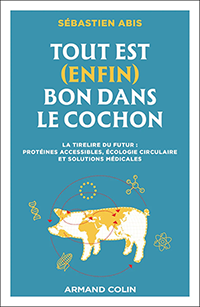
This text is one of the fictional scenarios developed in the book Tout est (enfin) bon dans le cochon. La tirelire du futur : protéine accessible, écologie circulaire et solutions médicales, (Everything is (finally) good in the pig. The piggy bank of the future: accessible protein, circular ecology and medical solutions), which has just been published by Armand Colin.