
Interviews / Africa/s
11 November 2026
Mauritius: Behind the October 2026 Riots, a Water Crisis and a Crisis of the Social Model
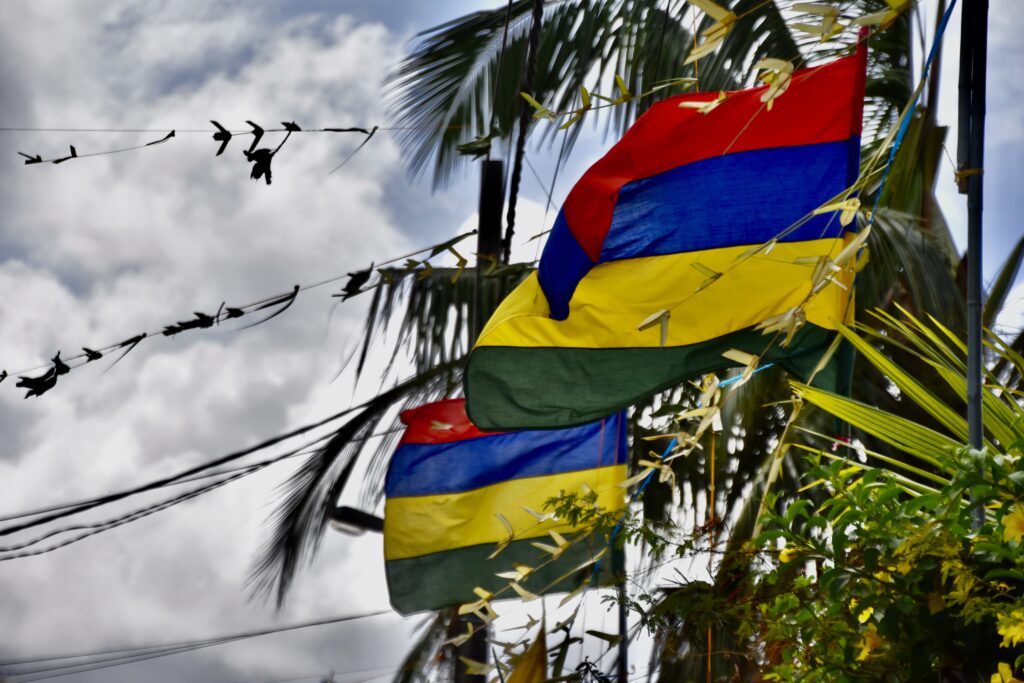
-

Harmony Delhalle
Ph.D. candidate in geography at the University of Nantes (LETG)
In the space of a few weeks, the Indian Ocean region has seen a succession of social crises of rare intensity. A year ago, Madagascar was rocked by a youth uprising—sparked by water and electricity outages—that ousted President Rajoelina from power. In early October, the regional press highlighted common vulnerabilities, from the cost of living in Réunion to budgetary strains in Mayotte. Now it is Mauritius—usually cited as a model of African stability and prosperity—that is experiencing riots on a scale not seen since 1999, according to observers, including Mauritian historian and political scientist Jocelyn Chan Low. Following the imposition of a nighttime curfew across one-third of the island, some 195 arrests, damage to eight police stations and 162 surveillance cameras, and approximately 17,000 metric tons of sugarcane burned, calm has largely returned since October 19, but the root causes of the anger have not been addressed.
A former sugar colony that gained independence in 1968, Mauritius has built its prosperity on successful diversification—from textiles to tourism and international finance—which ranks it among Africa’s highest-income economies, even when accounting for its dependence on imports. This trajectory masks growing vulnerabilities. These include high public debt and a political landscape that has been dominated for decades by the same parties, including that of Prime Minister Navin Ramgoolam, who returned to power in November 2024 with the Alliance for Change, elected on a promise of social justice eagerly awaited by the Mauritian people.
An Update with Harmony Delhalle, a Ph.D. student in geography at the University of Nantes (LETG)
Mauritius is facing a severe water crisis, which has sparked protests and riots in several towns. How can this shortage be explained, and what does it reveal about the structural vulnerabilities of the water supply system and water resource management?
The immediate cause is climatic. Mauritius entered the dry season without having stored enough water during the wet season. The main water reservoirs were about 57% full in early October, compared to 87% a year earlier, and the Mare-aux-Vacoas Dam, which supplies the Plaines-Wilhems region, was only 35.9% full. According to hydrogeologist Farook Mowlabucus, when a cyclone passes over Mauritius, it brings several days of continuous rain, which the dams need to fill up. However, these rain events have become rarer over the past two decades—a change consistent with climate change. As a result, the island is entering the dry season with reservoirs half-empty. These episodes are not isolated incidents and have become increasingly rare over the past two decades—a warning sign consistent with the impacts of climate change on the country and, more broadly, on nations in the Indian Ocean.
However, the drought does not explain everything. Above all, the crisis highlights the state of the water distribution network. According to Prem Saddul, former president of the Central Water Authority (CWA), approximately 60 to 62 percent of the drinking water produced is lost due to leaks, illegal connections, and faulty meters. Less than 40% of the funds allocated since 2010 to replace water mains have been spent, and the major investment (estimated at 37 billion rupees for the renovation) has been postponed year after year. Before increasing production, the infrastructure—starting with the pipes—must be repaired. It is on the solutions that opinions differ. The proposed desalination plant in northern Mauritius, announced in mid-October by Patrick Assirvaden, Minister of Energy and Public Services, is a subject of debate. The CWA has declared this project economically and environmentally unsustainable, as it could harm the lagoons, which are also a key tourist attraction on the island.
Finally, managing this resource raises a question of distribution. As early as August 2026, the CWA had reduced the water supply by two hours a day, and then banned car washing and filling swimming pools. The restrictions primarily affect the densely populated urban areas in the interior of the island, supplied by Mare-aux-Vacoas and La Nicolière—namely the towns of Vacoas-Phoenix, Curepipe, St. Pierre, and Bambous—where water is delivered only every other day, between 3 a.m. and 8 a.m. According to the ACLED observatory, water shortages are a chronic problem in Mauritius, and the protests they have sparked have been on the rise since 2020, though until now they had been concentrated in small towns far from the capital. This time, the protests have spread to urban centers, where a few days of water cuts have left hundreds of thousands of people without water. This shift has therefore changed the scale of the crisis. The contrast between daily life in working-class neighborhoods and an economy reliant on high-end tourism and international finance has fueled anger, even though no public data supports the claim that coastal tourist areas are better served.
To what extent do these protests reflect broader discontent and reveal socioeconomic inequalities?
The protests escalated on October 9, when a police officer seriously wounded a young woman who was returning home from work in Camp-Levieux. The exact circumstances of the shooting remain disputed, but the officer was arrested, brought before a judge, and an investigation was launched. Some members of the public feel that this judicial response was too slow to defuse a growing sense of arbitrary police action.
The International Monetary Fund (IMF) forecasts 2.8% growth in 2026, with public debt projected to exceed 88% of gross domestic product (GDP), and the high cost of living is taking a heavy toll. For a large portion of the Mauritian population, this growth does not translate into purchasing power. Data from the World Bank paint a more nuanced picture. Relative poverty has declined (8.4% in 2023), but it remains concentrated among children (15.7%), large families (28.9%), and on the island of Rodrigues, where it is more than double the national rate. These income inequalities remain relatively high and, according to the World Bank, continue to hinder the inclusiveness of the country’s growth.
This social geography is also closely linked to history. The Creoles, descendants of slaves deported from Madagascar and East Africa who were freed upon the abolition of slavery on February 1, 1935, account for about a quarter of the population and are overrepresented in working-class neighborhoods, while the descendants of Indian workers recruited under contract after the abolition of slavery make up about two-thirds of the population. This stratification, a legacy of the plantation economy, continues to shape access to housing, employment, and public services—and thus the inequalities within Mauritian society.
Added to this is the pension reform, which has intensified this sense of injustice. Announced in June 2025, it gradually raises the age for the universal old-age pension—which has been in place since 1958 and amounts to approximately 15,000 rupees per month, or nearly three-quarters of the minimum wage—from 60 to 65. The government cites the financial burden of the system, which accounts for 26 percent of the national budget—more than the combined budgets for education, health, and housing. Unions and civil society are denouncing the undermining of a pillar of the welfare state, and legal challenges are currently being reviewed by the Supreme Court. Against this backdrop, water cuts lasting several days in densely populated urban areas have sparked the recent uprisings. In this regard, the protests led by Generation Z—young people who are inheriting a high cost of living, precarious jobs, and a retirement age pushed back to 65—express the frustration of residents in densely populated urban areas whose daily lives contrast sharply with the image of a showcase island marketed to luxury tourism and international finance.
What policy responses has the government provided so far? Beyond the current crisis, how should we analyze recent developments in Mauritian policy (both domestic and foreign)?
The government’s initial response was an emergency one, both in terms of water supply and street conditions. Nine wells were drilled, additional water was drawn from rivers, water tankers were deployed, the Development Bank’s subsidy program was extended to all households without water systems (10,000 rupees for two water tanks and a pump), and a desalination plant was announced for the northern part of Mauritius. In terms of public order, a curfew was imposed from October 13 to 19, which was subsequently lifted due to a “favorable development in the situation.”
On the political front, the response remains unbalanced. On the security front, the Police Bill (Amendment)—a bill passed without amendments on October 20 under an emergency certificate—now authorizes the police commissioner to impose a curfew throughout the entire country, rather than in a single locality, and increases fines for possession of an offensive weapon from 25,000 to 100,000 rupees (equivalent to 472.67 euros to 1,890.67 euros). Prime Minister Navin Ramgoolam justified these measures by attributing the violence to drug trafficking networks—a line of inquiry that the authorities have not elaborated on—and pushed through a series of bills against crime and money laundering that same week. The opposition has denounced these powers as insufficiently regulated, lacking time limits or any requirement to disclose the grounds for arrests. On the social front, no equivalent plan to invest in the water infrastructure has been announced, even though this is the consensus among experts.
What course has the country taken since the November 2024 elections? A government elected on a promise of social justice is implementing imposed fiscal consolidation, of which pension reform—which was not part of its campaign platform—is undoubtedly the most controversial measure. On the international front, the course is more uncertain than the diplomatic victory of 2025 had suggested. The agreement of May 22, 2025—in which the United Kingdom unambiguously recognizes Mauritius’s sovereignty over the Chagos Archipelago, including Diego Garcia, over which it retains military use for 99 years—caps off a long-term strategy. The Mauritian government has since faced several challenges imposed by foreign powers. First, hostility from the U.S. administration—which opposed the transfer of the territory—led to the suspension of the transfer process in the spring of 2026. The British press revealed in early June that the White House was considering options to unilaterally retain the Diego Garcia base, even going so far as to suggest a “purchase” of the archipelago. Second, political upheaval in London delayed ratification. In early October, Navin Ramgoolam threatened legal action if the United Kingdom did not comply “within a reasonable time.” Finally, Washington and London’s distrust of Port Louis—whose diplomatic ties with China and Iran are causing unease, according to the British press—in an Indian Ocean that has once again become a arena of rivalry among major powers. The sovereignty won in the courts must therefore still be secured in the face of the major powers, a situation that stands in stark contrast to a social contract that has been weakened domestically.
Ultimately, the October riots do not mark a break with the Mauritian model; rather, they test its limits. Growth that redistributes less, underfunded public infrastructure, a welfare state that has been overhauled without consensus, and a youth that demands that the country’s ostensible prosperity be measured by whether the taps are running.
This article has been translated from French into English using artificial intelligence.