Interviews / Africa/s
23 September 2026
The UN and the Future of Multilateralism: What Stance Should the African Continent Take?
-

Dr Christian Pout
Chair of the CEIDES think tank
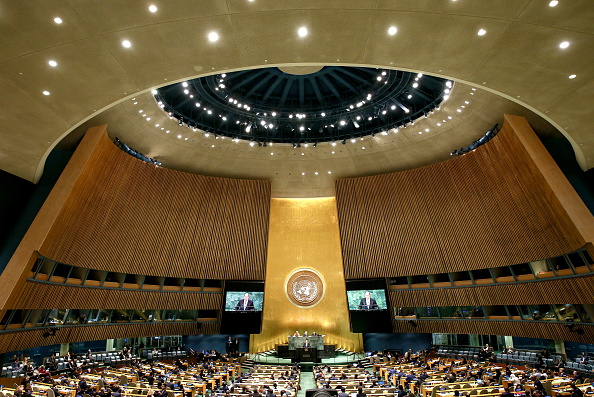
The 81st session of the United Nations General Assembly (UNGA) opened on 22 September 2026. Against a backdrop of international tension, where conflicts continue to multiply and become protracted, and where multilateralism – whose effectiveness in its current form is being called into question, though not necessarily its relevance – the 81st UNGA raises numerous questions about the future of the United Nations (UN) and its actual influence. So, what are the expectations regarding the future of the UN and, more specifically, the next Secretary-General? Furthermore, what are Africa’s priorities for this 81st UNGA? We take a closer look with Dr Christian Pout, president of the CEIDES think tank.
In your view, what characterises the overall context in which the 81st UN General Assembly is to be held?
This 81st session opens against a backdrop that could be summed up in one word: mistrust. The theme chosen by its President, Khalilur Rahman of Bangladesh, speaks volumes: ‘Restoring trust, managing transformation: a United Nations for all’. The general debate, which opened on Tuesday 22 September and continues until the 28th, brings together nearly 130 Heads of State and Government in person. To fully appreciate its significance, it is worth recalling that the General Assembly is the only body in which the 193 Member States sit on an equal footing, according to the ‘one State, one vote’ principle, and that this general debate is the moment when each leader sets out their priorities to the world. One does not choose to speak of restoring trust when it is taken for granted, after all… Even the participation of delegations has become a topic of debate at this session, as the Assembly has had to rule on the terms under which certain delegations may speak. This shows just how much the consensus – which is the strength of this common house – now needs to be rebuilt…
This mistrust takes many forms. It is geopolitical: conflicts are multiplying and becoming protracted, from Ukraine to Sudan, from the Middle East to the east of the Democratic Republic of the Congo (DRC), whilst divisions between the major powers regularly limit the Security Council’s ability to act. Moreover, the nature of these conflicts has changed: conventional wars between states or within states are now compounded by hybrid conflicts, which involve a mix of state and non-state actors, cyber-attacks, disinformation and conventional military operations. Conflict has become multifaceted, and all the more difficult to manage.
It is also a financial issue, and this is perhaps the aspect that has received the least attention. The Organisation is facing a severe liquidity crisis. Its regular budget for 2026, set at around 3.45 billion dollars, was adopted with a cut of more than 7 per cent, involving the elimination of around 2,400 posts, as part of the UN80 reform. The agencies are bearing the brunt of this: the World Health Organisation (WHO) has reduced its 2026–2027 programme budget by 22 per cent, whilst the United Nations Children’s Fund (UNICEF) forecasts, for 2026–2029, resources for its development and humanitarian activities to be 22 per cent lower than the estimates in its previous mid-term budget review. There is, moreover, a fundamental problem that is often underestimated: the growing proportion of voluntary contributions, which are often earmarked, creates a dependence on a few major donors and leaves the organisation vulnerable to having its actions dictated by those who fund it. Behind the figures lies a political question: how can we ask more of an organisation whilst reducing the resources at its disposal?
Finally, this is a transitional session. It is the last to be convened during the term of office of António Guterres, who is due to step down on 31 December. He will, in fact, open this general debate with his final address to the Assembly in his capacity as Secretary-General, presenting his annual report on the organisation’s activities. In addition, there are a number of key issues that will dominate the week: a climate summit convened by the Secretary-General bringing together the major economies and the most vulnerable countries, and the regulation of artificial intelligence (AI), which has become one of his major concerns. We therefore have an organisation that must, at the same time, reform itself, preserve its capacity for action and choose a new leader, in a world that has lost faith in it.
The election of the next Secretary-General is also in the spotlight. What expectations will be placed on António Guterres’ successor?
The race is wide open, and it is a close contest. Seven candidates remain in the running following Michelle Bachelet’s withdrawal. As a reminder, the Secretary-General is appointed by the General Assembly on the recommendation of the Security Council, which first conducts indicative votes in which each of its members ‘supports’, ‘opposes’ or abstains. The influence of the permanent members becomes decisive in the final rounds, and this is often where everything is decided. According to results reported by diplomatic sources following the Security Council’s third indicative vote on 18 September, Rebeca Grynspan of Costa Rica, Secretary-General of the United Nations Conference on Trade and Development (UNCTAD), received nine ‘encouragements’, ahead of Carolyn Rodrigues-Birkett of Guyana, who received eight. It should be noted, however, that this ballot is informal and secret, and that these results do not yet allow us to identify any potential vetoes by the permanent members. The profiles of the leading candidates are also fuelling expectations that the next Secretary-General will come from Latin America or the Caribbean. For the first time since 1945, the possibility of a woman heading the organisation is seriously on the table. That said, nothing is decided yet: diplomatic sources do not rule out the emergence of a compromise candidate, who would be the result of an agreement between the five permanent members.
As for expectations, they will be considerable – and, to some extent, contradictory. The next Secretary-General is expected to lead a more streamlined organisation without causing it to lose its presence on the ground. This is no small task, given that the system comprises dozens of funds, programmes, specialised agencies, departments and regional commissions, with their share of duplication and overlap. He will also need to know how to engage with the major powers, on whom a large part of the funding depends, without appearing to be beholden to them. And the countries of the Global South, led by Africa, will be looking for a voice that gives voice to their concerns: reform of the Security Council, reform of the international financial architecture, and development funding. This is, in essence, the demand that the Head of State of the Republic of Cameroon, Paul Biya, has long been making: for a UN capable of ‘reflecting the common will of all its members, large and small’. In short, what is needed is someone who is at once a reformer, a diplomat and an advocate, who bears in mind the mission that Dag Hammarskjöld, the organisation’s second Secretary-General, set for him: not to lead humanity to paradise, but to spare it from hell. The fact remains, however, that a Secretary-General has only the power that Member States are willing to grant him. His influence is real, but fragile, and the scope of his authority will depend less on his personal qualities than on the political will of the member states.
Is UN multilateralism still relevant in a rapidly changing world?
In my view, we must distinguish between the crisis of multilateralism and the question of its relevance. I have already had the opportunity to make this point in a previous interview on global conflicts, from the perspective of international law in the face of the law of the jungle: our planet has not reverted to being a jungle, that is to say, a space devoid of any norms. It is experiencing a crisis of authority amongst multilateral institutions and a resurgence of power struggles, in a world undergoing reconfiguration where law coexists with power. What we are witnessing is a crisis in the effectiveness of regulatory mechanisms, not their disappearance. UN multilateralism is therefore undeniably undergoing a crisis of effectiveness and legitimacy. Yet its relevance has never been more evident. The major challenges of our time know no borders: climate change, pandemics (the threat of which is brought home to us by the Ebola outbreak declared this year in the DRC), the regulation of artificial intelligence, illicit financial flows, and so on. These unconventional threats – whether financial, climatic, health-related or cyber-related – now compound traditional threats and impact the management of global public goods. No state, however powerful, can tackle them alone.
What is at issue, therefore, is not the idea of multilateralism itself, but rather an architecture inherited from 1945, which no longer reflects the real world. Yet a system that fails to reform will eventually be circumvented, one way or another… We are already seeing this: several major mediation efforts in recent months have been conducted outside the UN framework, by middle powers. Qatar in Doha on the situation in eastern DRC; Pakistan and Qatar in the de-escalation between the United States and Iran; ad hoc coalitions and smaller-scale formats are multiplying.
So, yes, UN multilateralism remains relevant, but on one condition: that it agrees to transform itself rather than merely survive. Power is shifting, the world is changing, and institutions must change with it, without abandoning the principles on which they are founded. The Pact for the Future, adopted in 2024, set out the direction; the UN80 initiative now seeks to translate this requirement into the organisation’s day-to-day operations. We must now move from commitments to action, and that is precisely the meaning behind the theme of this session.
What are Africa’s priorities in the run-up to this 81st UN General Assembly, which is also taking place against the backdrop of a crisis of credibility within the African Union (AU)?
One of the main priorities remains the reform of the Security Council. Africa accounts for a considerable proportion of the items on its agenda, and yet it remains the only major regional group without a permanent seat. With 54 out of 193 Member States, our continent nevertheless represents more than a quarter of the Organisation’s membership. Africa’s position is clear and consistent, based on the Ezulwini Consensus and the Sirte Declaration: two permanent seats with the right of veto — for as long as that right exists — and five non-permanent seats. The Secretary-General himself acknowledged this in Addis Ababa last February: ‘This is 2026, not 1946’…
Next come the issues of funding: the burden of debt, reform of the international financial architecture, and the predictable funding of peace operations led by the African Union. Security Council Resolution 2719 established a framework allowing, on a case-by-case basis, up to 75 per cent of the annual budget for African Union-led peace support operations authorised by the Council to be funded from United Nations statutory contributions. The challenge now is to make this mechanism fully operational. To this must be added climate justice – for a continent that contributes relatively little to global emissions yet suffers severely from their effects – as well as health sovereignty, which recent epidemics have brought back to the forefront. This involves, in particular, strengthening Africa’s capacities for surveillance, research, production and access to vaccines and treatments. Finally, the African Union, a permanent member of the G20 since 2023, must play a significant role in reforming the international financial architecture, so that our economies can access finance on fairer terms.
But you are right to highlight the African Union’s crisis of credibility, which must be addressed frankly. If we accept this assessment, it stems less from a lack of standards than from the persistent gap between the standards adopted and their implementation. The unconstitutional changes of government in Madagascar and Guinea-Bissau in 2025, the difficulties in dealing with the war in Sudan and the persistent issue of the organisation’s self-financing are undermining its political authority. The Commission’s Chair, Mahmoud Ali Youssouf, himself described the implementation of Agenda 2063 in February as a “survival imperative” and reiterated that the mobilisation of domestic resources was no longer optional.
Africa’s credibility in New York will therefore also be built in Addis Ababa. We must speak with one voice, both on Security Council reform and on the key priorities of global governance. With the election of His Excellency Philémon Yang as President of the 79th session of the General Assembly, Cameroon has recently taken a leading role in multilateral diplomacy. This experience serves as a reminder that the African voice carries greater weight when it is well-prepared, consistent and capable of forging compromises. It seems that it is this consistency that we need to consolidate…
This article has been translated from French into English using artificial intelligence.