
Analyses / Europe, European Union, NATO
14 April 2026
What the Hungarian Elections Tell Us About the EU
-

Directeur de recherche à l’IRIS, responsable du Programme Europe, UE, OTAN sur les questions UE/OTAN
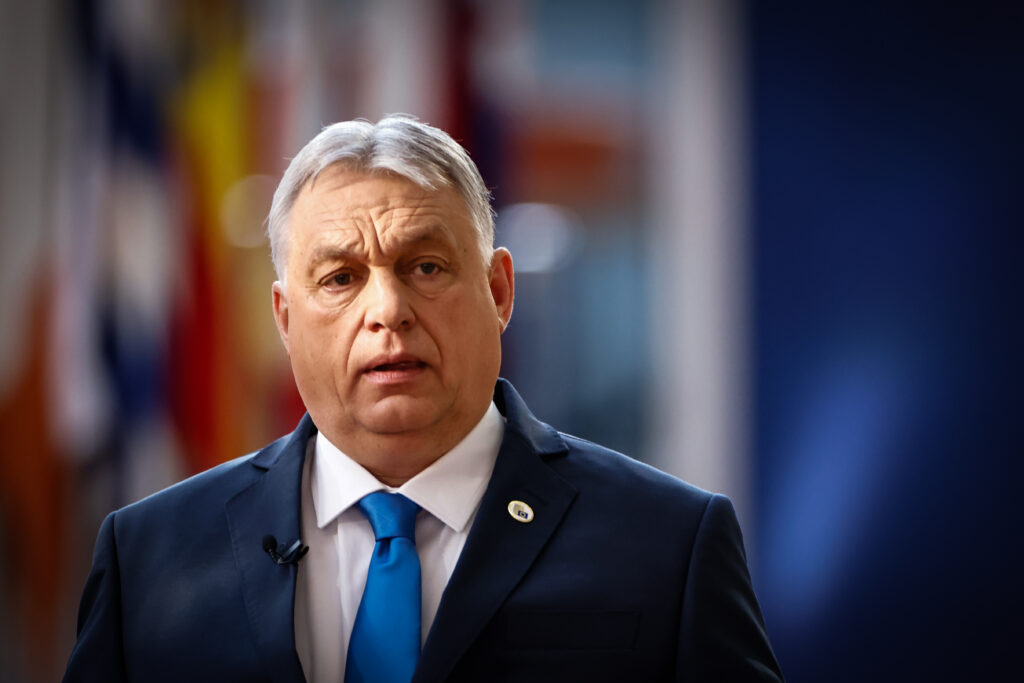
The elections held in Hungary on 12 April 2026, which resulted in Viktor Orbán’s defeat after more than sixteen years in power, generated extensive comment both across Europe and beyond. Such a level of interest may seem surprising. How could an election in a small country of fewer than ten million inhabitants attract so much attention not only from European capitals, but also from Moscow, Washington and, no doubt, Beijing?
The answer lies not in Budapest, but in Brussels. It sheds light on the indirect yet very tangible effects that the functioning of the European Union (EU) exerts far beyond the Old Continent.
In reality, the attention paid to the Hungarian elections was entirely justified: Viktor Orbán’s fall is likely to have significant repercussions on several levels: on the functioning of the EU, on the internal political balances of the Member States, on the United States and its relations with the Europeans, on the war in Ukraine and, more broadly, on the capacity of Russia and China to exert influence in Europe. Nothing less.
Orbán and the European Union
For the European Union, Viktor Orbán represented both a political obstacle and a normative challenge. Since the start of the war in Ukraine, Hungary had regularly opposed European initiatives in support of Kyiv, helping to slow, delay or weaken a number of common decisions. Its closeness to Vladimir Putin’s Russia had made Budapest a source of weakness and inconsistency for the Union. One immediate consequence of Orbán’s defeat could therefore be the unblocking of the €90 billion that the EU plans to lend to Ukraine so that it can continue to survive financially and fight militarily.
Yet the problem posed by Orbán’s Hungary went far beyond the Ukrainian question alone. His regime embodied a direct challenge to the principles of the rule of law on which European integration is founded. By establishing what he himself claimed to be an “illiberal democracy”, Viktor Orbán was contesting not only certain Union policies, but also the fundamental values on which its political identity rests.
Orbán and the United States
Viktor Orbán’s defeat also raises a number of questions regarding the United States and, more particularly, Donald Trump’s influence over nationalist and sovereignist right-wing movements across the world.
The Trump administration had invested considerable political capital in supporting Viktor Orbán. The openly expressed backing of senior American officials, notably Vice-President J. D. Vance, reflected the symbolic importance that Washington attached to this election. Orbán’s defeat can therefore be interpreted in several ways.
First, one may ask whether Donald Trump’s support may ultimately have worked against the Hungarian Prime Minister, turning American backing into a source of rejection among part of the electorate. More broadly, this defeat may mark an initial check to the political momentum carried by Trumpism at the international level since the beginning of 2025. It invites a wider reflection on the evolution of sovereignist right-wing movements in Europe and beyond. Has the advance observed in recent years now reached its high-water mark? Is a reversal beginning to take shape, partly in reaction to the excesses, provocations and polarising effects associated with Donald Trump?
At this stage, it is too early to answer such questions. Nevertheless, several signs suggest that a degree of distancing is beginning to emerge in Europe, including among leaders who were initially close to Washington.
The Italian case is revealing. Giorgia Meloni, despite her closeness to Donald Trump and J. D. Vance, has already begun to put some distance between herself and the American administration. This shift appears to reflect a broader unease within Italian public opinion, including on the right, in response to the international conduct of the United States.
In this context, one question stands out: is Donald Trump becoming an electoral liability in Europe? And might this dynamic also become apparent in the United States, particularly in the midterm elections due to be held in the autumn? Even without an immediate answer, the very fact that such a question is now being asked is politically significant.
Orbán, Russia and China
For Russia, Viktor Orbán’s defeat also comes as bad news. Moscow has, in effect, lost a seat at the European Council. For years, Budapest served as a point of support for a Russian strategy aimed at dividing Europe from within, by slowing down or challenging certain common positions, particularly on Ukraine.
Russia thus finds itself somewhat more isolated within the European political space. While this development is unlikely to alter decisively the course of the war in Ukraine, it nonetheless reduces Moscow’s ability to rely, within the European institutions, on an influential political relay.
China, too, is losing a valuable partner. Under Viktor Orbán, Hungary had become one of the main entry points for Chinese investment in Europe, including in sectors regarded as strategic, and in relation to which the EU is seeking to develop control mechanisms.
The lessons for Europeans
These points do not, however, answer the initial question: what made Viktor Orbán’s small Hungary sufficiently powerful and influential to become a privileged interlocutor for the great powers, thereby placing itself at the centre of the global chessboard?
The Hungarian episode invites a more fundamental reflection on the functioning of the European Union. If Hungary was able to acquire such influence on the international stage, this was not solely due to the strategy pursued by its leader. It was also, and perhaps above all, because the Union’s rules of operation, based on unanimity in foreign policy matters, conferred on Budapest a blocking power entirely out of proportion to its demographic, economic or strategic weight.
That is why the source of the problem lay not only in Budapest, but also in Brussels. In theory, the European Union ought to act as a formidable multiplier of power for all its Member States. In practice, its functioning has ended up producing the opposite effect: it has become a multiplier of power for those seeking to obstruct and paralyse its action. Viktor Orbán, in truth, owes a great deal to the very institution he so often denounced.