
Analyses / Europe, European Union, NATO
20 October 2026
Europe’s Multi-Annual Budget Under Financial Strain and Political Pressure
-

Associate Research Fellow, IRIS
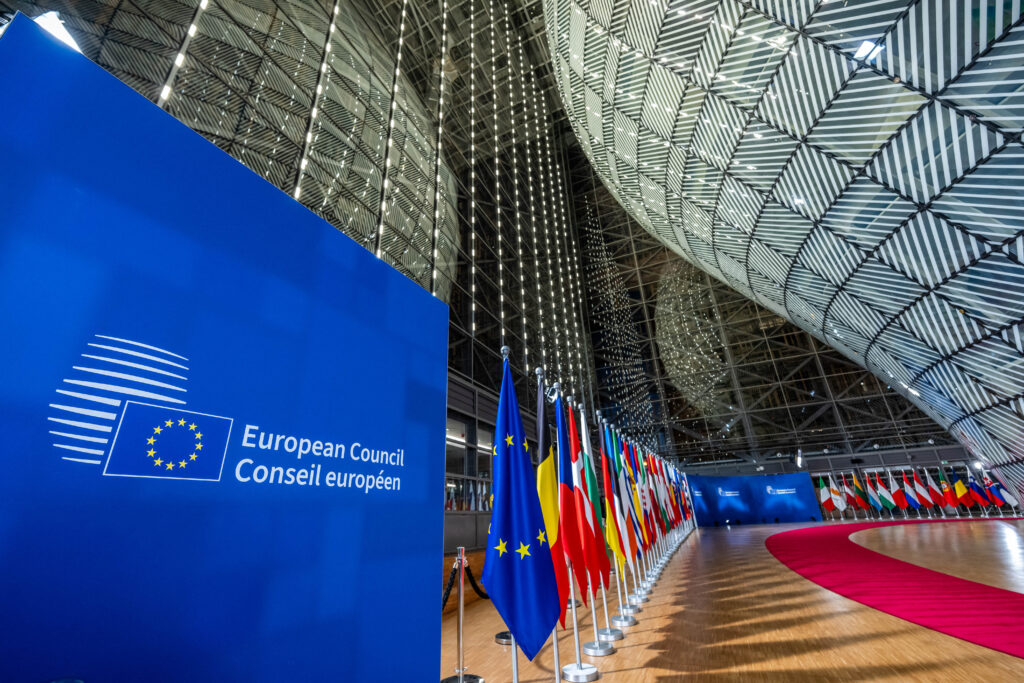
Whilst there were some positive developments at the European Council (EC) meeting in Brussels on 15 and 16 October 2026 – notably the reaffirmation of support for Ukraine, the integration of the single market, the adoption of the 28th Company Law Directive, and the commitment to a coordinated response to the energy crisis – no political agreement could be reached on the Multiannual Financial Framework (MFF) that would enable the European Union (EU) to ensure the continuity of its missions from 2028 to 2034. The matter is not yet settled, however, and the Heads of State or Government have tasked the President of the European Council, Antonio Costa, with continuing his consultations with a view to reaching an agreement, if possible before the end of 2026 (an extraordinary European Council meeting has been convened for late November). The political challenge is, in fact, to adopt a text against a backdrop of significant political uncertainty linked to the elections scheduled in several countries in 2027 (France, Italy, Poland, Greece, etc.), bearing in mind that the adoption of the MFF – which is essential to ensure the EU’s financial continuity as of 1 January 2028 – requires unanimity amongst Member States before being approved by the European Parliament.
An update with Pierre Jaillet, associate researcher at IRIS and adviser to the Jacques Delors Institute.
The compromise solution proposed by the Irish Presidency of the European Council
In July 2025, the European Commission proposed a MFF for 2028–2034 totalling just over 2,000 billion euros, representing (1.26 per cent of the EU’s gross national income (GNI), an increase of more than 60 per cent in current prices compared with the 2021–2027 MFF of 1,214 billion, justified by the growing financial needs relating to security, competitiveness, the climate transition and territorial cohesion[1]. It should be noted, however, that the Recovery and Resilience Facility (RRF) – a central pillar of the NextGenerationEU (NGEU) programme – has been added to the MFF 2021–2027, with an initial allocation of 807 billion euros (financed by a joint bond issue on the markets), bringing the total funding to 2,021 billion.
Anticipating the rejection of the Commission’s initial proposal, the Irish Presidency of the European Council proposed a new MFF reduced to 1,825 billion euros as a new basis for negotiation, incorporating an increase in funding from own resources, in order to ease the pressure on national budgets, which are themselves under severe strain. It should be noted that around two-thirds of the European budget’s resources (excluding the EU Recovery Fund) are based on contributions paid by each Member State in proportion to their gross national income (GNI), with the remainder coming from value added tax (VAT), customs duties and various other own resources (Carbon Border Adjustment Mechanism – CBAM , a tax on non-recycled plastic, proceeds from the sale of greenhouse gas emission allowances, etc.).
On the expenditure side, the Irish Presidency proposes to preserve (if not ‘ring-fence’) the two headings ‘Cohesion, Resilience and Values’ and ‘Natural Resources and the Environment ’ (96 per cent of which is allocated to the Common Agricultural Policy (CAP)), which together account for two-thirds of total expenditure, so that the bulk of the savings are made in external aid (-17 per cent), the European Competitiveness Fund (-10.5 per cent) and the Solidarity Fund (-55 per cent).
The recurring divide between ‘frugal’ and ‘spendthrift’ states
This compromise proposal was rejected by the European Council, and we see the recurring divide between a group of so-called ‘frugal’ states ’ (Germany, the Netherlands, Austria, Sweden, Finland) – which advocate freezing the EU budget and making the funding of new objectives (the green transition, competitiveness, the expansion of industrial capacity, etc.) conditional on a reallocation of existing expenditure – and a second group (France, Italy, Spain, Poland, etc.), known as the ‘big spenders’. The latter see themselves, above all, as more ambitious regarding the EU’s future role, whilst seeking to safeguard existing policies, both for domestic political reasons (e.g. the CAP) and to preserve, through the Structural Funds, the catch-up momentum of those EU regions where per capita income remains below the EU average. This momentum slowed significantly in the wake of the 2010–2012 eurozone crisis, particularly in the southern countries, although the implementation of the Recovery and Resilience Facility (RRF) under the Next Generation EU (NGEU) programme – of which they were the main beneficiaries – has given it fresh impetus from 2021 onwards [2].
One sticking point in the discussions on the MFF relates to the expected growth in own resources. The ‘frugal’ Member States doubt whether it will ensure effective control over national contributions by 2028 (whereas the European Court of Auditors estimates that it would reduce the share of national contributions from 67 per cent to 55 per cent by the same date). Their arguments relate in particular to the uncertain revenue from the carbon market tax (which is expected to raise 10 billion euros per year), which depends on the price of allowances and the volume of auctions – factors which are themselves dependent on industrial conditions – or on the revenue from the tax on multinational companies (expected to yield €7 billion per year), the tax base for which (turnover rather than profitability) remains susceptible to circumvention and distortions of competition.
In short, the Irish Presidency (and the Lithuanian Presidency, which will take over on 1 January 2027) still has a long way to go to bridge the gap between positions that remain very far apart on this thorny issue of the uncertain return on the revenue forecast in the MFF, against clearly identified expenditure, to which will be added, from 2028 onwards, the cost of repaying the NGEU loan, estimated at around 25 billion euros per year.
The figures (and miscalculations) regarding the ‘cost’ of Europe to Member States
Against the backdrop of tense discussions on the European budget (as well as the preparation of national finance bills), a great many figures – often contradictory and sometimes exploited by certain politicians – are circulating regarding Member States’ contributions. A brief clarification is in order. Take the case of France: in 2025, it paid a contribution of 25 billion euros to the European budget, representing less than 1 per cent of its gross domestic product (GDP). However, this is a gross figure from which payments made by the EU to France (a large proportion of which relates to the CAP) must be deducted to arrive at a net contribution of 9.5 billion, or 0.31 per cent of its GDP[3], this figure may seem insignificant when compared with other data (the public debt burden is set to reach nearly 80 billion euros in 2026). It is worth noting that Italy’s net contribution is of a similar proportion, whilst Germany and the Netherlands contribute twice as much.
But that’s not all. We must also take into account the EU payments to Member States under the NGEU’s Recovery and Resilience Facility (RRF). France thus received 34 billion euros between 2021 and 2025 – admittedly much less than Italy and Spain in particular – but enough to result in a net surplus of 1.8 billion euros. In summary, Europe paid more to France in total over this period than it cost France (whereas Germany’s net contribution amounted to nearly 50 billion euros).
Moving away from the narrow-minded (and economically unfounded) logic of ‘fair return’
As part of the run-up to the 2027 presidential elections, Marine Le Pen and Jean-Luc Mélenchon have included in their respective manifestos a reduction of 11 billion euros and 5.6 billion euros in France’s contribution to the budget. This represents a marginal ‘saving’ given the scale of the budget involved and, above all, the political cost of making such a demand of our partners. It should be remembered that a country cannot unilaterally decide to reduce its contributions to the EU budget without risking financial sanctions. Furthermore, a rebate – even a negotiated one – would have to be approved by all Member States, a highly unlikely scenario. The ultimate solution in the event of disagreement would then be to trigger the procedure for withdrawal from the EU, with all the conceivable systemic consequences for the sustainability of Economic and Monetary Union (EMU).
Proposals aimed at reducing national contributions to the EU budget take us back to the demand made by Mrs Thatcher to her partners in 1979 (“I want my money back”), illustrating a narrow conception of ‘fair return’ that runs counter to the very principle of Community solidarity, which presupposes that each country contributes to the financing of EU policies and objectives in accordance with its means. This view is also economically unfounded. The EU budget cannot be a zero-sum game and fulfils, amongst other things, a redistributive function. This is naturally the case with the Cohesion Fund, which helps the less developed economies to catch up, contributes to greater homogeneity within the EU and promotes the smooth functioning of the single market (and EMU). It should also be noted that the funds allocated to certain countries benefit everyone through externalities. Thus, the indirect macroeconomic gains linked to the mobilisation of the FRR – NGEU in favour of the countries of the South and East have been estimated at 40 billion euros for Germany and 18 billion euros for France (in addition to the direct funding received by these two countries)[4].
In conclusion, breaking the deadlock in which discussions on the MFF currently find themselves requires reaching a consensus on the various points raised, against a backdrop of considerable political uncertainty that favours isolationism rather than a sense of community. The challenge, however, is to strengthen the EU’s capacity for collective action at a critical juncture of geo-economic and geopolitical tensions, when it must reconcile Community solidarity and the financing of future investments (including the climate transition) whilst preserving its strategic autonomy in the face of the hegemonic blocs of the United States and China.
[1] For a comprehensive analysis of this proposal: Cinzia Alcidi and Eulalia Rubio, ‘Navigating the European Commission’s MFF Proposal for 2028–2034’, report to the European Parliament, March 2026.
[2]Pierre Jaillet and Eulalia Rubio, ‘Southern Europe’s impressive post-Covid performance: what impact have European recovery funds had on the recovery?’, Décryptage brief, Jacques Delors Institute, May 2026.
[3] European Commission, Financial Report 2025, 2026; FIPECO, ‘The European Budget’, briefing note, 16 October 2026.
[4] European Commission, Report from the Commission to the European Parliament and the Council on the Implementation of the Recovery and Resilience Facility, COM(2025) 637 final, Brussels, 8 October 2025.
This article has been translated from French into English using artificial intelligence.