
Interviews / Middle East / North Africa
9 July 2026
Afghanistan-Pakistan: Security and diplomatic challenges
-

Associate Research Fellow, IRIS
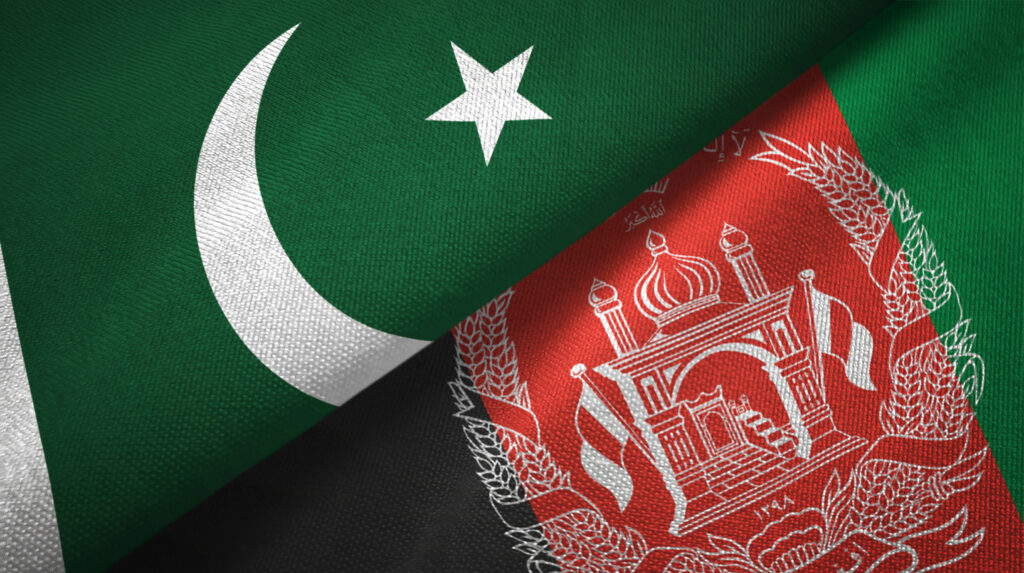
In May 2026, a new decree was promulgated in Afghanistan, authorising the marriage of underage girls. This measure reflects the worsening situation in the country, particularly the erosion of women’s rights, four years after the Taliban returned to power. The security situation has also deteriorated significantly, especially since tensions between Pakistan and Afghanistan escalated into “open war” in February 2026. This conflict, centred on disputes over the Durand Line and the fight against the Tehrik-i-Taliban Pakistan (TTP), continues to pit the two countries against each other and raises fears of repercussions for regional stability. At the same time, Pakistan is seeking to strengthen its diplomatic influence, particularly by becoming involved in negotiations related to the war in the Middle East between Iran, the United States, Israel and the Gulf countries. What have been the consequences of the Taliban’s return for the situation and rights of Afghan women? What are the risks of an escalation in the conflict between Afghanistan and Pakistan? To what extent is Pakistan succeeding in establishing itself as a diplomatic actor in negotiations surrounding the war in the Middle East? Insights from Georges Lefeuvre, Associate Research Fellow at IRIS.
Following the Taliban’s return to power in 2021, what assessment can be made of the situation of women in Afghanistan? To what extent could the decree promulgated in May 2026, authorising the marriage of underage girls who have reached puberty, further worsen the situation of women and girls in Afghanistan?
There are no words to describe the hell that women in Afghanistan have endured since the Taliban returned to power. Before 2021, under a 2009 law, the minimum legal age for girls to marry was 16. Admittedly, this law was not always enforced outside the cities, particularly in the poorest rural areas, where selling a young girl for between 2,000 and 3,000 dollars enabled the rest of the family to survive for at least a year. However, this longstanding practice has increased sharply over the past five years, because the Taliban regime sees nothing wrong with it and because poverty has grown since 2021. According to a study published by Amu TV and reported by Courrier International on 14 February 2024, 118 girls aged between 6 and 10 have been sold since 2021 in Shahrak-e-Sabz, a displaced persons’ camp in Herat Province, while another 116 have reportedly already been “put up for sale”.
Decree No. 18, promulgated on 14 May, concerns the right of husbands and wives to divorce, but it is a sham: indeed, its intention might appear virtuous, since it would allow girls married in early childhood to seek a divorce upon reaching puberty, which amounts to de facto recognition of forced marriages contracted before puberty, since they could only be dissolved through judicial proceedings. However, one provision of the law states that the silence of a girl who has reached puberty amounts to consent to the previously arranged marriage. Experience, corroborated by Article 22 of the new decree, shows that, if the girl is heard by a Taliban court, she will not be granted a divorce without the agreement of her in-laws, even in cases of proven ill-treatment. There is indeed a practice whereby a girl who wishes to leave her husband can be “bought back”, but the price demanded is so high that no family in need can afford it.
We are therefore a long way from the promise made by Sher Abbas Stanekzaï, Deputy Minister of Foreign Affairs, when he was still one of the negotiators of the Doha agreements. At a peace conference held in Moscow in February 2019, he pledged on behalf of the Taliban: “women’s social, economic, political and educational rights will be guaranteed, in accordance with the principles of Islam”. Everything therefore depends on the “principles of Islam”, interpreted in an ultra-rigorous manner by Supreme Leader Akhunzada, unlike some of his ministers, including senior ones. There is only a faint hope that such divisions might weaken the Taliban regime and make it unworkable, provided, of course, that the international community refrains from officially recognising it or simply granting it too many concessions in the name of regional political realism or economic interests (underground resources) and logistical interests (transit projects).
At the same time, Pakistani strikes have once again targeted Afghan territory, including one on 29 June that reportedly killed 25 terrorists according to Pakistan and 38 civilians according to Afghanistan. How can this recent renewal of hostilities between Islamabad and Kabul be explained, following the outbreak of open conflict in February 2026, rooted in the historical dispute between the two countries over the Durand Line? What risks would a worsening of tensions between the two countries pose to regional stability?
This is not a resumption of hostilities, but a continuation in the form of escalation. Nor is this any longer merely a “conflict”, which has in any event persisted for decades over the Durand Line, but an “open war” announced by Pakistan’s Defence Minister, Khawaja Asif, in October 2025[1]. When a state goes to war, it deploys the resources of a state, including attacks by its air force, such as those of 27 February 2026 against Kabul and Kandahar, followed by further strikes on 29 June against three Afghan border provinces, Paktia, Paktika and Kunar. These strikes are regarded as conventional responses to the asymmetric war waged by the Tehrik-i-Taliban Pakistan (TTP), through terrorist attacks against Pakistani forces in the districts — formerly the “tribal areas” — bordering the Durand Line, on the grounds that these are “usurped territories” that “Afghanistan will one day recover by the grace of Almighty Allah”, according to Afghan Deputy Interior Minister Nabi Omari, quoted by Ariana News on 10 October 2025. Other statements of the same kind by Afghan Deputy Foreign Minister Stanekzaï (already mentioned above) or Information Minister Zabiullah Mujahid[2], amply demonstrate that the historical Taliban of the new Afghan Emirate support their Pakistani cousins in the TTP or, at the very least, give them their approval in principle. According to the South Asia Terrorism Portal, terrorist acts committed by the TTP killed 3,890 people in Pakistan in 2025 alone[3]and pose a serious threat to Pakistan’s political and territorial stability.
The long-running conflict over the Durand Line has therefore turned into an open war, and concern is mounting because it is difficult to see how or why it would end. China’s mediation last April achieved nothing. As early as October 2025, following the first bombings by the Pakistani air force, Qatar and then Turkey had failed in their mediation efforts. It must be said, however, that the meetings in Doha and Istanbul had officially been described as “technical”. There will never be a lasting solution to this conflict — as has been known since at least 1947 — for as long as the longstanding historical and anthropological roots of the issue are ignored or concealed by the two states concerned, as well as by the international community.
How do you explain Pakistan’s role in the negotiations between Iran, the United States, Israel and the Gulf countries? Does this strengthen its role in the region?
US-Pakistan relations were appalling during Donald Trump’s first term. His furious tweet of 1 January 2018 will be remembered: “The United States has foolishly given Pakistan 33 billion dollars in aid over the past fifteen years, and it has given us nothing in return, […] taking our leaders for fools. They harbour the terrorists we are hunting in Afghanistan, no more!”… Everything has changed since then: in May 2025, Trump claimed to have ended the armed conflict between India and Pakistan. As a result, Pakistani Prime Minister Shabbaz Sharif proposed that Trump be nominated for the Nobel Peace Prize. Flattered, Trump reduced tariffs on Pakistani products from 29 to 19%, and invited both Prime Minister Sharif and his Chief of Army Staff, Asif Mounir, to the White House. To discuss what? Everything, but above all rare earths, which Pakistan possesses in large quantities, with an estimated value of 6,000 billion dollars. Where? Mainly… in Balochistan! The United States added the separatist Balochistan Liberation Army to its list of terrorist organisations and reactivated its counter-terrorism cooperation with Pakistan, which suited Iran very well, as it too has its hands full with insurgents in Sistan, the Iranian part of Balouchisran. The United States and Pakistan are therefore friends again.
However, Pakistan and Iran enjoy relatively calm relations, despite their differences between Sunni Islam and Shia Islam; they share common interests, including the vital management of water in the transboundary Helmand basin, as well as the well-known Iran-Pakistan-India (IPI) pipeline, which was never completed because of US sanctions against Iran following Donald Trump’s repudiation of the 2015 Vienna agreement on Iran’s nuclear programme. In contrast, Iran has no diplomatic relations — nor direct informal relations — with the United States. Pakistan is therefore well placed to act as an intermediary.
Pakistan has also always enjoyed excellent relations with Saudi Arabia, which frequently grants it loans at very low interest rates when the International Monetary Fund (IMF) backs away or turns up its nose! Saudi support for the historical Taliban (1994-2001… somewhat more complicated thereafter) has almost always been unwavering, and Riyadh, like Islamabad, understood better than Washington the difference between the Taliban (Mullah Omar) and Al-Qaeda (Bin Laden and then Al-Zawahiri)… A national “Pashtun” agenda for the former, an international one for the latter. Finally, Pakistan (a nuclear power) concluded a strategic agreement with Saudi Arabia on 17 September 2025. The content of this agreement has not been published, but several sources indicate that Pakistan had already sent several thousand troops and F-16 fighter aircraft to Saudi bases from the beginning of the war in Iran. In return, as evidence of the two countries’ overlapping interests, Les Échos of 15 April mentioned a 3 billion dollar loan to Pakistan, supplementing a previous deposit of 5 billion dollars whose repayment has been deferred.
By contrast, relations between Iran and Saudi Arabia have always been competitive and complex, not to say distrustful, until their complete rupture between 2016 and 2023, following the execution of a Shia dignitary, Nimr al-Nimr, on 2 January 2016. Admittedly, these relations were restored (under China’s auspices) and have even warmed since 2023. However, all this is too recent to constitute a solid axis, especially as Israel and the United States view it rather unfavourably. Here too, Pakistan had a card to play.
Pakistan also has good relations with Qatar, which played a major role between the Taliban and the United States during the negotiation of the Doha agreement of February 2020. Finally, relations with Oman have always been excellent, and Oman plays a leading role in matters concerning the Strait of Hormuz and its management.
For all these reasons, Pakistan would like an agreement between Iran, the United States and Israel to be named the “Islamabad Agreement”, which would improve its international standing and highlight its indispensable role in regional geopolitics.
[1] See Georges Lefeuvre, “Pakistan-Afghanistan : aux origines d’un basculement dans une guerre ouverte”, IRIS, 12 March 2026: https://www.iris-france.org/pakistan-afghanistan-aux-origines-dun-basculement-dans-une-guerre-ouverte/
[2] See Georges Lefeuvre, “Afghanistan-Pakistan. Pourquoi la Ligne Durand brûle-t-elle ?”, Orient XXI, 23 April 2026:
https://orientxxi.info/Pakistan-Afghanistan-Pourquoi-la-ligne-Durand-brule-t-elle
[3] Tushar Ranjan Mohanty, “Khyber Pakhtunkhwa : Persistent Peril”, South Asia Intelligence Review, Vol. 24, No. 38, 9 March 2026.