
Analyses / Geopolitical Observatory of Religion
15 April 2026
A pontificate in recomposition: Assessing the first year of Leo XIV between diplomatic repositioning, transatlantic tensions and an African recentering
-
Associate Research Fellow at IRIS, Director of the Geopolitical Observatory of Religion
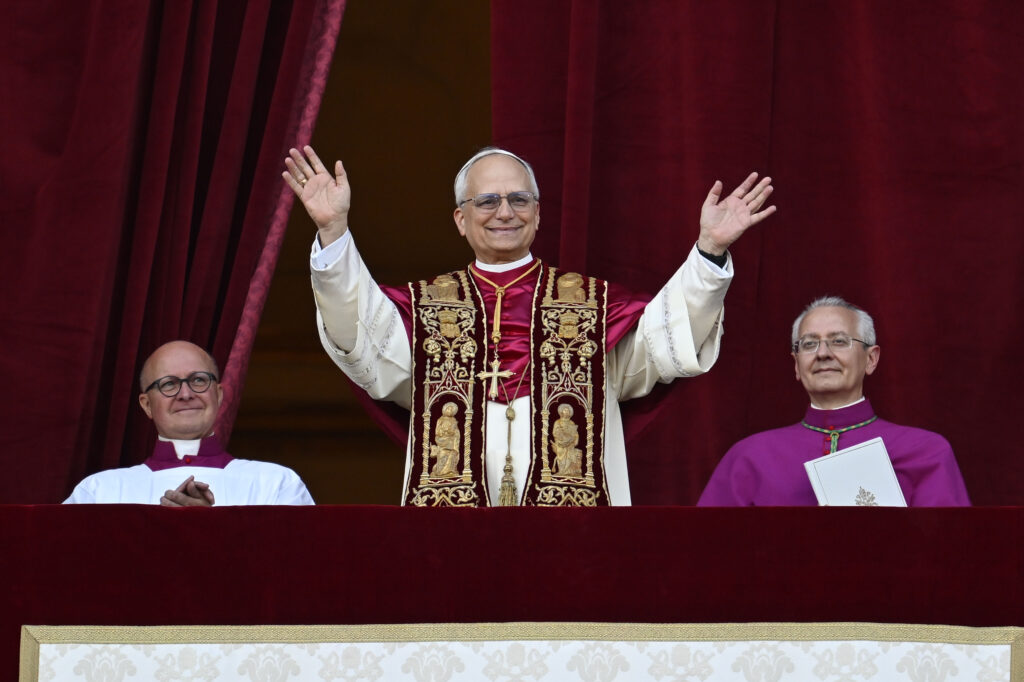
One year after his election, the pontificate of Leo XIV appears to be entering a phase of gradual reconfiguration of pontifical diplomacy and, more broadly, of the role of the Holy See in contemporary international relations. Far from constituting a major doctrinal or institutional rupture, this first year appears rather as a moment of strategic adjustment, characterised by a redefinition of the pope’s modes of intervention on the international stage, by a recomposition of relations with the major powers – foremost among them the United States – and by a deliberate shift of the ecclesial centre of gravity towards the Global South. From this perspective, the African journey of spring 2026 cannot be understood as a simple pastoral visit: it constitutes a moment in which these dynamics crystallise, revealing the tensions and orientations of a pontificate that is still unfolding.
The first notable shift concerns the transformation of the diplomatic register of the Holy See. Leo XIV has not overturned Vatican diplomacy, but he has changed its grammar. This modification, which may appear stylistic, in reality reflects a deeper evolution in the ways pontifical authority is exercised within an international environment marked by the fragmentation of norms and the questioning of multilateralism. Whereas the previous pontificate operated within a logic that might be described as “protest-oriented and activist”, in many respects at odds with diplomatic practice, relying on the public denunciation of injustices and strong media exposure, Leo XIV favours a more institutional approach, centred on mediation, negotiation and the embedding of his positions within a universal legal framework.
This orientation became particularly evident during the first visit to Turkey and Lebanon, during which the pope systematically mobilised the language of international law and fundamental rights to structure his interventions. By resorting to this register, he translates Catholic morality into universalisable norms capable of being heard by state actors often reluctant to accept any confessional form of appeal. This strategy enables the Holy See to preserve its capacity for influence in constrained political contexts, by avoiding direct confrontation while maintaining a form of indirect normative pressure. It also grants the pope a position of arbiter, grounded in a claim to universality that no longer relies exclusively on theological reference, but on the invocation of shared legal principles.
However, this diplomacy of discretion and implicit normativity is not without ambiguities. On the one hand, it may appear less legible, or even less mobilising, within a globalised media space where visibility constitutes an essential resource. On the other hand, it collides with the persistence of a structural imbalance between the moral authority of the Holy See and its lack of coercive means. The assessment of this first year thus underlines the still limited nature of the results achieved in the major international conflicts, confirming that the Vatican remains a “moral power” whose influence largely depends on the receptiveness of state actors. Leo XIV therefore appears engaged in a delicate attempt: transforming a diplomacy of witness into a diplomacy of effective influence, without possessing the classical instruments of power.
In this context, relations with the United States constitute a particularly revealing indicator of contemporary tensions between religion and politics. The emergence of a North American Catholicism shaped by post-liberal currents critical of pluralism and cultural liberalism resonates with certain political orientations promoted by Donald Trump. The latter embodies a worldview grounded in national sovereignty, the centrality of identities and an explicit instrumentalisation of religion within the political sphere. By contrast, Leo XIV is situated within a universalist logic articulated around international law, human dignity and multilateralism.
This divergence does not necessarily translate into explicit confrontations, but rather into a growing gap between normative frameworks and discursive registers. Whereas the American administration favours a transactional and conflict-driven approach to international relations, the Holy See proposes a regulated vision founded on principles and norms. The pontifical positions on migration, religious minorities or the protection of fundamental rights thus stand in implicit tension with certain American policies, without nevertheless giving rise to direct confrontations. This tension is all the more significant as Leo XIV appears as a “post-Western” pope, attentive to the dynamics of the Global South and concerned with relativising the historical centrality of the West in the governance of the Church.
It is precisely within this shift in perspective that the African journey of spring 2026 must be situated. It should be analysed in light of a structural transformation of global Catholicism, marked by the demographic and institutional growth of the Churches of the South. With approximately 281 million faithful and a growing share of priestly vocations, Africa is now emerging as a central pole of global Catholicism. This evolution is not limited to a quantitative dimension; it is accompanied by a qualitative transformation in the forms of ecclesial presence and the modes of articulation between religion and society.
The choice of countries visited, from Algeria to Angola via Cameroon, highlights the diversity of African configurations. It reveals the existence of several models of Catholicism: a minority and discreet Church in predominantly Muslim contexts, a mediating Church in societies marked by conflict, and a majority Church actively participating in the structuring of social cohesion. This plurality underlines the plasticity of Catholicism, but also the challenges posed by maintaining its unity across differentiated cultural and political contexts.
Beyond this diversity, Africa appears as a space for experimentation and redefinition within contemporary Catholicism. African Churches are characterised by strong social visibility, a pronounced community anchoring and a capacity for intervention in the fields of education, healthcare and political mediation. They embody a public Catholicism, often more doctrinally assertive than in secularised Western societies. This situation encourages partial convergences with certain contemporary critiques of cultural liberalism, while remaining deeply rooted in local issues related to development, governance and conflict management.
The pontifical journey also highlights the existence of transnational intellectual circulations, particularly between Africa and North America. Certain African figures, such as Cardinal Robert Sarah, participate in networks within which critiques of relativism and reflections on the common good are developed. However, these circulations should not be interpreted as a simple diffusion of ideological models. They are subject to processes of reappropriation and hybridisation, giving rise to original configurations in which local traditions, the social doctrine of the Church and external influences combine.
From this perspective, Africa cannot be reduced to a simple demographic reservoir or a field of experimentation. It increasingly appears as a fully-fledged actor in the recomposition of global Catholicism, capable of influencing the doctrinal and pastoral orientations of the Church. Leo XIV’s journey forms part of this recognition, while also raising the question of the institution’s internal balances. How can the unity of a Church that is becoming increasingly diverse in its practices, priorities and cultural anchoring be maintained? This question, already present during previous pontificates, acquires particular urgency within the current context of post-synodality.
Ultimately, the assessment of Leo XIV’s first year highlights a pontificate under construction, marked by a desire for the strategic repositioning of the Holy See within a world undergoing recomposition. The transformation of pontifical diplomacy, the tensions with the United States and the African recentering do not constitute independent dynamics, but rather different facets of the same process. The pope is not merely seeking to adapt the Church to the evolutions of the international system; he is also attempting to redefine the conditions of its unity and influence.
The African journey thus appears as a pivotal moment, both an assessment and a projection. It closes a first phase of adjustment and opens a pontificate destined to unfold within an environment marked by uncertainty and the pluralisation of norms. Leo XIV does not present himself as an actor of rupture, but as an operator of recomposition, seeking to preserve a capacity for arbitration within an international system in which traditional reference points are undergoing transformation. The challenge for the years ahead will be to determine whether this strategy will enable the Holy See to retain significant influence, or whether it will remain confined to a symbolic function within an increasingly fragmented world order.