Infographies / Europe, European Union, NATO
16 June 2025
Towards a Massive Increase in European Military Spending?
-

Head of Data, Mapping and Infographics
-

Deputy for Communication
-

Deputy Director of IRIS
-

IRIS Defence Research Team
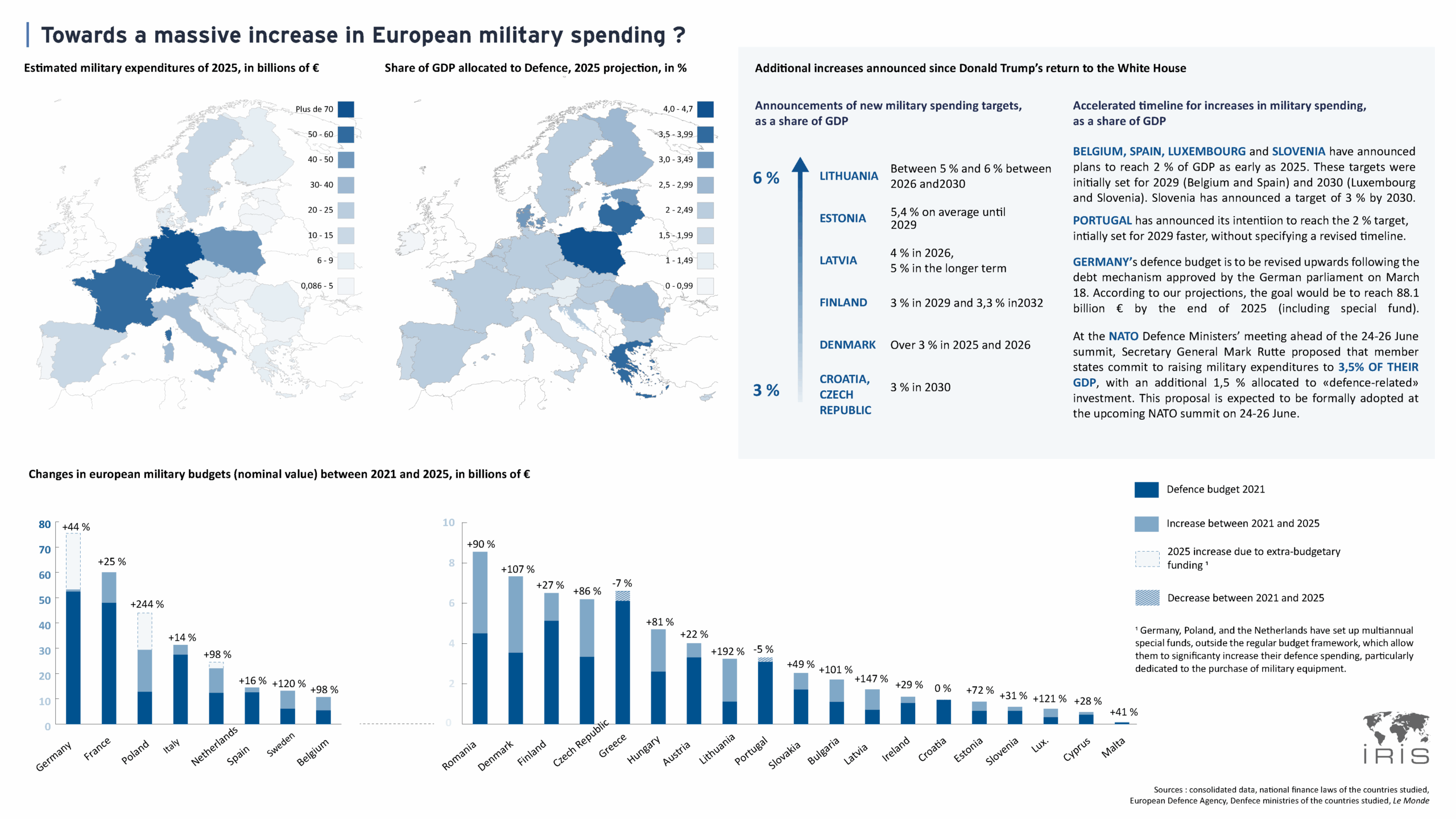
Since Russia started the war in Ukraine in 2022, European Union member states have been increasing their defence spending to address the Russian threat. But the 27 EU countries are also dealing with budget constraints and high debt levels because of the Covid-19 pandemic and rising raw material prices. The issue of defence expenditure is therefore fuelling budgetary debates in many countries, as well as in Brussels. What’s more, since the re-election of Donald Trump in 2024, the American administration, particularly Vice President J. D. Vance at the Munich Conference, has suggested to Europeans that they will have to compensate for a withdrawal of US investment in European affairs. Nevertheless, European countries remain divided over the strategy to adopt towards Washington. Issues related to defence investment, industrial cooperation and the ramp-up of industrial production remain topics of debate. On January 7th 2025, during a press conference, Donald Trump urged NATO members to increase their defence spending to 5% of their GDP. Many responded by announcing increases in military expenditure and an acceleration of their budgetary timelines. From June 24th to June 26th, Donald Trump will attend his first NATO summit since his re-election. The budgetary issue will be central, as the organisation’s Secretary General, Mark Rutte, has proposed committing member states to raise their military spending to 3.5% of GDP, along with an additional 1.5% of their budgets dedicated to investment.