
Interviews / Africa/s
6 July 2026
Sudan: humanitarian emergency and risk of fragmentation
-

Associate Research Fellow, IRIS
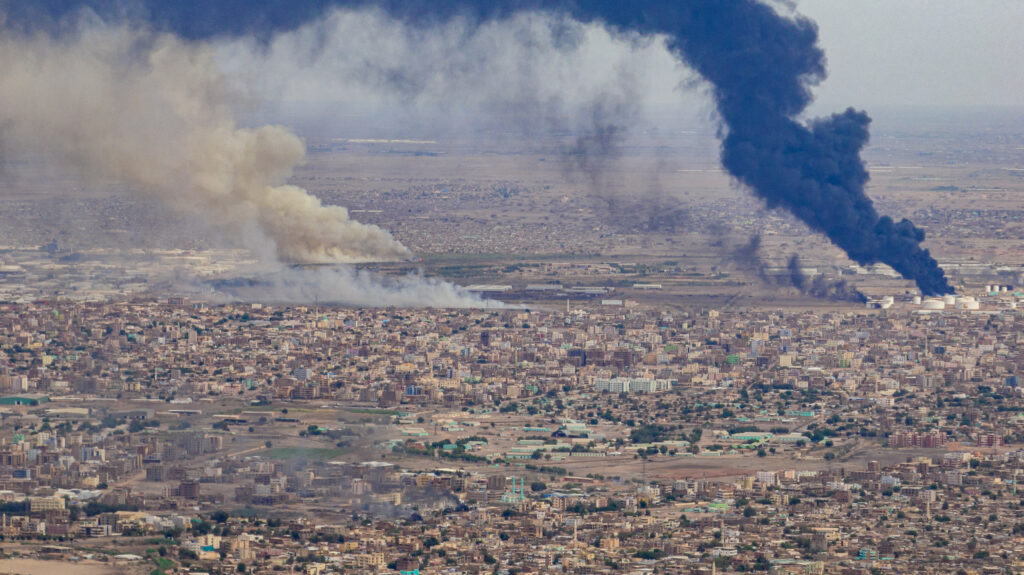
The civil war in Sudan, which broke out in April 2023 between the Sudanese Armed Forces (SAF), the regular army led by Abdel Fattah al-Burhan, and the Rapid Support Forces (RSF), a paramilitary organisation commanded by General Mohammed Hamdan Dagalo, known as “Hemedti”, has been characterised by extreme violence against civilian populations. This has been compounded by growing food insecurity and several episodes of famine, making the conflict the world’s most severe humanitarian crisis. As the conflict has entered a new phase of violence since the beginning of 2026, the risks of Sudan’s fragmentation are increasing. What caused the outbreak of war in Sudan and why does 2026 mark a turning point in the conflict? Why is the war in Sudan now considered the world’s most severe humanitarian crisis and what are its consequences for neighbouring countries? What role can external powers play in the search for a political solution? Insights from Jean-Marc Gravellini, Associate Research Fellow at IRIS and a specialist in security and development issues in the Sahel region.
What are the origins of the war in Sudan? Why does the beginning of 2026 mark a turning point in the conflict?
The Sudanese civil war, which broke out in April 2023, is the result of an intertwining of historical, military and political factors. It pits the regular army (SAF) against the Rapid Support Forces (RSF), which emerged from the Janjaweed militias in Darfur. Following the 2019 revolution and the 2021 coup, the two forces jointly governed the country, but their rivalry intensified when the 2022 political framework provided for the integration of the RSF into the army. Disagreements over the timetable for this integration crystallised a struggle for control of the state, its resources and its economic networks. On 15 April 2023, tensions erupted in Khartoum, triggering an all-out war that rapidly spread across the entire country.
The beginning of 2026 marks a major turning point in the conflict. First, because drones have become the central weapon used by both sides, causing a dramatic increase in civilian casualties and making besieged cities even more vulnerable. Second, because the geography of the conflict is settling into two blocs: the SAF control the east of the country around Port Sudan, while the RSF dominate Darfur, South Kordofan and part of North Kordofan. This de facto partition is turning the war into a protracted territorial confrontation. Finally, the internationalisation of the conflict is intensifying: US sanctions against arms networks, allegations of foreign support for the RSF, total humanitarian collapse. In 2026, Sudan has become the world’s worst humanitarian crisis according to the UN, with more than thirty million people in need of assistance and entire areas cut off from humanitarian access.
To what extent does this conflict constitute one of the world’s most severe humanitarian crises? How is the refugee crisis affecting neighbouring countries and regional stability?
The Sudanese crisis is having major regional repercussions. More than two and a half million refugees have fled to neighbouring countries since the conflict began in 2023 (UNHCR), particularly Chad, South Sudan, Ethiopia and Egypt. Chad, already fragile, is hosting more than one million refugees in overcrowded camps, creating ethnic tensions and risks of cross-border spillover. South Sudan, itself in crisis, is under enormous pressure on its resources. Ethiopia, still marked by the Tigray war, is seeing its border regions destabilised. Egypt must manage a massive influx in a difficult economic context. This refugee crisis is turning the Sudanese war into a regional threat, with the risk of the conflict spreading, increased flows of weapons and mercenaries, and the weakening of neighbouring states.
Why has the city of El-Obeid become a strategic issue in the current conflict? Is there a risk of the fragmentation of Sudanese territory, particularly in the regions of Darfur and Kordofan? What role can regional and international powers play in pursuing peace in the country?
The city of El-Obeid has acquired decisive strategic importance. Located in the heart of North Kordofan, it is the main logistics hub connecting the east of the country (Port Sudan, Khartoum) with the west (Darfur). For the SAF, El-Obeid is essential for maintaining territorial continuity and transporting fuel, food, ammunition and humanitarian aid. For the RSF, which have besieged the city since 2025, capturing it would allow them to link their positions in Darfur with those in South Kordofan, completely isolate the SAF in the east and control the routes leading to Khartoum and Wad Madani. This is why NGOs and the UN are warning of the risk of imminent atrocities: the fall of El-Obeid could seal a territorial victory for the RSF and permanently alter the balance of the conflict.
This dynamic is fuelling a genuine risk of the fragmentation of Sudanese territory. The country is already de facto divided between two rival administrations. Darfur, entirely controlled by the RSF, operates as a quasi-autonomous entity with its own economic networks and tribal alliances. North Kordofan has become the pivotal area: if the RSF seize it, the SAF would be confined to the east, creating a lasting partition between a western bloc dominated by the RSF and an eastern bloc held by the SAF. Some analysts even refer to a three-bloc scenario: an RSF territory in the west, an SAF territory in the east, and contested central areas around Khartoum, the White Nile and the Blue Nile. This would be the largest territorial reconfiguration since the secession of South Sudan in 2011.
With a view to achieving peace, regional and international powers have a decisive role to play. The United Arab Emirates, accused of supporting the RSF, could influence efforts to halt the flow of weapons. Egypt, an ally of the SAF, can exert influence over the decisions of President Burhan, leader of the loyalist forces. The United States has already sanctioned supply networks and can increase diplomatic pressure. The European Union can fund a massive humanitarian response. The UN could impose an embargo on drones, which have become the main weapon in the conflict. China, a major economic actor, can act through debt and infrastructure. But no lasting peace will be possible without three conditions: cutting off arms flows, guaranteeing humanitarian access to besieged cities, and forcing both sides to accept an inclusive political transition. Without this, Sudan risks lasting fragmentation and a prolonged regional crisis.