
Interviews / Defence, Strategy, Armament
4 March 2026
Speech by the President on Nuclear Deterrence: An Evolution Rather Than a Revolution
-

Scientific Adviser at IRIS, Head of the Defence, Strategy and Armaments Programme and ARES Group
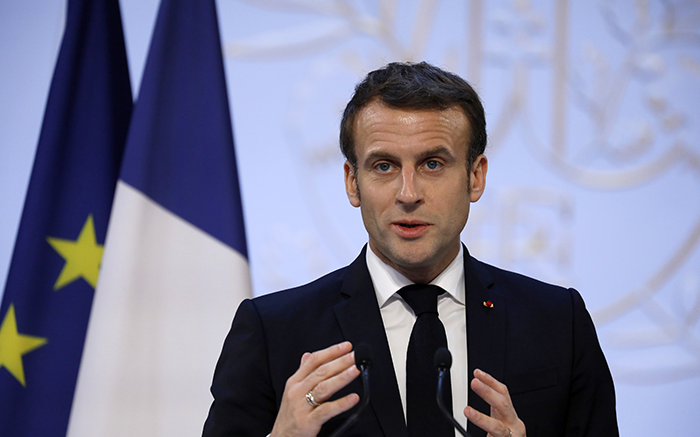
In his speech delivered on 2 February 2026, the President of the French Republic, Emmanuel Macron, announced an evolution in France’s nuclear deterrence doctrine, while referring to the establishment of “advanced deterrence”. What is meant by “advanced deterrence”? Why should this speech be interpreted as a logical evolution of French doctrine rather than a revolution? Does it also signal greater French sovereignty over nuclear weapons? An analysis with Jean-Pierre Maulny, Deputy Director of IRIS.
Does the advanced deterrence outlined by Emmanuel Macron mean that France has lost sovereignty over the use of nuclear weapons?
Prior to the President’s speech, some commentators and political figures expressed concern about the risk that France might extend a nuclear security guarantee to its European partners by sharing decision-making on the use of such weapons. This did not occur, and the real surprise lies in the fact that such a risk was even raised. Such a development was inconceivable for two reasons:
- First, the principle of sole authority over the decision to use nuclear weapons was reaffirmed in the National Strategic Review published in July 2025. It is difficult to see why the President would have reversed a principle he had endorsed only nine months earlier.
- Second, the principle of sole authority stems from the very nature of nuclear weapons, which, owing to their exceptional destructive power, are fundamentally different from any conventional weapon. The ultimate decision to use such a weapon cannot be shared, and all leaders of nuclear-armed states adhere to the same reasoning. It is therefore an immutable principle. There is no risk that it will ever be abandoned, and this holds true for all nuclear powers.
Advanced deterrence is not the same as extended deterrence. It does not represent a revolution, but rather a gradual evolution that began as early as the 1990s. France’s responsibilities, and its interests, in defence do not stop at its national borders. Emmanuel Macron reiterated this in his speech, echoing François Mitterrand, who had already expressed this idea vividly in his 1994 address on deterrence. Responding in 1987 to a question from Margaret Thatcher about the use of French nuclear weapons, he stated that “if the Russians were in Bonn, the war would already be lost”, adding that French nuclear deterrence should come into play at the outset of a conflict with the USSR, not when it was too late[1]. It is also worth recalling that as early as the Ottawa Declaration of North Atlantic Treaty Organization (NATO) in 1974, member states, including France, emphasised that the nuclear forces of the United Kingdom and France were “capable of playing a deterrent role of their own, contributing to the overall strengthening of the Alliance’s deterrence”.
So what changed on 2 March 2026?
First, the strategic environment is far more threatening than it was 30 years ago, with Russia openly posing a threat to Europe. At the same time, the United States is calling on Europeans to do more for their own defence, an understandable position, but there are growing doubts as to whether it remains willing to mobilise to defend Europe in the event of an attack. The “Trump effect”, marked by at best an ambiguous relationship with Vladimir Putin, is undeniable.
There is therefore a demand from European partners for France to take on a greater role in Europe’s defence, while France itself seeks to make European defence a reality and to have Paris’s role in this area clearly recognised. There was thus a shared interest in acting to more clearly acknowledge the role of French nuclear deterrence in Europe’s defence—without calling into question France’s sovereignty over its deterrent.
What is advanced deterrence?
The term “advanced deterrence” must first be understood in contrast to the United States’ extended deterrence within NATO. It also serves to avoid any ambiguity regarding the automatic use of France’s deterrent should one of its European partners be attacked.
Advanced deterrence has two main components.
The first consists of exercises involving nuclear deterrence, combined with the conventional forces of participating countries. These exercises enable those countries, in a sense, to learn the “grammar” of nuclear deterrence. Based on scenarios, they facilitate a process of familiarisation and thus a better understanding of deterrence, particularly how it interacts with conventional forces. This also fosters enhanced defence cooperation among participating states, including “joint work on threats and intelligence, as well as dedicated communication capabilities”. The mechanism closely resembles the European Intervention Initiative (EII) launched in 2018, which aimed to build a shared strategic culture, though in this case applied to nuclear deterrence rather than external operations. The United Kingdom, although not a member of the European Union, is included in advanced deterrence, just as it was in the European Intervention Initiative.
The second component is the possibility of deploying nuclear capabilities to countries participating in advanced deterrence. However, it is specified that this would involve “the deployment, in specific circumstances, of elements of strategic forces on allied territory”, with “strategic air forces able to disperse across the depth of the European continent”. As in all discussions of deterrence, the wording has been carefully chosen. It likely implies that such deployments would not be permanent, unlike US nuclear weapons stationed in Europe under NATO arrangements, but would occur only in the event of a crisis or a threat suggesting a major and imminent Russian military action. This approach complements deterrence within NATO, alongside US nuclear capabilities.
Conventional aspects and relations with the United States: other key points of the President’s speech
Advanced deterrence also entails initiatives relating to conventional forces: one of the more innovative aspects of the French proposal.
One of the risks facing Europeans is the potential “undermining from below” of deterrence due to insufficient conventional capabilities. This is precisely what the United States has been calling for, as formalised by US Under Secretary of Defense for Policy Elbridge Colby at the NATO ministerial meeting on 9 February 2026. Emmanuel Macron identified three priority conventional areas linked to deterrence that require particular attention: early warning, enhanced air defence, and missile and counter-drone protection, as well as deep-strike capabilities. It is worth noting that the second area, enhanced air defence, corresponds to capabilities that Germany had already decided to develop under the European Sky Shield Initiative (ESSI), launched in October 2022. At the time, France criticised the German initiative for three reasons:
- France had not been involved in its development;
- The military equipment proposed was largely American and Israeli;
- France believed the initiative should be embedded in a broader doctrinal framework, rather than limited to equipment acquisition, and should include nuclear deterrence.
In this respect, the advanced deterrence project appears, at least in part, to address the concerns France raised in 2022 by placing the German initiative within a broader framework. However, further developments in the coming weeks will be needed to determine whether France and Germany now share a common, or at least compatible, approach on this issue.
The final key point concerns relations with the United States and how advanced deterrence aligns with NATO’s extended deterrence. Emmanuel Macron stressed that French nuclear deterrence remains independent from NATO, that the initiative complements existing NATO arrangements, and that the process has been conducted “in full transparency with the United States”. The Macron–Merz statement published the same day goes further, referring to “coordination with the United States”. Nonetheless, some questions remain. At the NATO ministerial meeting on 9 February 2026, Elbridge Colby emphasised that Europeans would be on the front line with their conventional forces, while reaffirming that the United States would continue to provide extended nuclear deterrence. In the event of a major crisis, a key question will arise: how will France’s advanced deterrence, potentially involving the deployment of Rafale aircraft equipped with nuclear weapons to participating European countries, be coordinated with US extended deterrence within NATO, notably the B61 bombs deployed in Italy, Germany, the Netherlands, Belgium, and Turkey? Coordination between the two will be essential. Otherwise, either the NATO component based on US capabilities would have to step back, implying the absence of a US nuclear guarantee, or the French component would have to do so, making the deployment of French nuclear weapons in those countries impossible. A third possibility is that both France and the United States deliberately maintain ambiguity in order to complicate Russia’s strategic calculations in the face of these complementary deterrents. As it stands, many uncertainties remain to be resolved.
[1] Speech by François Mitterrand, President of the Republic, on French defence policy and nuclear deterrence, delivered in Paris on 5 May 1994.