
Notes / ARES Group - The Armament Industry European Research Group
13 October 2026
The EU and the Internal Defence Market: What Are the National Perspectives?
-

Félix Arteaga
Senior Fellow, Elcano Royal Institute
-

Samuel B. H. Faure
Senior Research Fellow, Institute for Strategic Research (IRSEM)
-

Calle Håkansson
Head of the Programme for European and Global Politics, Swedish Institute of International Affairs (UI), and Researcher, Swedish Defence Research Agency (FOI)
-
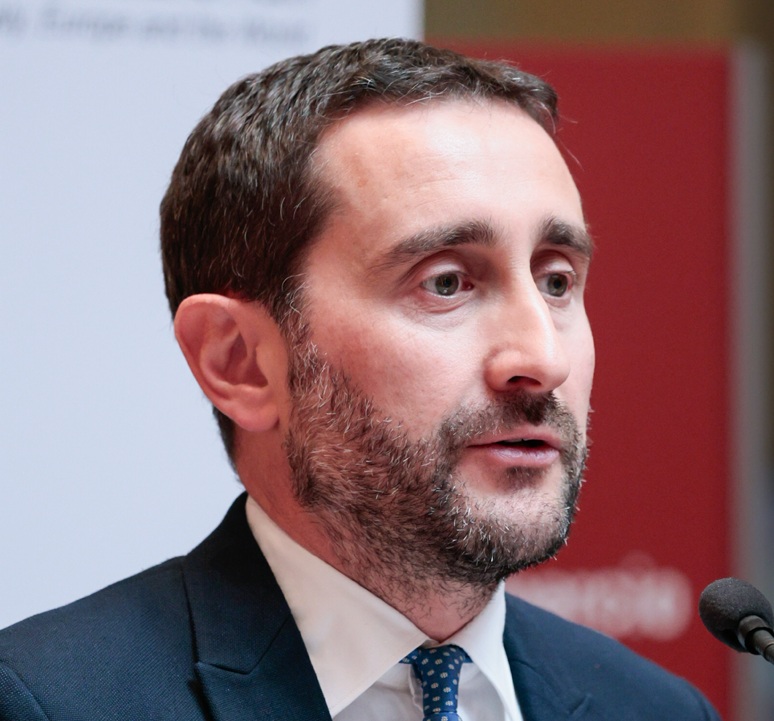
Alessandro Marrone
Head of «Defence Security and Space» Program, Istituto Affari Internazionali (IAI)
-

Łukasz Maślanka
Senior Fellow, Security and Defence Department, Centre for Eastern Studies (OSW)
-

Christine Nissen
Chief analyst, Think Tank Europa
-

Andrea Rotter
Head of Division Foreign and Security Policy, Hanns Seidel Foundation
-

Senior Research Fellow at IRIS, Head of the Europe, EU, NATO Programme on EU/NATO issues
-

Prof. Margarita Šešelgytė
Director of the Institute of International Relations and Political Science, Vilnius University
-

Auke P. Venema
Senior Research Fellow, Clingendael
Since the European Commission announced its intention to revive the project of an internal market for defence, Member States have been on alert. The issue is particularly sensitive. Using the EU budget to strengthen the European Defence Technological and Industrial Base (EDTIB) is one thing, regulating defence markets — and public procurement in particular — is quite another. Some countries are supportive, others remain sceptical, while others are still weighing up what position to take.
The idea of an internal market for defence does, after all, raise major issues. This is no longer simply a matter of supporting industry: it touches on the very exercise of national sovereignty, as governments decide which weapons and military equipment their security will ultimately depend on.
These questions have therefore been the subject of intense debate within the EU institutions for several months. In Brussels, even the terminology remains contested: a Defence Single Market? An Internal Market for Defence? A Defence Equipment Market?
But what is the view from European capitals? How are these issues perceived at national level? And what positions do the main Member States intend to defend in Brussels? To answer these questions, the ARES Group asked nine of its researchers, based in nine EU capitals, to examine the debate from their respective national perspectives. The picture that emerges is a nuanced one. National positions certainly diverge, but they are far from set in stone, and several areas of convergence are beginning to emerge. More importantly, some of these disagreements appear to stem from misunderstandings that could be clarified, potentially opening the way to compromise.