
Interviews / Middle East / North Africa
20 February 2026
Iran–United States nuclear negotiations: real progress but still uncertain prospects
-
Research Fellow, IRIS
While Iran has been shaken by protests of unprecedented scale since the Islamic Revolution, negotiations on the nuclear issue have resumed between Washington and Tehran. Despite a slightly more relaxed diplomatic climate and the Iranian perception of a US position deemed “more realistic”, major obstacles remain, with both sides maintaining particularly rigid stances for the time being. However, in a context where economic sanctions, military power balances and Iran’s internal vulnerabilities intersect, the outlook remains deeply uncertain and some positions may evolve. An overview with Thierry Coville, Research Fellow at IRIS and specialist on Iran.
Where do the Iranian nuclear negotiations stand, and what are the power dynamics between the main actors?
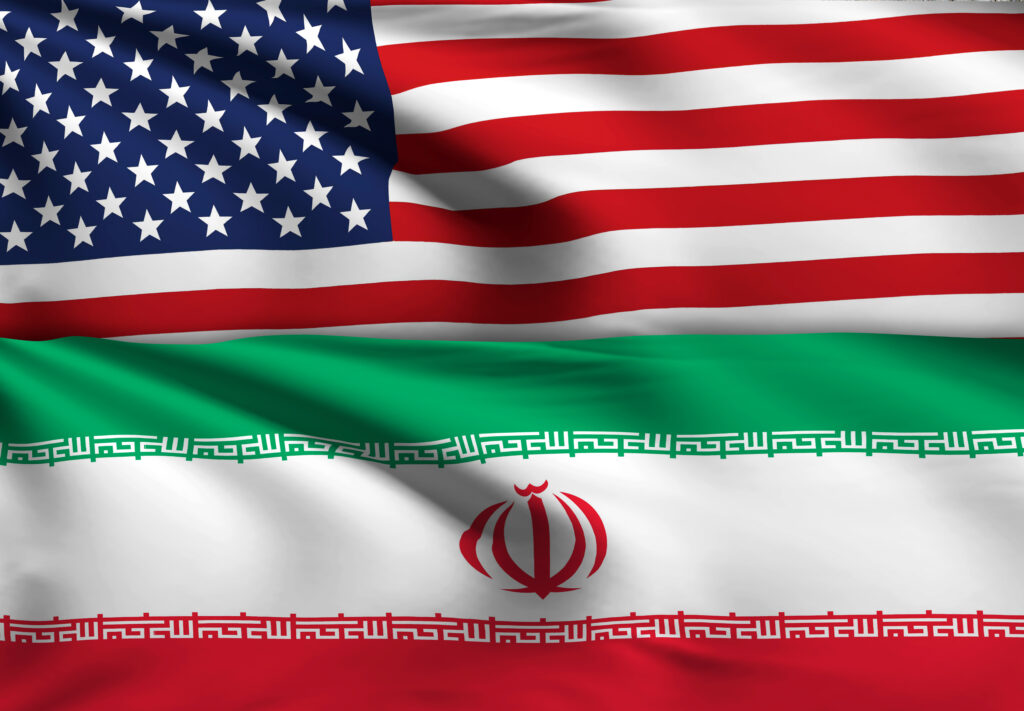
Two rounds of negotiations have recently taken place, one in Muscat, the capital of Oman, the other in Geneva, between the Iranian Minister of Foreign Affairs, and Steve Witkoff and Jared Kushner for the US side, with the Omani Minister of Foreign Affairs acting as intermediary. The first point to note is that some progress has been made: after the Geneva meeting, both parties expressed positive views about the discussions. The Iranian Foreign Minister even stated that the US position was more realistic. It appears that both sides have agreed on the principles that should guide the negotiations. However, we remain very far from seeing them conclude successfully. The main issue lies in the breadth of topics that would need to be addressed. Tehran is willing to discuss its nuclear programme, particularly the more than 400 kilograms of uranium enriched to 60%, but it refuses to address its ballistic programme and its policy of support to regional allies. Washington, meanwhile, insists that all these issues be included.
The balance of power clearly tilts in favour of the United States. Donald Trump is using his usual method to pressure Iran: on the one hand he highlights the “carrot” of negotiations, presenting himself as ready to negotiate rather than go to war; on the other, he flexes his muscles by deploying aircraft carriers in the Persian Gulf and asserting he is prepared to strike if negotiations stall.
Furthermore, even on the nuclear question, divergences remain: the United States demands a complete halt to enrichment, whereas Iran appears ready to consider a suspension, but only if its right to enrichment is recognised. The idea of a regional consortium also remains on the table. As for the more than 400 kilograms of uranium enriched to 60%, the solution proposed by Iran would be to dilute it. Some have also discussed the possibility of transferring this uranium – perhaps to Russia – but opinions diverge. In any case, Iran is prepared to make progress on the nuclear issue on condition that sanctions are lifted, as these weigh very heavily on its economy. The Iranians have understood how Donald Trump operates: they are prepared to open their market further to US companies if sanctions are removed.
Have Iran’s domestic mobilisations weakened the regime or its position in the negotiations?
It is difficult to give a definitive answer. Iran’s position in the negotiations has barely changed. It is almost identical to the stance held prior to the Israeli attack. I therefore do not believe that the protests or their repression have altered Iran’s diplomatic posture.
However, the internal crisis has had a significant impact inside the country: the number of deaths and the scale of repression, unprecedented since the 1979 revolution, have created a trauma affecting the whole of society. From what is reported from inside Iran, it seems even the regime is aware of the seriousness of what occurred. It is difficult to assess precisely how this affects the negotiations. Nevertheless, this crisis may push the Iranian authorities to show slightly more flexibility, particularly on the nuclear issue in exchange for sanctions relief, as economic hardships – largely caused by these sanctions – lie at the heart of popular discontent. If a nuclear agreement with Donald Trump made it possible to lift sanctions, this could improve the economic situation and ease internal tensions, a calculation that the Iranian authorities may well bear in mind.
What scenarios can be envisaged in the short and medium term?
It is extremely difficult to predict what may happen next. Everything will depend on how negotiations between Tehran and Washington evolve, and there remain many uncertainties on this point. Despite Donald Trump’s contradictory statements, sometimes hinting at regime change, he is simultaneously negotiating with that very same regime. For now, the United States appears to favour negotiations. The key question is whether it will agree to focus solely on the nuclear issue, or whether it will reject any compromise should Iran refuse to discuss its ballistic programme and regional policy. From the Iranian perspective, it seems highly unlikely that Tehran will make any concession on its ballistic programme, especially after the war with Israel, during which its missiles constituted its only defensive capability, given the absence of a functioning air force and the destruction of its anti-aircraft systems.
Another open question is how different a future nuclear agreement would need to be from that of 2015 in order for Donald Trump to present it as “far better than the one secured by Obama in 2015”.
Regarding the possibility of a war, which many are discussing, caution is essential. Reza Pahlavi, the son of the Shah, openly calls for US intervention, imagining it could topple the regime and pave the way for a democratic transition. Yet the situation remains highly uncertain. Wars almost never lead to the regime change hoped for, as seen in Syria, Iraq or Libya, and one must recall the enormous human toll they entail. Moreover, although the Iranian regime is weakened, it remains solid. The security forces show no sign of disobedience; on the contrary, the political system, with few exceptions, remains broadly united around the leadership and continues to advance the official narrative portraying protesters as backed by foreign powers. There is also no genuine organised opposition inside the country. The only structured opposition groups are in exile or located on the margins (Iraqi Kurds or Baloch militants operating from Pakistan). These factors make scenarios of regime change triggered by military intervention highly uncertain.
This is why any analysis linking US intervention, regime collapse and democratisation in Iran rests on enormous uncertainties and underestimates the human costs.
Another hypothesis increasingly mentioned is that of a more limited US military intervention aimed at forcing Iran’s hand in the ongoing negotiations. The risk in this scenario is that Iran would respond, leading to a broader conflict.