
Analyses / Political and Geostrategic Observatory of the United States
10 December 2025
A Perfect Little Metaphor
-
Associate Research Fellow, IRIS
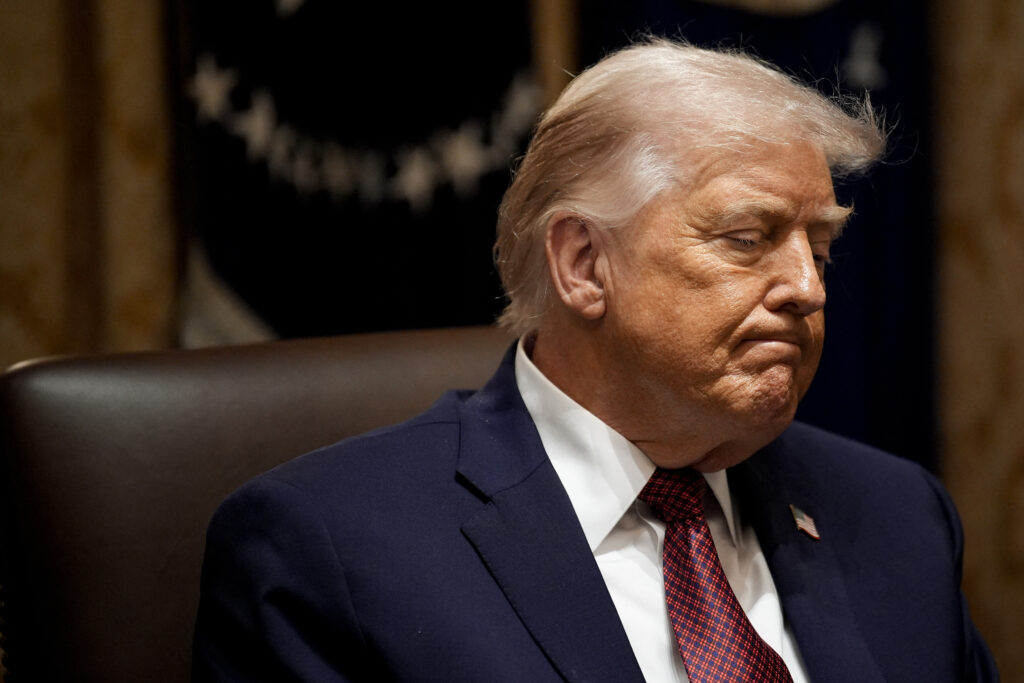
On 4 December, at the magnificent headquarters of the United States Institute of Peace, just steps away from the famous Washington Mall, Donald Trump sponsored the “historic” signing of a final peace agreement between the Democratic Republic of the Congo and the Republic of Rwanda. The presidents of both countries were present to sign the document, and several other African heads of state, the Chairperson of the African Union, and mediators from the Gulf states had travelled to attend the ceremony. This agreement, along with others signed that day in the US capital, represented, according to the US State Department, a deep commitment to “end decades of conflict, foster economic cooperation, and lay the foundations for lasting peace”. A victory for American foreign policy.
Perhaps. Yet in many ways, this event at the now-dissolved United States Institute of Peace was the perfect metaphor for everything hollow, self-interested and hypocritical in Washington’s foreign policy in the age of Donald Trump.
To begin with, one can legitimately question the motivations of the Trump administration in bringing this agreement to fruition. While there were undoubtedly members of the US delegation sincerely committed to ending decades of conflict in the region, Trump himself appears, at least publicly, primarily eager to add the Congo to his case file for the Nobel Peace Prize. In his social media post devoted to the signing of a preliminary agreement last June, Trump barely mentioned the agreement itself — or the hundreds of thousands of Africans deeply affected by the hostilities — preferring instead to launch into a bitter complaint about the fact that he would never be recognised for all his efforts in favour of peace. “No, I will never get a Nobel Peace Prize no matter what I do,” he lamented. A more plausible explanation for American interest in the region lies in the wealth of its mineral resources, and particularly rare minerals. At the very moment the peace agreement was being signed, the government of the DRC also set up a joint commission with the United States aimed at increasing American access to Congolese gold and mineral resources. Given Trump’s fixation on rare earths and China’s deep involvement in their exploitation in eastern Congo, his newfound interest in this long-standing African conflict becomes more understandable.
Moreover, there is a certain irony in seeing the Trump administration present itself as a champion of African mediation while the president downplays relations with Africa and attacks the African diaspora in the United States. Just two days before the signing ceremony, Trump launched a venomous public attack on Somalis living in the United States, describing them as “trash”. The Trump administration has totally or partially banned entry to the United States for ten African countries; US relations with African leaders such as those of South Africa or Nigeria have deteriorated following Trump’s verbal attacks; and the administration allowed the flagship US trade initiative with the continent, the African Growth and Opportunity Act, to lapse. Africa receives only three meagre paragraphs on the very last page of Trump’s new 30-page National Security Strategy.
As so often, the Trump administration began singing the president’s praises before any of the hard work had actually been done. Secretary of State Marco Rubio certainly did not hold back at the signing of the preliminary agreement in June. “President Trump is a president of peace. He truly wants peace. He prioritises it above all else,” Rubio enthused. Despite this emphasis on harmony, peace has yet to blossom in eastern Congo. The day after the signing, violent fighting once again broke out between rebel groups and government forces. The AFC/M23 rebel group, backed by Rwanda, continues to hold crucial territories in North and South Kivu, and civilians continue to die in the clashes.
Then there is the choice of venue for the ceremony. The US Institute of Peace (USIP) is — or rather was — a small think tank created by Congress in the 1980s to support conflict resolution. It produced highly respected analyses on peace and security issues around the world, organised discussions among experts, and conducted small peace-building initiatives in sensitive areas across the globe, including in Africa. In February, Trump signed an executive order abolishing the agency, although it remains unclear that he had the authority to do so, and Elon Musk’s “Department of Government Efficiency” took possession of the building in March, dismissing almost all of the Institute’s staff. Just before the signing ceremony, the building was renamed, of course, the “Donald Trump Institute for Peace”. All internet searches for USIP programmes and initiatives now lead to the press release on the ceremony.
And there it is. In the end, we have a Trump-sponsored peace agreement that has not yet delivered peace, a major African peace initiative led by an administration that takes little interest in the continent beyond its mineral wealth, and a ceremony held in an institution now branded Trump that no longer pursues peace — or anything else. What a perfect little metaphor for American foreign policy today.
Find Jeff Hawkins’ editorials regularly in Carnets d’un vétéran du State Department. A former US diplomat, he is an associate researcher at IRIS.