
Analyses
2 January 2026
Where Will the United Arab Emirates’ Destabilising Actions Stop?
-

Associate Research Fellow, IRIS
The ambitions to expand Abu Dhabi’s influence are seriously irritating neighbouring countries, including Saudi Arabia. After Sudan—where the United Arab Emirates provided support to the Rapid Support Forces (RSF), accused of the worst atrocities in El-Fasher—Abu Dhabi has come into conflict with Saudi Arabia in southern Yemen by backing the secessionist militias of the Southern Transitional Council (STC). The sources of irritation do not end there: the UAE’s role as an intermediary in facilitating rapprochement between Somaliland and Israel, which has become the first state in the world to recognise this entity, has triggered strong opposition from Saudi Arabia, as well as from Turkey and Egypt.
This raises the question of the limits of the expansion of Emirati ambitions, which appear insatiable.
Yet everything had begun under the most favourable auspices between Riyadh and Abu Dhabi. Upon his appointment as Crown Prince, Mohammed bin Salman had taken his Emirati neighbour as a mentor. The idyll continued with the joint intervention in Yemen in 2015, within a coalition aimed at fighting the Houthis, who had seized Sanaa and driven out President Hadi. This relationship gradually deteriorated with the rise of Mohammed bin Salman and the assertion of his ambition for regional leadership.
With the benefit of hindsight, it appears that Riyadh’s and Abu Dhabi’s agendas differed from the outset in their objectives. Nevertheless, on 3 September 2025, Mohamed bin Zayed, President of the United Arab Emirates, was received in Riyadh with unusual pomp. This façade of cordiality was not sufficient to bring the two countries’ agendas closer together.
Saudi intervention primarily aimed to secure its borders and shield itself from Iranian influence, Tehran being allied with the Houthi rebels. Abu Dhabi, while also concerned about Iranian policy, sought instead to extend its influence in southern Yemen, in Aden and on the Socotra archipelago. The United Arab Emirates supported the Southern Transitional Council by providing military backing to militias stemming from this political entity, whose ambition is to secede from the north of the country. The most recent episode was the bombing by the Saudi-led coalition’s air force of the port of Al-Mukalla, where two vessels carrying weapons and military vehicles from Al-Fujairah, one of the emirates of the federation, had unloaded their cargo.
In a statement, Saudi Arabia declared that “the actions of the Emirates in Yemen represent an extreme danger and that the security of the Kingdom is a red line not to be crossed”. Saudi intervention is motivated by the threat posed by STC-aligned militias to its southern flank in Hadramawt and the province of Mahra. This also concerns Oman, whose Dhofar province borders Mahra.
At the request of Yemen’s President, Al-Alimi, the Emirates were ordered to withdraw their military presence from Yemen within 24 hours. Abu Dhabi, while denying having supplied weapons and any intention to undermine regional security, complied with this demand.
An appetite sharpened by economic gains
The UAE’s ambitions in southern Yemen are not new. As early as 2018, and for a period of two weeks, the Emiratis attempted to establish a military presence on the island of Socotra, with the ambition of turning it into a new Dubai by capitalising on the exceptional preservation of endemic species and using it as a logistical, tourist and military foothold. The failure of this military expedition did not, however, mark the end of Emirati influence on the island. Under the guise of humanitarian aid, Abu Dhabi secured the support of the tribal leaders of the archipelago and now exercises de facto dominance there.
The Horn of Africa and Sudan: economic ambitions
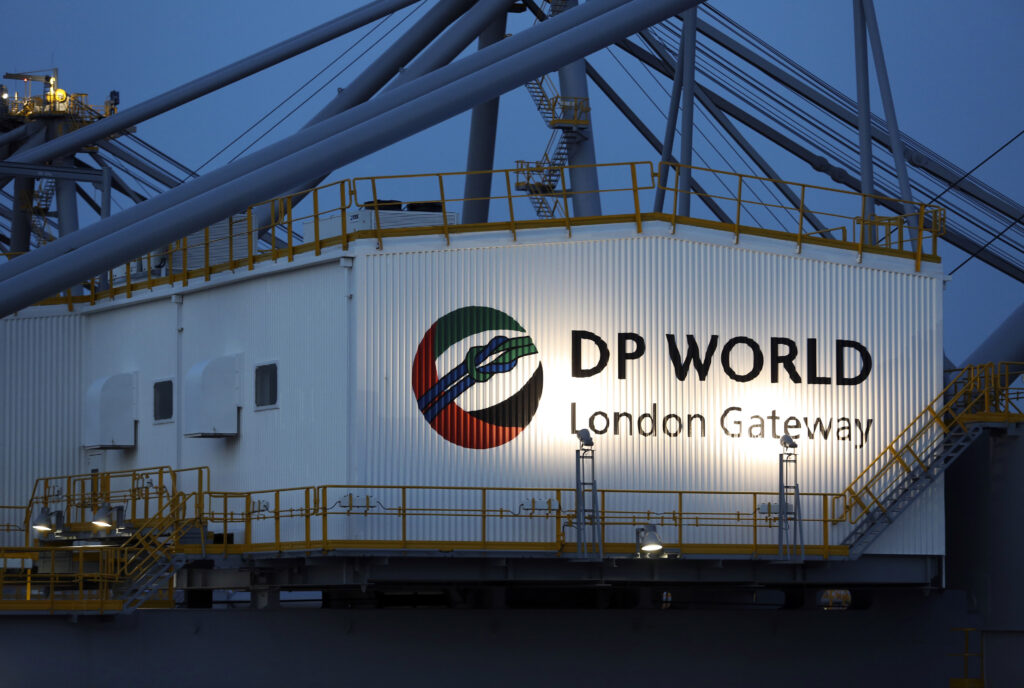
The actions of the United Arab Emirates have also been denounced in Sudan and in the Horn of Africa. The presence of DP World, one of the giants of maritime transport—which, after its setback in Djibouti, established itself in Berbera, in Somaliland, in 2016 to make it the main logistical port of the Horn of Africa—clearly demonstrates this, with investments exceeding USD 440 million.
Israel’s recognition of Somaliland
Somaliland, which formally remains part of Somalia, seceded in 1991. No state had officially recognised its existence until Israel did so on 26 December last year. The principal facilitator of this rapprochement was the United Arab Emirates, a strategic ally of Israel. One may recall, for example, that Abu Dhabi prepared the visit of Somaliland’s President, Abdirahman Mohamed Abdullahi, to Israel in October 2025.
Beyond managing the port of Berbera, the Emiratis also maintain a military base in Somaliland. For the Israelis, the proximity of this territory to the Houthis represents a strategic opportunity. Likewise, a potential Israeli presence in the region would bring them significantly closer to Iran, thereby facilitating possible future military operations. Moreover, Israeli authorities have on several occasions mentioned Somaliland as a possible destination for the deportation of Palestinians, a proposal denounced by the Palestinian Authority.
Israel’s decision to recognise Somaliland has provoked negative reactions in the region and beyond. In addition to the United Nations, which viewed this recognition as an infringement of Somalia’s territorial integrity, Saudi Arabia protested against it, as did Turkey and Egypt, which see it as support for Ethiopia, for whom Berbera constitutes a maritime outlet, at a time when the two countries are in deep disagreement over the exploitation of Nile water resources, particularly following the construction of Ethiopia’s Grand Renaissance Dam.
Emirati support for the RSF clashes with Saudi interests
Saudi and Emirati interests also collide in Sudan. The military equipment support provided by Abu Dhabi to the RSF in their conflict with the authority of General al-Burhan has plunged Sudan into a bloody war that erupted openly in 2023. The populations of Darfur, already victims of atrocities committed by the Janjaweed militias, were mercilessly massacred during the capture of El-Fasher by Hemeti’s RSF. Saudi Arabia, for its part, supports General al-Burhan, whom it considers the sole legitimate authority. Emirati involvement in Sudan is believed to be aimed at gaining control over the region’s gold mines.
The role of the United Arab Emirates is increasingly irritating its neighbours. Its ambitions for economic domination and its support for secessionist factions generate instability and clash with the interests of regional powers such as Turkey, Egypt and Saudi Arabia, which could act to curb the hubris that has taken hold in Abu Dhabi.