
Editorials by Pascal Boniface
24 February 2026
Putin has gained territory, not the war
-
Director, IRIS
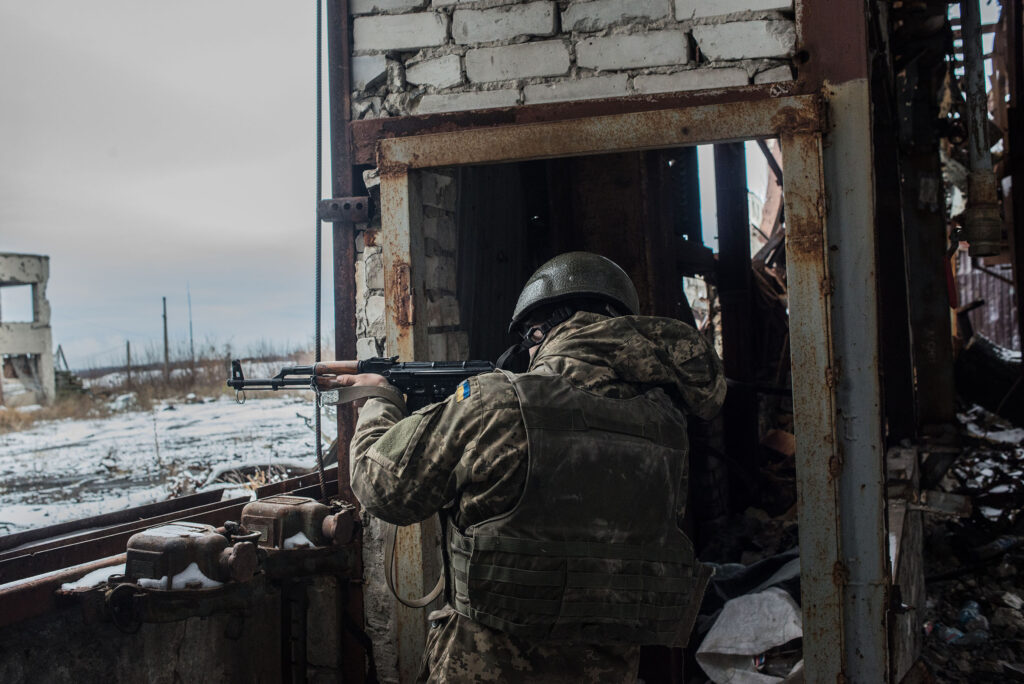
Four years after the outbreak of the war launched by Russia against Ukraine, what assessment can be drawn?
First of all, on the human level, it is a catastrophe. The war has likely caused hundreds of thousands of deaths, injuries and mutilations on both sides. An absolutely appalling human toll.
On the geopolitical front, who benefits? Who pays the price? For Russia, the crime has not paid. Back in 2014, Vladimir Putin gained Crimea but “lost” Ukraine. Since 2022, he has gained territory that he will not return, but he has lost far more in terms of status and power. Russia has been weakened by this war. Vladimir Putin’s ambition when he took power was to restore Russia’s greatness. He achieved this until 2022, because year after year he could rightly claim that Russia was doing better since he had taken office. But since 2022, Russia has been in retreat: it is no longer pursuing the development of its power. The war has weakened it and, in the long term, Russia “weighs” less in Europe and globally than before the war: it is losing men at the front, but also at home, with young graduates fleeing mobilisation, restrictions on freedoms and repression. A costly loss, particularly in sectors such as new technologies. Russia is also in decline economically. While its economy has not been brought to its knees by sanctions – largely thanks to the establishment of a wartime economy – it is paying the price of the war and will continue to do so in the years ahead. It is not cut off from the rest of the world, contrary to Western expectations, but it has lost a great deal in terms of image and relationships. Certainly, Donald Trump is a serious and very useful support. He has even blown up the concept of the Western bloc. But this war has cost Vladimir Putin far more than it has brought him. In historical judgement, this will count against him. It will be difficult for Russia to move away from this wartime economy. Its dependence on China is growing, weakening its relative position.
Ukraine is a martyred country that has suffered greatly in terms of human and physical destruction. But although it has de facto lost territory it will not recover, it has gained a status. It was a country long deemed undesirable, avoided due to endemic corruption. A country whose GDP per capita had barely improved in 30 years because the elites, whether pro-Russian or pro-European, were united in waste and corruption. Now, it has obtained candidate status to the European Union and has become acceptable. It benefits from the unwavering support of Europeans, who have strongly committed themselves in its favour. The challenge for Ukraine is having to accept a loss of territory that is illegal and immoral, but which reflects the balance of power after four years of war—one that seems difficult to fundamentally alter regardless of how long the conflict continues.
Ukraine will also likely face social divisions after years of war. Has the entire population been subjected to the same obligations regarding the Russian threat? There is finally the challenge of economic development. Will Ukraine’s strong and vibrant civil society prevail over the oligarchs? Will it choose development and truly put an end to corruption? If so, it has potential, even with part of its territory gone, to develop.
The major losers of this war are undoubtedly the Europeans. They have fallen far behind in terms of dependencies. The era of cheap Russian gas is over. They have abandoned billions in assets in Russia so as not to support the Russian war effort—resources that flowed directly into the hands of oligarchs close to Vladimir Putin. EU countries have increased their military spending to the detriment of other sectors. Their dependence on the United States has grown—energy dependence, military equipment dependence, and therefore geopolitical dependence. Today, although Donald Trump repeatedly but inconsistently asserts that he will stop aid to Ukraine, and while he considers the European Union an enemy, European countries continue to pretend they believe he is an indispensable ally. They are so focused on maintaining the American strategic presence in Ukraine that they are ready to make every concession. This is why they accepted a very high level of military spending set by the Trump administration. This is why they accepted a highly unbalanced trade agreement and continue to make one concession after another to Donald Trump. Preserving Ukraine’s sovereignty has, in a way, limited their own sovereignty vis-à-vis the United States. Even though they had no choice but to support Ukraine for reasons of principle and interest, they fully adopted Kyiv’s war aims. They could have discussed their legitimacy and, above all, their feasibility. Volodymyr Zelenskyy has always prioritised the United States, even though Europe has ultimately helped significantly—and now more than the United States. Europe has suffered a strategic loss of credibility because, by constantly claiming that Russia could not win the war, that it had to return all conquered territories, that this was a matter of European credibility—while this has long appeared impossible—it has undermined its own credibility. Above all, it has lost its moral credibility: on the one hand, condemning Russia’s violations of international law and its war crimes and crimes against humanity in Ukraine, immediately accompanied by increasingly severe sanctions; and on the other hand, imposing no sanctions at all for violations of international law and war crimes and crimes against humanity committed by Israel in Gaza. The insistence of European countries in urging states of the Global South to impose sanctions on Russia, while none of them did, has further highlighted the limits of their influence.
China is also a winner of this war. The conflict was initially destabilising—a strategic surprise from Russia that ran counter to Beijing’s vision and interests, as it first led to increased spending on food and energy imports, China’s two main import sectors. In the end, Beijing has benefited by strengthening its influence over Russia, and by presenting itself to the rest of the world as a peaceful power, able to point out that it is not involved in the conflict, unlike Europeans and Westerners. It can portray itself as a power seeking peace, favourable to a ceasefire, which aligns with the interests of many states in the Global South. China appears as a country that avoids missteps and honours its commitments.
As for the countries of the “Global South”, they have not felt concerned by this war. They have often sent Ukraine and Russia back to back, even though two-thirds of them condemned Russia’s aggression in UN votes, without wishing, however, to engage in a policy of sanctions against Russia, asserting that this was a Western affair. They were irritated by Western attempts to push them into following sanctions, even though they had not been involved in the decision-making process that led to them. Over the course of the war, they have increasingly affirmed themselves—in their diversity, in their complexity—but united in refusing to adopt sanctions against Russia. They have further asserted their identity—amorphous, perhaps, but still collective—in contrast with the West.