
Analyses
16 January 2026
Greenland, a Mirror of the World
-

Associate Research Fellow, IRIS
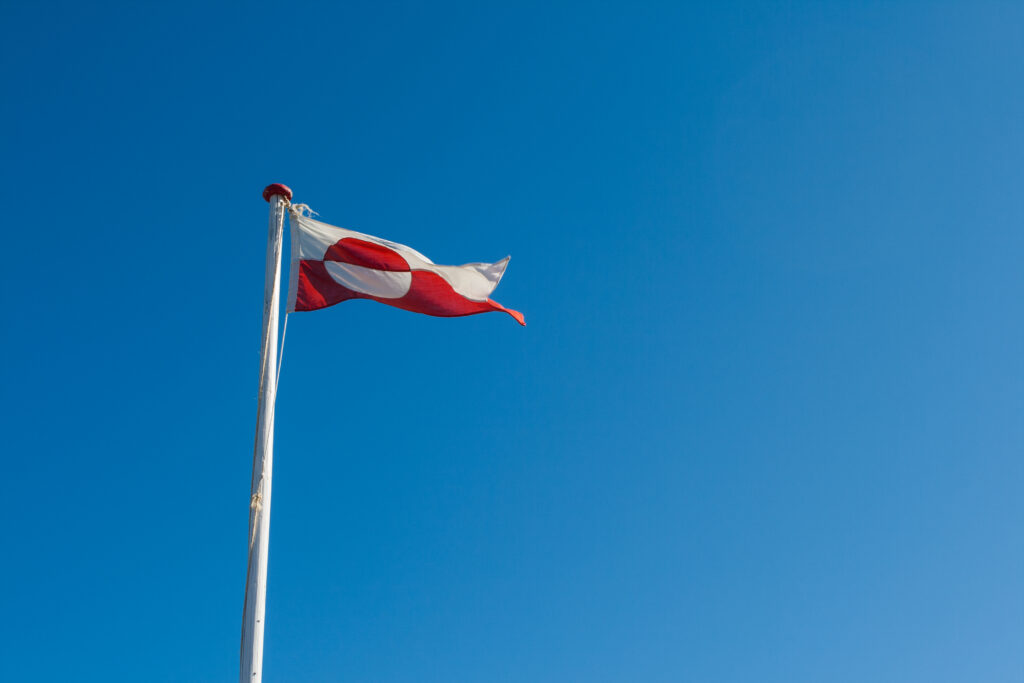
Behind declarations, announcements and political communication, Greenland offers us a magnifying mirror of the state of the world. Consequently, behind the hottest current affairs, let us add a little cold to extend the perspective. In three steps, given the dance of dangers.
First point: the tipping point. During the previous decade, speaking about Greenland and the Arctic mainly meant addressing climate change. Not without reason. The North Pole is one of the main thermometers of meteorological changes on Earth. Ice melt and rising sea levels were a concern. The protection of natural ecosystems featured prominently on cooperation agendas relating to this fragile region, whose rapid warming reflected in its own way the climate clock, the reactor at the heart of this century. None of this has become any less important today. On the contrary, the clock is ticking faster. However, within a decade, between the Paris Agreement on climate and today, geopolitics has taken over. But not just any geopolitics: the hard kind, which threatens and expresses itself through power plays. Greenland is a striking example of territories once regarded as requiring preservation, now being spoken of as to be defended or conquered. The “trumpisation” of international relations, launched during Donald Trump’s first term, also means this: brushing aside climate risks and making room for strategic appetites. The President of the United States, like others, takes part in this hippopotamus geopolitics—ferocious, fast and polygamous—which I referred to after Covid to describe the new era we had entered. Others have since spoken of predators, undoubtedly to better examine the system that Europeans observed for too long: a form of strategic veganism, both military, economic and industrial. I still prefer the image of the hippopotamus, because it is an herbivore but becomes carnivorous if necessary—that is, when it is very hungry. And it is fast, as Trump is, sometimes unsettling everyone, taking them by surprise and leaving them stunned. When you weigh several tonnes but can run faster than a sprinter, you can defy gravity and create astonishment. As for its polygamy, the hippopotamus embraces it fully: why bother with solid and lasting commitments? Everything must be self-interested, transactional and disposable. Alliances, treaties, the law. Greenland now presents a menu that sadly reflects today’s world. Not simply hotter in climatic terms. Hotter also on the geopolitical front, because brutal and tropical (are we not breaking into cold sweats these days?).
Second point: the great divide. The list would be long of subjects illustrating the growing distance between the two sides of the Atlantic. And let us point out that Donald Trump does not have a monopoly on responsibility for this phenomenon. Relations between the United States and the European Union have been marked by tensions and rivalries older than the rise of trumpism. Let us say that Donald gives them a much sharper flavour. The Greenland case is emblematic of an incredible scenario: at the start of 2026, we are now wondering whether the United States could take possession of this island dependent on the Kingdom of Denmark, whether NATO soldiers could find themselves face-to-face on this land of ice. How can we explain that we have reached such a point, when only in 2024 we were commemorating the 80th anniversary of the Allied landings in Normandy and reminding ourselves with solemnity of how arduous the conquest of peace had been, how precious and invaluable it is? Here we are today with a Trump administration posturing over Greenland, floating the idea of buying it or taking full possession of it, regardless of Danish objections and European timidity. The new Donroe doctrine envisages a generalised weakening of Europe: we would no longer be capable of guaranteeing Greenland’s security, for lack of means, already constrained and potentially even weaker tomorrow. Trump the futurist, who fears that China could become a polar power and keeps a close watch on Russia and its manoeuvres in the Arctic, therefore intends to control Greenland before it is too late. The United States can already operate militarily there under a 1951 agreement, but that is no longer enough. It must be taken with a full bite. Tick-tock. And for the EU, yet another provocation on a grand scale. Will our ambassadors in the polar regions remain diplomats, scientists or environmental experts, or will they sooner or later have to don fatigues? That is not the question.
Indeed, the third point with this Greenland as a magnifying mirror is equilibrium. It consists in never forgetting, when analysing international relations, to what extent the geopolitics of resources predominates. We Europeans have enjoyed moralising international relations. We are right to continue doing so. But we must also acknowledge, with necessary strategic clarity, that many other powers primarily seek to monetise their international relations. Trump is a super-charger in this respect. And so, to return to this Far North which is becoming the new land of promise, whether navigational, energy-related or mineral, this is where we stand. Not all actors view this region as a barometer of climate risk. The hunger for resources is insatiable. Greenland is said to contain 10% of the world’s freshwater reserves, 10–15% of its rare earth elements, considerable quantities of sand (more precisely marine aggregates, essential in particular in construction), not to mention the glacial rock flours (the island’s “grey gold”) capable of developing green fertilisers to improve agricultural soil fertility in the future. We spoke of equilibrium to remind that the economic dimension is never far from international affairs; it is generally central. The United States, like other powers never sated, rarely relegates this variable to a footnote. If we overlook the economic dimension for too long in our strategic compass, then we Europeans may still be right on ecological and legal grounds, but may no longer be able to wage these historic battles for lack of robust tools at our disposal. Greenland invites us to reflect on a world that is warming—climatically and geopolitically. And therefore on current and future imbalances.