
Geopolitics of Nature, Nature of Geopolitics
Introduction By Bastien Alex and Olivier de France (Winter 2021)
Read
Analyses / Climate, Environment, Security
31 March 2026

IRIS
geopoliHow might one define a geopolitics of nature? With what consequences for the nature of geopolitics? Edited by Bastien Alex and Olivier Yasar de France, a special issue of The Review of International and Strategic Affairs (La Revue internationale et stratégique) queries nature both as an object and potential actor of politics and geopolitics.
Bruno Latour and Philippe Descola, amongst others, suggest that exploring a geopolitics of nature calls into question the very nature of geopolitics. On the one hand, the politics of “nature” as an object classically concerns nature’s integration into national political processes. The geopolitics of nature therefore probes its integration into both national and international political processes.
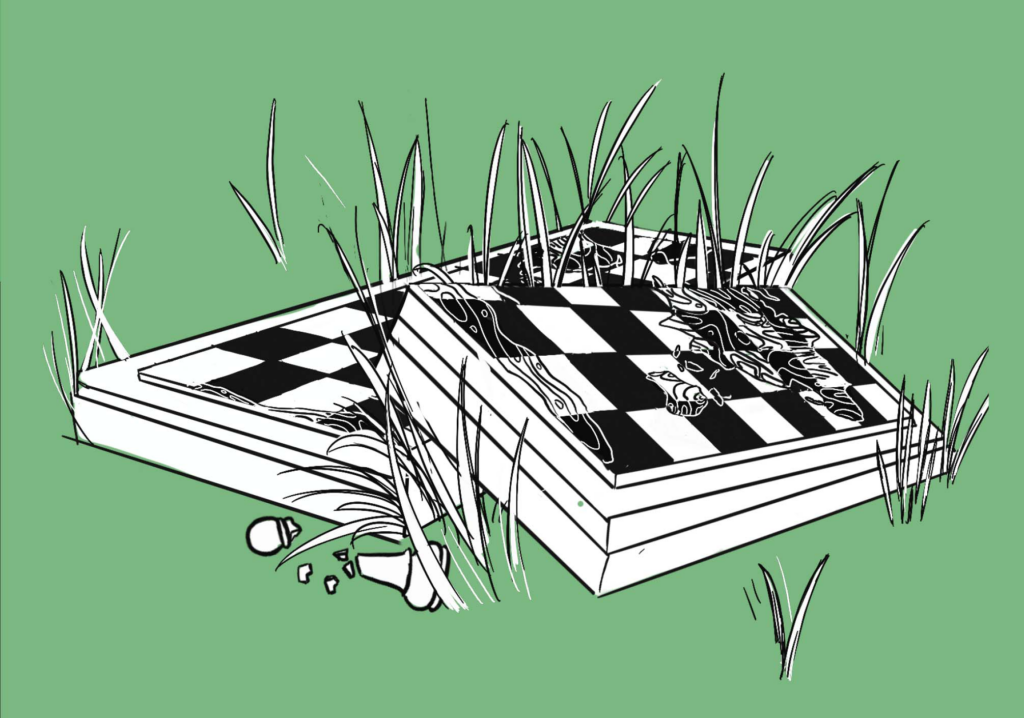
On the other hand, it has today become conceivable – and indeed perhaps necessary – to see nature not merely as an object, background, resource, or function of politics, but as an agent or subject of politics. A geopolitics of nature cannot therefore limit itself to examining how nature is integrated as an object into national and international political processes. Instead, it must consider how nature breaks into the frameworks inherited from classical geopolitics by emerging as an actor that refashions our conceptions of space, territory, sovereignty, enemies, borders, and the state.
Published in 2021, the special issue takes contemporary experimentations as a starting point and lays out the following quandaries. How do we then fashion a geopolitics that will reignite a questioning of notions of space, territory, and sovereignty? One that could integrate our dependence on temperatures, soya, water, and biodiversity? How do we connect the different scales, politics, and world views within systems that are likely to coexist? Are the twin (geo)politics of nature as object and as agent compatible, or are they mutually exclusive?
Latour and Descola retrace the steps that have led us from the abstract to the concrete politics of nature; from the monolithic geopolitics of nature as a resource to the plural geopolitics of nature as agent; from the universal cosmopolitics of nature to the diverse cosmopolitics of living things; and ultimately from the geopolitics of nature to the nature of geopolitics itself.
Both Latour and Descola’s arguments in this journal describe nature’s local intelligence and the need to find ways of seeing the world which ‘localises the global’. Despite its limited capacity to understand it correctly, geopolitics is not immune to today’s growing ecological awareness. In fact, these current shifts cast doubt on the very underpinnings of classical geopolitics, starting with the notion of space as a flat surface to be conquered and dominated.
The concept of “nature” historically emerged as a term we employed to describe external spaces when dividing the world into nation-states. These nation-states required the concept of “nature” because it symbolised the world as a collection of objects and resources—a domain to be explored, understood, and conquered. This perspective, however, significantly oversimplifies reality.
A genuine geopolitics of nature is forced to encompass elements traditionally grouped under the simplistic label of “nature”, but which, in reality, extend far beyond it. These are entities actively responding to human actions and include rivers, the atmosphere, animals, viruses, and more. Such complex interactions cannot be comfortably accommodated within conventional geopolitical frameworks.
As such, the work of inventing a geopolitics that integrates the developments made within political ecology and Earth systems very much remains to be done—in both latin senses of the word invenire: to invent, but also to discover. In this context, Europe might be one of the birthplaces of other versions of the ideas of space, territory, and sovereignty.
Introduction By Bastien Alex and Olivier de France (Winter 2021)
Read Conversation with Bruno Latour, sociologist, anthropologist and philosopher of science (Winter 2021)
Read Conversation with Philippe Descola, anthropologist (Winter 2021)
Read