
Interviews / Climate, Environment, Security
1 December 2025
COP30: Limited Progress in a Fragmented Multilateral System
-

Research Fellow, Head of the Climate, Environment, Security Programme, IRIS
As the Belém COP30 marks the tenth anniversary of the Paris Agreement, its overall assessment appears mixed. While several advances were achieved – a just transition mechanism, new adaptation objectives, commitments on information integrity, and progress on gender – the conference also fell short on key issues such as phasing out fossil fuels, tackling deforestation, and clarifying climate finance. Between positive signals and missed opportunities, COP30 reflects a deeply fragmented multilateral system in which national dynamics and pressure from powerful actors continue to limit the real scope of climate negotiations. An assessment with Mathilde Jourde, Research Fellow at IRIS and Head of the Climate, Environment and Security Programme.
What conclusions can be drawn from COP30? On which issues have we seen progress, and where did the conference lack ambition or results?
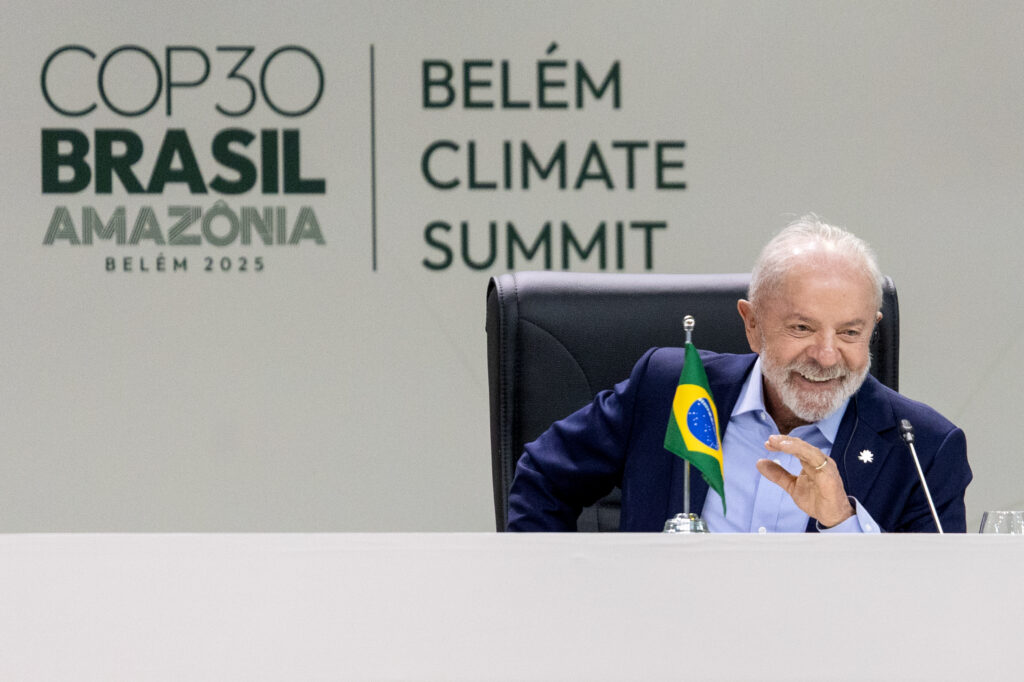
To recall, COP30 in Belém, which ended a day late on 22 November, unfolded in a particularly complex context. Marking the 10th anniversary of the Paris Agreement, this edition took place at a time when multilateralism is fragmenting and international cooperation is under severe strain. Tensions are rising on multiple fronts: political (the rise of extremism), social (polarisation), economic (recurrent crises), military (an increase in high-intensity conflicts), and climatic (rollbacks and attacks on environmental progress). In this context of polycrises, COP30 faced the heavy responsibility of demonstrating that global climate action can withstand these challenges. It is therefore essential, while remaining critical, to take this context into account when analysing the advances and shortcomings of this COP, which nonetheless succeeded in reaching a final agreement known as the “Mutirão Decision”.
Several notable advances can be highlighted. Unlike previous editions, COP30 adopted a more cross-cutting approach, whereas COP29 had focused on finance and COP28 on loss and damage. For the first time, the final agreement includes the adoption of a Just Transition Mechanism, a long-standing demand of civil society. This mechanism aims to ensure that energy and ecological transitions do not penalise specific population groups. In addition, a new adaptation finance target was adopted, calling on countries to triple their funding by 2035 compared with 2025, within the framework of the 300 billion dollars per year announced at COP29. Beyond the final agreement, other issues also progressed. Discussions on climate disinformation led to an agreement on the integrity of climate information, signed by 12 states. Significant progress was also made on gender, with the adoption of the Belém Gender Action Plan, which will guide the integration of gender justice into climate action in the coming years.
Highlighting progress does not mean ignoring the major gaps and disappointments observed. Some issues remained blocked and saw no meaningful developments. No significant progress was achieved on the gradual phase-out of fossil fuels, despite President Lula calling from the opening of the COP for a roadmap on this much-anticipated topic following its total absence from discussions at COP29. The measure had appeared in an early draft text but was ultimately removed from the final version, despite support from nearly 90 countries. The issue of deforestation, announced as a flagship theme of the COP, also saw little progress. Moreover, despite the objective of tripling adaptation finance, discussions on financing remained disappointing. The target remains vague and difficult to apply (lack of specific figures, absence of deadlines, and an extended timeline to 2035 instead of 2030), weakening its real effectiveness. Finally, only 120 countries submitted their Nationally Determined Contributions (NDCs) – their national climate action plans. Some managed to do so just in time, such as the European Union, which submitted its NDC a few days before the COP, or Mexico, which submitted it during the conference. Others refrained altogether, such as India.
This COP therefore represents a mixed outcome, combining clear disappointment with a certain sense of relief, given the setbacks it might have suffered in the current global context.
Although the 197 Parties to the UN Framework Convention on Climate Change (UNFCCC) are states, how did COP30 also involve non-state actors?
There was a significant mobilisation of civil society. After several COPs in which civil society had been restricted – either for health reasons linked to Covid-19 or because of limits on rights and freedom of expression – this edition brought together multiple movements from across the world, notably during the People’s Summit. Civil society mobilised to defend strong ambition in the face of climate change, particularly against actors seeking to curb it.
In early November, Indigenous peoples were placed at the heart of President Lula’s political agenda, with a commitment to better integrate Indigenous communities and civil society into the negotiations. In theory, Indigenous peoples had never been so well represented at a COP. However, this inclusion remained largely symbolic, even a mere announcement effect, as Indigenous representatives were not allowed access to the Blue Zone reserved for official negotiators. This led to several incidents: for example, on 11 November, dozens of protesters forced entry into the “Blue Zone”, the highly secured perimeter of COP30, resulting in clashes with conference security. Civil society also mobilised through demonstrations in the streets of Belém. This march, a tradition of UN climate conferences, had been banned three times at previous editions.
Mobilisation by non-state or sub-national actors helps compensate for the lack of ambition or action by certain governments. The United States, for example, did not send an official delegation to the COP this year – which is not necessarily a bad thing, as it prevented the conference from facing anti-climate actions, as had been the case in 2017. Nevertheless, to signal non-alignment and opposition to the climate policy of the Trump II administration, the Governor of California attended COP30. Around one hundred American local officials (governors, mayors, and other elected representatives) were also present to show their support for climate multilateralism and their opposition to current US climate policy.
Which processes could make these meetings more effective and better suited to a fragmented multilateral landscape?
Faced with shortcomings and the slow pace of progress on certain issues within the COP process, many have grown weary and associated COPs with defeatist rhetoric. However, it is important to qualify claims that COPs ‘serve no purpose’. These conferences must be viewed for what they are: diplomatic events that shed light on national dynamics. Indeed, if COPs often appear unambitious, it is mainly because they reflect the real lack of ambition at national level as well as existing divisions between states. It is therefore necessary to consider improvements to their functioning so they can better mitigate the very obstacles present at national level.
One example is limiting the presence of lobbyists, who are already highly active at national level and whose numbers have increased sharply since the first COPs. COP30 broke a record in terms of fossil fuel lobbyist participation. More than 1,600 were authorised to attend – an increase of 12% compared with COP29 – amounting to one participant in every 25. Among the multinational companies represented were oil and gas giants such as ExxonMobil, BP, TotalEnergies and Petrobras. According to Mediapart, five Total employees, including its CEO Patrick Pouyanné, were accredited to COP30 within the French delegation, with access to the Blue Zones normally reserved for negotiators. Given the lack of concrete progress on fossil fuels and the absence of any reference to a phasedown or phase-out, legitimate questions arise regarding the influence these groups exerted over the negotiations. Limiting their presence could therefore help make the conferences more effective and promote meaningful implementation of the Paris Agreement.
Furthermore, some actors are already bypassing the structural obstacles of the COP process and are finding alternative ways to move forward on essential issues through renewed forms of multilateralism. In this respect, “minilateralism” allows cooperation among a smaller group of stakeholders. For example, although fossil fuels were not mentioned in the final text, other positive initiatives were launched by voluntary countries to limit fossil fuel use. A voluntary initiative was proposed: the Global Implementation Accelerator, which will involve several working sessions in 2026 before submitting a report at COP31, which will take place in Turkey under Australian presidency. This initiative is led by Colombia, a signatory in 2023 of the Fossil Fuel Non-Proliferation Treaty. The Brazilian presidency also proposed developing a roadmap for a genuine fossil fuel phase-out.