
Notes / Climate, Environment, Security
8 June 2022
The World Climate and Security Report 2022 : Decarbonized Defense the Need for Clean Military Power in the Age of Climate Change
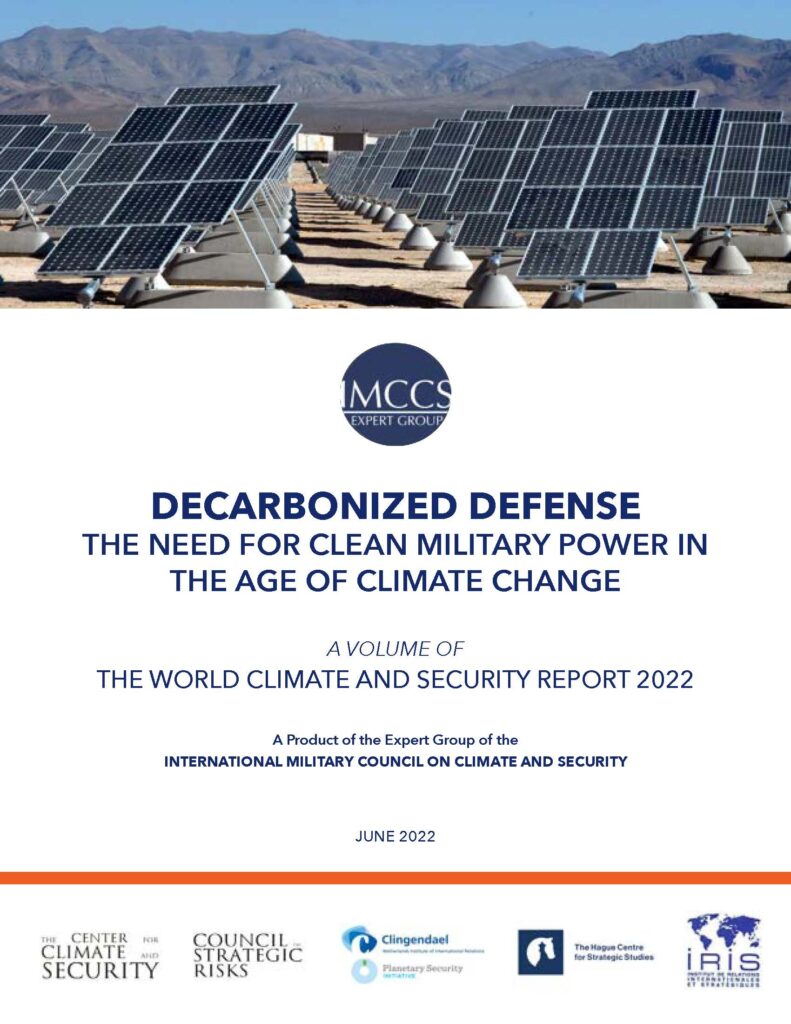
The risk of climate change worsening security risks is well documented and recognized by security and foreign policy communities worldwide. NATO Allies and EU member states have prioritized climate action in economic and industrial policies and have made a start with decarbonization efforts in the military. Accelerating this effort would help to modernize militaries and reduce costs and operational vulnerabilities related to fossil energy. It would be a logical contribution to the wider effort to combat climate change and phase out fossil energy, also in view of Russia using it as a weapon in the war in Ukraine.
Emissions reduction targets for the military are considered a national choice, even in countries firmly committed to climate neutrality in 2050. In the past, military decarbonization has often been dismissed because of fear that greener solutions may weaken operational effectiveness, thereby compromising national security. High financial costs associated with renewable transition constituted another reason for pushback. However, militaries are nowadays more often forced to respond to climate-induced crises and doing so whilst emitting and thereby contributing to the problem is in itself, contradictory. Further, new technologies and clean energy approaches can provide operational benefits to militaries that make them more resilient and adaptable to 21st century threats.
This report discusses why reducing carbon emissions in the military is a sensitive issue, what a methodology for monitoring its emissions could look like, where technological challenges are the greatest, how NATO and EU are currently responding and what more they can do, and how they could cooperate on this issue…
By the Expert Group of the International Military Council on Climate and Security, in collaboration with the Center for Climate and Security, Council on Strategic Risks, the Clingendael Institute, the Hague Center for Strategic Studies and IRIS.